Backing up a bit, this is what that corner joint in the frame base looks like when assembled and the shachi sen sawn off and flushed. In case it wasn't clear before, the small dovetail on the arm coming in from the left is smaller in width than its mortice. That way it can insert in the same direction as the internal sliding dovetail. The shachi sen then fills the gap. I think this is a handy joinery trick to use when you need it. And the wings on the T-shaped mortice are for stub tenons flanking the main tenon on the post. Those are extra insurance against the post twisting.

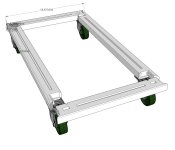
And here is a short video of assembling the cabinet base. The mobile base is open in the center but the cabinet has dust panels in the base and and in all the web frames. The dust panels are simple 1/4"/6 mm birch plywood. Yes, that's me. Handsomer than you imagined, yes?
I'm glad I added dust panels since I often blow the dust out of the shop at the end of the day using a giant electric hair drier meant for my dogs. It looks like a leaf blower. Very effective but dust goes everywhere before it finally leaves the shop.
Speaking of dust panels and web frames, here is one of five for the left side drawers. The front and back rails are cherry and the sides are sycamore. Sycamore turns to out be superb as a bearing surface because it is abrasion resistant. It also sands to a silky finish. I sanded these to 400 grit and then shellacked and waxed them.
You can also see the tongues on the side rails that engage the grooves in the rails on the cabinet frame. Thus the web frames are totally supported along their depth front to back and cannot sag under the weight of the drawers. I did not glue the tenons on the side web frame rails into their front and back rails. There was no need since the entire web frame assembly is completely captured by immovable posts at their corners. That greatly simplified assembling all the frames.

The web frames during final assembly. The blue tape hides and confines drawer stops, which I'll explain later. You can also see the open faced, spear point tenons on each web front rail. I talked about that joinery in Ming table post. I like 'em, they let me carry a chamfer around the inside of the drawer openings, and they give the chest an Asian reference I was after without my having to build a Japanese
tansu (a style of furniture I don't particularly like).

The side panels are the same Baltic birch panels but hammer veneered with hot hide glue using cherry veneer that a friend donated to the cause. I had not done hammer veneering before and there were many false starts and do-overs before I got into a rhythm. If anyone is interested in trying hammer veneering, I strongly recommend starting with smaller panels first. But I got it done. Here is one panel of book matched veneer.

And inserted into its grooves in the posts. I divided the panel into two pieces vertically to add a separate spear pointed rail between. That rail is there only to carry lines of the web frame rail on the front of the cabinet around the sides. I fit the side panels without much play at the top and bottom to give some further shear resistance. Probably not necessary to resist racking given the multiple rail joints inside.

The back is a frame and panel construction set into rebates in the posts. The panels are also book matched cherry veneer done like the sides. The frame joinery is mitred with through and wedged tenons with a double mitred center stile.

Those odd notches are for loose tenons/clips that go through the rails and stiles into mortices in the posts, top frame, and base frame. When tightly fitted this construction gives some resistance to racking, provides a finished look without using screws, and the back can easily be removed. Why would someone want to remove the back? I don't know. Maybe to adjust the adjustable drawer stops?




 .
.


 - Rob
- Rob


