• Hi all and welcome to TheWoodHaven2 brought into the 21st Century, kicking and screaming! We all have Alasdair to thank for the vast bulk of the heavy lifting to get us here, no more so than me because he's taken away a huge burden of responsibility from my shoulders and brought us to this new shiny home, with all your previous content (hopefully) still intact! Please peruse and feed back. There is still plenty to do, like changing the colour scheme, adding the banner graphic, tweaking the odd setting here and there so I have added a new thread in the 'Technical Issues, Bugs and Feature Requests' forum for you to add any issues you find, any missing settings or just anything you'd like to see added/removed from the feature set that Xenforo offers. We will get to everything over the coming weeks so please be patient, but add anything at all to the thread I mention above and we promise to get to them over the next few days/weeks/months. In the meantime, please enjoy!

Another tool chest

GaryR

Nordic Pine
Joined
Jan 22, 2024
Messages
623
Reaction score
1,030
Location
Bloomington, Indiana, USA
Name
Gary
I hesitated to post this since I have another thread ongoing. But this project has unusual joinery, like my others, and I hope that will entertain enough for you to forgive my excess.

Done in American black cherry and quarter sawn sycamore. The only glue is on the drawer boxes and hammer veneered side and back panels. The only metal is the Japanese brass drawer pulls and decades old American casters. The rest of the construction is adapted from Japanese timber frame joinery. Most of that joinery is hidden but I have lots of pictures to illustrate how it is built.

913B9C5A-C1A1-428F-88FA-BDCE997594B5_1_105_c.jpeg
 
I hesitated to post this since I have another thread ongoing. But this project has unusual joinery, like my others, and I hope that will entertain enough for you to forgive my excess.

Done in American black cherry and quarter sawn sycamore. The only glue is on the drawer boxes and hammer veneered side and back panels. The only metal is the Japanese brass drawer pulls and decades old American casters. The rest of the construction is adapted from Japanese timber frame joinery. Most of that joinery is hidden but I have lots of pictures to illustrate how it is built.

View attachment 26286
Most impressed with the joinery of the drawers. !
 
That's a beautiful cabinet Gary. I for one would love to see details of the construction. The dovetails look great.
 
Nice, Gary. I reckon it takes two hands to pull the drawers open, though......one to hold the chest in place. Is it useful being on castors?

Is the pattern of the drawers an eastern tradition? Obviously here in the west we would have the larger drawer/s at the bottom, and work upwards to small ones at the top.
 
No, one hand opens a drawer just fine. And it is on casters because I designed it to sit in front of my dust collector bin. I have to move the chest a few feet a few times per year to empty the bin and it would be too heavy to move without wheels. The chest has enough mass, especially when full of tools, to not move unless I want it to.

Graduating the drawer heights is one thing I wish I had done.

The dovetail design was entirely for fun. I'll get to that when I discuss the drawers.

Here is the habitat and the concept for the chest/cabinet. I haven't done the upper part, yet so that is just an idea.


5BA052F2-EACF-42C4-8351-B1BF136E8A3E_1_105_c.jpeg

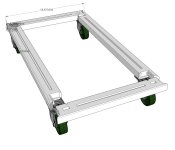
Starting at the bottom, I knew I wanted the chest to be on wheels. I decided to make a separate base for the casters but integrate it into the design of the chest to appear as a plinth. The joinery I used for the mobile base is based on a cill/sill corner joint used in higher end Japanese timber frame construction:


192C6E8B-CE6C-47C1-ABA7-722B7BE6F204_1_105_c.jpeg


The internal sliding dovetail and the half dovetail are locked after assembly by inserting two shachi sen (double tapered parallelogram shaped pins).


2D54F524-F7FA-4718-907F-A99FAE24BB0E_1_105_c.jpegA43E7C08-69C2-4B88-B4B6-57697256D5F9_1_105_c.jpeg

Here is a nearly identical version of the joint used again on the cabinet frame. The t-shaped mortice accepts a tenon on the end of a corner post.

44A269A5-F4CE-4544-A6D2-31589D672FE3_1_105_c.jpeg

And the mobile base and both cabinet frames done:

0E30EAB5-F2CF-4C8A-B7B9-3CDC8E37645D_1_105_c.jpeg
 
Watching this joinery makes me feel like I feel when watching Leo Goolden working on Tally Ho: some people are operating on a completely different plane (no pun intended) of joinery skill than I am. Awe inspiring 👏.
 
I'm remembering now my thinking (4 years ago) about the drawer sizes and arrangements. I tried several designs including ones with graduated drawer heights and different numbers of drawers and combinations of widths. In the end I settled on double drawers out of concern that all full width drawers full of metal tools would be too heavy for their wood on wood slides and perhaps they might sag in the middle. I did make the lower pair of drawers 1/4 inch taller than the middle ones and the top wide drawer 1/4" shorter than the middle ones. The wider plinth and base does give the chest a little more visual weight at the bottom so the drawer pattern doesn't look too top heavy, at least to my eye. That wide top drawer is my chisel drawer and it works fine for that.

The chest has four full height corner posts and two shorter center posts. The post ends are tenoned to fit through mortices in the mobile base, the chest base, and chest top plate. They are also grooved to accept veneered side panels and morticed to accept tenons from the drawer rails and drawer web frames.

5A2D8A2A-B175-4768-BDDF-EBDEDBF000E2_1_105_c.jpeg

1E2ED32D-A69A-436D-9CE0-C37D3F3DE737_1_105_c.jpeg

The sides posts accept these gorgeous quarter sawn sycamore rails. The rails are meant to confine the drawers and also provide racking resistance front to back. I was particularly concerned about controlling racking in piece I knew would be heavy and pushed and pulled around the shop.

CB91081A-C53B-40D6-8298-483AC96A38AA_1_105_c.jpeg

F644DF25-B73D-4C34-9C76-21BB6905B287_1_105_c.jpeg

Those side rails are tenoned on the ends. Rather than being glued, the tenons are draw bored/morticed to receive tenons on the sides of the web frames. The rails are also grooved to accept tongues on the sides of the web frames. That joinery is a little difficult to show in photographs. This hints at the construction showing a center rail as it joins the back center post along with two back web frame arms.

43710A30-9178-483E-9C12-76C12D249B99_1_105_c.jpeg

0298DFC6-5814-48C9-AF73-6340037453CA_1_105_c.jpeg

And here is a post lying flat, the tenoned rail in the center, and the front of the web frame with its tenon that will lock the rail tenon in place. This actually sort of worked but as you can see there isn't enough relish past the mortice on that rail tenon and the web frame tenon is too long and skinny. And on assembly it was a challenge getting all of those little tenons to come together inside the posts. I'd lay it out differently today. But, it was a fun experiment.

BCD02B01-0E70-4E74-827A-3E95D4E0739C_1_201_a.jpegUNADJUSTEDNONRAW_thumb_1abe.jpg
 
I do like Sycamore. Wish I could course some more for my instruments. Yours looks really nice.
 
I'm not sure whether it would be "instrument grade" if there is such a thing, but Wentwood Timber usually have some. Not **that** far for you.
**that**?!!! It's in the next country! :)
 
I do like Sycamore. Wish I could course some more for my instruments. Yours looks really nice.
I'm not sending it to you Malcolm, but I've got a load of 20 year old + sycamore here. If you ever find yourself up here you're more than welcome to whatever your want.
 
I got my boards from a local woodworker who had purchased enough to build a set of kitchen cabinets for his home. When he saw the figure he decided that an entire kitchen of that would, in his words, "look like clown pants." He made a couple of mirror frames for a bathroom and sold off the rest.
 
I'm not sending it to you Malcolm, but I've got a load of 20 year old + sycamore here. If you ever find yourself up here you're more than welcome to whatever your want.
Wow! That's great. Thank you. Just been watching Michael Portillo around Essex, Suffolk and Norfolk on coastal railways, and Mission Control suggests we ought to visit.
 
One of the things I like about woodwork and woodworkers is that we find so many different answers to shared questions, and all of them are right.


Personally, a similar volume of tool storage in my workshop is a chest of drawers from a nurses' home that was being cleared for demolition. It's utilitarian, though the drawer fronts are oak. It cost me £3.00.

It's fine for me, and your beautiful cabinet is fine for you. We're both happy. And I get to admire your ability to cut 3D puzzles that fit sweetly together.
 
Backing up a bit, this is what that corner joint in the frame base looks like when assembled and the shachi sen sawn off and flushed. In case it wasn't clear before, the small dovetail on the arm coming in from the left is smaller in width than its mortice. That way it can insert in the same direction as the internal sliding dovetail. The shachi sen then fills the gap. I think this is a handy joinery trick to use when you need it. And the wings on the T-shaped mortice are for stub tenons flanking the main tenon on the post. Those are extra insurance against the post twisting.
corner joint - 1.jpeg

And here is a short video of assembling the cabinet base. The mobile base is open in the center but the cabinet has dust panels in the base and and in all the web frames. The dust panels are simple 1/4"/6 mm birch plywood. Yes, that's me. Handsomer than you imagined, yes?


I'm glad I added dust panels since I often blow the dust out of the shop at the end of the day using a giant electric hair drier meant for my dogs. It looks like a leaf blower. Very effective but dust goes everywhere before it finally leaves the shop.

Speaking of dust panels and web frames, here is one of five for the left side drawers. The front and back rails are cherry and the sides are sycamore. Sycamore turns to out be superb as a bearing surface because it is abrasion resistant. It also sands to a silky finish. I sanded these to 400 grit and then shellacked and waxed them.

You can also see the tongues on the side rails that engage the grooves in the rails on the cabinet frame. Thus the web frames are totally supported along their depth front to back and cannot sag under the weight of the drawers. I did not glue the tenons on the side web frame rails into their front and back rails. There was no need since the entire web frame assembly is completely captured by immovable posts at their corners. That greatly simplified assembling all the frames.

E5A95073-F640-40B1-83F8-91AA65671F0A_1_105_c.jpeg


The web frames during final assembly. The blue tape hides and confines drawer stops, which I'll explain later. You can also see the open faced, spear point tenons on each web front rail. I talked about that joinery in Ming table post. I like 'em, they let me carry a chamfer around the inside of the drawer openings, and they give the chest an Asian reference I was after without my having to build a Japanese tansu (a style of furniture I don't particularly like).

9BA373BC-EA4F-4796-9015-C1D7C2AF901B_1_105_c.jpeg

The side panels are the same Baltic birch panels but hammer veneered with hot hide glue using cherry veneer that a friend donated to the cause. I had not done hammer veneering before and there were many false starts and do-overs before I got into a rhythm. If anyone is interested in trying hammer veneering, I strongly recommend starting with smaller panels first. But I got it done. Here is one panel of book matched veneer.

10C093B9-FAFF-4B69-AD25-A92CC32E3132_1_105_c.jpeg

And inserted into its grooves in the posts. I divided the panel into two pieces vertically to add a separate spear pointed rail between. That rail is there only to carry lines of the web frame rail on the front of the cabinet around the sides. I fit the side panels without much play at the top and bottom to give some further shear resistance. Probably not necessary to resist racking given the multiple rail joints inside.

716F4673-E53F-4D2E-92A3-F7520E07A0ED_1_105_c.jpeg

The back is a frame and panel construction set into rebates in the posts. The panels are also book matched cherry veneer done like the sides. The frame joinery is mitred with through and wedged tenons with a double mitred center stile.

4BAD538F-A22D-4D64-A9A7-3B77EADBAE35_1_105_c.jpeg

Those odd notches are for loose tenons/clips that go through the rails and stiles into mortices in the posts, top frame, and base frame. When tightly fitted this construction gives some resistance to racking, provides a finished look without using screws, and the back can easily be removed. Why would someone want to remove the back? I don't know. Maybe to adjust the adjustable drawer stops?

back panel loose tenons - 1.jpeg


32E13623-E388-4D36-886B-384A91632CEA_1_105_c.jpeg
 
Again, I'm not a fan of the design, but I'll say how much I enjoy the joinery, and the hand-tool skills involved. I'd also be frightened to have a piece of hardwood polished furniture in my workshop. Mine is all much more utilitarian.
 
This is excellent work. Derek Cohen has a rival!

I understand where Mike is coming from re utilitarian and design simplicity, but I like the fact that you are building things that you enjoy making and for me that is a largely the point. I must admit that in my own workshop it is full of ex office cabinets and cupboards that I got for free. Does not stop me admiring the nicely fitted workshops that others have.
 
I certainly understand the logic of having shop furniture be utilitarian. Most of mine is, too. But I will say that in the four years the chest has been in my shop with daily use, it looks the same as the day I finished it save for one small ding. Certainly no more accumulated damage than any other piece in the non-shop areas of the house, such as a dining table. After all, how much abuse does a chest get opening and closing a drawer? And the finish is a simple matte oil. Nothing fussy about it, easy to clean and renew if necessary.

Speaking of drawers, here is the design. You have already seen the modified dovetail I chose. Since glued dovetails are mostly decorative (a finger joint is just as strong) I decided to play with the dovetail design and come up with something less common perhaps with a nod to Japanese style. I was discussing options on another forum and a friend there sent me this photo of a poster of dovetail variations.


0F33A6A3-1246-4EE4-9CF6-2F4FB3E7C5EB_1_201_a.jpeg

I picked one of the simpler ones:
A13F863E-13BD-4250-A25F-009040CA9049_1_105_c.jpeg

It wasn't that difficult to cut out but I did have to modify a chisel to get into the narrow spaces between the tails. It took some practice, and the first drawer was fun to see when it was finished. By the thirteenth drawer the novelty had worn off, but I did get much faster. Here is a practice set.

0C43FDAE-7C6F-4EBF-AB11-04D8C5029982_1_105_c.jpegA6F1CB1E-BD9A-4D03-983F-CF319BC44DD4_1_105_c.jpeg

And for real:

0C43FDAE-7C6F-4EBF-AB11-04D8C5029982_1_105_c.jpeg

The side boards are Oregon white oak (Quercus garryana) which is the hardest of all the known oaks. It is a lovely tree. There is a huge one right across the street from my house
:17ADD3DC-F46C-4491-AAC0-862C582E321B_4_5005_c.jpeg

A friend has sawmill that specializes in OWA flooring. He provided some lovely quartersawn stock that I resawed into 9 mm boards. They tended to chip badly going through my planer so I ended up hand planing all of the boards. Much resharpening necessary. But it was worth it. I love the ray flecks. Here are side and back boards for one drawer along with a cherry front. The cherry front boards were all cut from a single plank of clear straight grained cherry.

CC55E3A3-2A02-44E6-8B2F-F95D033E5973_1_105_c.jpeg

Because the sides were so thin I added drawer slips. The slips are sycamore, as are the drawer bottoms.9C1321D4-F049-48B0-A7B3-587AF8B41EF2_1_105_c.jpegdrawer  - 1.jpeg
 

Attachments

  • drawer bottom - 1.jpeg
    drawer bottom - 1.jpeg
    103.3 KB · Views: 8
  • AA3877E7-45A9-4EA1-95F7-69070D63454F_1_105_c.jpeg
    AA3877E7-45A9-4EA1-95F7-69070D63454F_1_105_c.jpeg
    213 KB · Views: 7
I certainly understand the logic of having shop furniture be utilitarian. Most of mine is, too. But I will say that in the four years the chest has been in my shop with daily use, it looks the same as the day I finished it save for one small ding. Certainly no more accumulated damage than any other piece in the non-shop areas of the house, such as a dining table. After all, how much abuse does a chest get opening and closing a drawer? And the finish is a simple matte oil. Nothing fussy about it, easy to clean and renew if necessary.
I'm with you there Gary (although most of my workshop stuff is currently very utilitarian). As I see it, if you enjoy the process of making something for the workshop, then go for it. If you end up with something pretty, then as long as you're not too precious about it then that's fine.

I've seen a few people railing against "posh" workbenches on the premise that "you'd be too scared to use it", but I see the two as unrelated. You decide whether to be precious about it. There's nothing stopping someone from building a posh workbench & enjoying making & using it & then accepting the damage that will be done to it in use.

(My workbench is some sheets of plywood fixed to some scaffolding poles, so definitely not posh!)
 
You do seem to have the knack of combining really good timber, interesting/challenging designs, and skill!

I've seen a few "sunrise" dovetails before but nothing like that poster. Nor have I seen that cunning drawer bottom detail before, with a rebate on the slips and grooved-in covering strips. Did you see that somewhere or devise it yourself?
 
Nice to see thin drawer sides; the best European work always, but always uses thin quarter sawn material (usually oak) for the sides. I usually make mine around 6mm but I've seen work done by Barnsley where the sides are even thinner. Many makers from across 'the big wet' seem to use drawers that are about a cm thick or possibly thicker and to my eyes they always look decidedly 'clunky' - Rob
 
^ Agree. We have a large antique cupboard (Gillow) in our kitchen, bought for a song, which has very wide slip drawers in the top cupboard. Side and back are all oak (bottoms too I think) and about 1/4" thick. You would not think it strong enough, but it is.
 
^ Agree. We have a large antique cupboard (Gillow) in our kitchen, bought for a song, which has very wide slip drawers in the top cupboard. Side and back are all oak (bottoms too I think) and about 1/4" thick. You would not think it strong enough, but it is.
6mm thick is plenty for drawer sides and once the slips are glued on, the bearing/wear surface is actually far greater than a drawer with thick sides and no slips...but you would have worked that out Adrian :ROFLMAO: - Rob
 
A few more details. I wanted to have both push in drawer stops and pull out drawer stops. I didn't want to reach to the back of a drawer for something and end up dumping a load of steel tools on my foot. I found a clever pull out stop designed by an Australian woodworker and adapted that to my project.

It is a small drop down stop let into the underside of a front rail of the web frame. It rises up when inserting the drawer back and drops down by gravity to press against the inside of the back of the drawer when the drawer is pulled out. The contact face has a bit of leather glued on to soften the stop.

It works well but the downsides are it is complicated to make because it has multiple parts and it can get hung up on taller items in the drawer. I'd not use it again for those reasons since there are other simpler methods to accomplish the same thing. Here is the view as seen from inside a drawer.
E28F55D1-B929-4814-B589-9304B43589BA_1_105_c.jpeg


And I added a back stop also faced with leather. I made it to be adjustable to achieve a perfect reveal on the drawer front, but in the end I don't think that was necessary. Also, I positioned the stop in the center of the back drawer board. That gives the drawer a bit of spring when it closes. I think a surer stop would be placed at the ends of the side boards. It does work but again there are much simpler solutions. You can just make it out hanging below the web frame at the center of the drawer back.

1043C488-021E-48ED-ADEB-9275309480B4_1_105_c.jpeg

Pulls are coated brass and made in Japan by a company that has been making tansu hardware for over 100 years. The quality is very high except for the ugly plastic screw covers meant I suppose to provide a smooth and more "finished" look for the inside of the drawer.

B7C93A25-6AE3-4515-B2E8-AB3D31FFE0F3_1_105_c.jpeg

I didn't like the look. Fortunately I found some mirror screw caps in stainless steel that fit. I spray painted them black to match the pulls.


B791FFFA-5171-4A6E-ADA2-EEF663A8A06D_1_105_c.jpeg
The top is single solid cherry board fit flush with the surface and fixed with a tongue and groove. In use I imagine the front 6 inches or so will be a place to set things while the back will be covered by the future upper cabinet. I fixed the front edge of the board to the front arm of the frame so there would be no gap, and left the expansion gap at the back since that will later be covered by the upper cabinet.

CB7BB811-D7E9-4726-A8D9-F1828762FA23_1_105_c.jpeg


The odd protrusions are double dovetailed keys that drop into mortices in the top frame and will engage complementary mortices in the bottom of the future top cabinet.

The last finishing touch was to lay in some rubberized cork mats to protect the tools from the drawers and to protect the drawers from sharp and/or oily tools.

3F87E651-E4E0-4D17-B977-90313832ED44_1_105_c.jpeg

And here is where it lives, handy to my workbench.

B289D3B5-AE85-4B0F-A9B2-5DB1EE375DEF_1_105_c.jpeg

And a special treat: Tool Chest, the movie:

 
While I take a break on my garden shed WIP I've decided to take a few months to finish the upper part I intended for my tool cabinet. Here is the concept drawing from 5 years ago:

5BA052F2-EACF-42C4-8351-B1BF136E8A3E_1_105_c.jpeg

Now that I'm five years on I'm reconsidering the top. It will be out of cherry to match the base and will use similar Japanese joinery with minimal glue and metal fasteners. It needs to work with the existing base cabinet but my tool storage needs and my skills and design eye have changed. For example, I'm now unlikely to need storage for a set of Western planes but I'd like space for more Japanese planes and layout tools. The upper part will still have drawers and doors but I'll probably change the size and the joinery and tool storage options, including hanging tools from the doors.

I'm trying to resist the urge to just get on with it and instead take more time to think through and draw what I want to do.
 
Nice Gary, love the mobility of your tool chest.
But I can't help thinking I'd want lockable castors on it.

Lovely bit of work though.
 
Yes very nice, those D/t’s are super but not sure I could ever have the patience to do them!
Yes definitely worthwhile planning it all out, including hinges door seal and catches which people tend to leave till it’s almost built, to their cost.
I have just spent a couple of weeks worth of time planning all the ancillary bits to add onto my new bench, most satisfying.
Ian
 
I agree about the hardware. In fact, I'm starting with the door hinges. I'd like the doors to open 270 degrees, lie flat against the cabinet sides when open, and not extend past the back of the cabinet. And I'd like the hinges to be discrete. I'm thinking of using something like these offset pivot hinges that Chris Hall used on a cabinet.

E52669B4-0A1E-4D07-9858-351B16FC0527.jpeg

But I will need to get them custom made if I go that route.
 
I agree about the hardware. In fact, I'm starting with the door hinges. I'd like the doors to open 270 degrees, lie flat against the cabinet sides when open, and not extend past the back of the cabinet. And I'd like the hinges to be discrete. I'm thinking of using something like these offset pivot hinges that Chris Hall used on a cabinet.

View attachment 29190

But I will need to get them custom made if I go that route.
If you don't mind the offset being at 90° not 135° Brusso do quite a few options. Here they are at UK supplier Classic Hand Tools, but you will know a local source I expect. Pricey but not custom-made-pricey.


Or else an even more discreet version could consist of just a simple metal stud, plus a couple of washers, paired with some matching metal tube buried in the corner of each door. They wouldn't be adjustable but I am sure you could devise a jig to bore the holes precisely.
 
16/4 cherry, 8 feet long 11 inches wide for posts, stiles, and rails. Maybe drawer fronts.

12/4 cherry, 38 inches long, 15 inches wide to be resawn for door panels.


C742AEF7-267B-4982-A459-300D5E96A256_1_105_c.jpeg
 
Back
Top