• Hi all and welcome to TheWoodHaven2 brought into the 21st Century, kicking and screaming! We all have Alasdair to thank for the vast bulk of the heavy lifting to get us here, no more so than me because he's taken away a huge burden of responsibility from my shoulders and brought us to this new shiny home, with all your previous content (hopefully) still intact! Please peruse and feed back. There is still plenty to do, like changing the colour scheme, adding the banner graphic, tweaking the odd setting here and there so I have added a new thread in the 'Technical Issues, Bugs and Feature Requests' forum for you to add any issues you find, any missing settings or just anything you'd like to see added/removed from the feature set that Xenforo offers. We will get to everything over the coming weeks so please be patient, but add anything at all to the thread I mention above and we promise to get to them over the next few days/weeks/months. In the meantime, please enjoy!

A question for the electricians

Blackswanwood

Old Oak
Joined
Jun 27, 2020
Messages
1,428
Reaction score
885
Location
North Yorkshire
Name
Robert
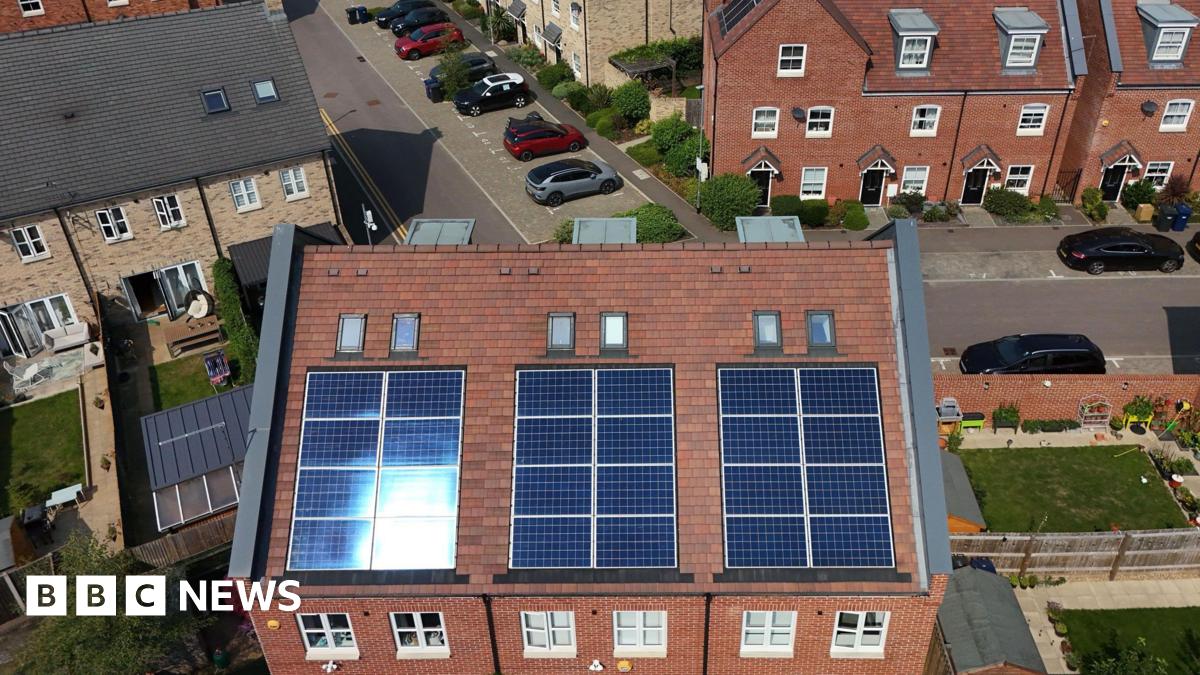
I know there are a few members who are knowledgeable in electrical matters. I’d welcome their thoughts on the reports that budget solar panels will shortly be available from Aldi and Amazon.

From what I have read (on Sky News) these are simply taken out if the box and plugged into a normal socket. Intuitively (but with very limited knowledge on the subject) pumping self generated electricity back into the mains circuitry of a house feels unwise?
 
I'm not an electrician. Though I am an electrical engineer of sorts.

Though it may sound dubious, I'm not sure that it differs a lot from what any domestic solar install already does, with the exception of how it is connected. Which does seem a bit counter-intuitive, having a power producing device with a plug with exposed pins on it. But in any case inverters shouldn't produce an output without a mains connection the sync to (to avoid electrifying circuits that are being worked on). So, so long as the rating of the plug and wiring aren't exceeded, I guess there is no issue.
 
So yes, having a plug with exposed energised pins is a terrible idea. But the existing domestic solar installs face the same problem, in that grid workers need to be able to turn off power to the street in order to repair underground mains, and having a house feed 240V back into the cables they're working on is just as dangerous.

The solution in both cases is a grid-tied inverter: it detects the presence of 'incoming' voltage from the grid, and both syncs its output to the same phase as the grid, and shuts off as soon as the grid power goes away. If you unplug it while it's running there'll be a few milliseconds between breaking contact with the socket and the inverter shutting down, but that will be less time than it takes to pull the pins out of the socket and expose them to touch.

The remaining issue is that some older types of RCD don't like being fed 'backwards'. Those types were installed with just one or two RCDs protecting the entire house, though, and it's unlikely that a single plug-in solar unit would be able to produce more power than all the RCD-protected circuits combined are using.
 
With all the issues sorted and the hidden ones discovered I think its a step forward.
In my case a fully fitted rooftop installation would require a new roof underneath it first,then some clumsy out of town contractors clambering all over it.
Then all the electrical installation.Then the tariff arguments with the energy provider.

Just plugging in a couple of these seems a quick alternative,once they get cheaper.
 
In reality, none of the above is remotely "green".

The nation is being conned by Milliband et al, and quite a lot of people (many of whom are Chinese), are getting rich at our expense.

I write as someone who has had solar panels here for around 27 years, quite successfully. But mine do not generate electricity.
 
I write as someone who has had solar panels here for around 27 years, quite successfully. But mine do not generate electricity.
Much better to heat water that can be stored rather than produce electricity which requires an invertor. Think of your garden hose in summer, laid out in the sun all day and then in the evening you want to water the garden and it comes out hot enough to burn.
 
If you could store the electricity ( or feed it into the national grid for reward) it wont lose as much energy like hot water will as it cools
We will need electricity to replace things like gas cookers in the future
Converting energy to a different form will incur loss.
 
In reality, none of the above is remotely "green".

The nation is being conned by Milliband et al, and quite a lot of people (many of whom are Chinese), are getting rich at our expense.

I write as someone who has had solar panels here for around 27 years, quite successfully. But mine do not generate electricity.
We are currently making a lot of people rich with the oil industry ( very rich at the moment!) I also have solar panels and so I’m aware they don’t last forever but then neither does a power station. I much prefer the idea of harnessing renewable energy and reducing the ability for a few to get very rich from us
 
I like the idea of solar energy but I'm having issues seeing the true cost effectiveness of such systems. Cost/life span/return for such systems - along with the type/size of battery storage. At my age (75) I wouldn't benefit from such an outlay. Even with the 'plug and play' panels...
 
We have solar PV panels and solar water panels. In my opinion, the water panels are virtually useless except in summer. The PV panels are obviously less use in winter, but they do still work. We bought the house with this setup. If starting from scratch I'd forego the hot water panels and have a diverter and immersion heater.
 
What size are these panels that Aldi are offering ? They would need to be quite big to be worthwhile, especially with the uk cloud cover…….Or is it just another Green narrative to make money from uninformed punters
 
What size are these panels that Aldi are offering ? They would need to be quite big to be worthwhile, especially with the uk cloud cover…….Or is it just another Green narrative to make money from uninformed punters

There is more detail here.


From wider reading it seems they are already in use and becoming popular in France and Germany so I’d wager there is something to them.

It still seems odd to me that, on the face of it, they can feed in via a random household socket. Perhaps as more detail on the regulations are released it will seem less so.
 
We have ring circuits, continental Europe has radials. That might have a bearing.

I could, however see that one might be handy for off-grid activities (cut the plug off, fit a trailing socket instead), since presumably you have panel and inverter combined, but it isn't going to help much with my washing machine, kettle or even the toaster. Charging a phone (slowly) perhaps, but woefully inefficiently.

Do they quote a power output at 240V, and if so under what conditions - Saharan sunlight or Scottish drizzle?
 
Last edited:
We have ring circuits, continental Europe has radials. That might have a bearing.

I could, however see that one might be handy for off-grid activities (cut the plug off, fit a trailing socket instead), since presumably you have panel and inverter combined, but it isn't going to help much with my washing machine, kettle or even the toaster. Charging a phone (slowly) perhaps, but woefully inefficiently.

Do they quote a power output at 240V, and if so under what conditions - Saharan sunlight or Scottish drizzle?
No use for off grid, as far as I understand things, as it's grid tied. Agreed that it won't help with your washing machine, but could conceivably cover your background fridge/router etc. for a few hours a day. Charging your phone slowly? I don't know what sort of phone you have..
 
I was curious about 'balcony solar' too. As to safety I read that the plug pins shut off being powered by the solar in less time than it takes to pull the plug all the way out. As a grid tied inverter it will not work without the mains supply to synchronise with. It adds 800W (but probably less) to the house and if you are using less than 800 the extra just goes back to the grid for no benefit to you.

What I don't know is if 800W is the limit. I also wonder what DC voltage it works from - could these approved units run from batteries and you charge the batteries from solar panels and a controller for an extended run time?
 
It still seems odd to me that, on the face of it, they can feed in via a random household socket. Perhaps as more detail on the regulations are released it will seem less so.
The electrical instalation was designed as a distribution system where you have an incoming supply that feeds various loads via protective devices, it was never designed to run in reverse where power is fed in downstream of protective devices and can feed loads where the installed protective devices are in effect bypassed.
 
The electrical instalation was designed as a distribution system where you have an incoming supply that feeds various loads via protective devices, it was never designed to run in reverse where power is fed in downstream of protective devices and can feed loads where the installed protective devices are in effect bypassed.
Are you saying that these panels won’t work in that case? Confused am I.

With reference to wattage, I read they were rated at 400 watts which …quote..’would provide a significant contribution to daily usage’. Really?
 
800W is the limit but I can see that being useful. My smart meter says I am currently using 570W with no heavy consuming appliances in use. So solar could offset that during daylight - then it's down to calculating if it's worth doing. The inverter is around £120 and panels can be had for around £80 each or buy a kit for £350. Payback is going to take a while...
 
Are you saying that these panels won’t work in that case? Confused am I.
They may well work but the power would be flowing into a socket then potentially out of another to feed a load so using part of the installation but downstream of the main board and any protective devices. The other issue is the means of earthing, the protection will only exist when it is plugged in and using the properties CPC. It all sounds like a bodge it and leggit synario that has not be fully thought threw.

With reference to wattage, I read they were rated at 400 watts which …quote..’would provide a significant contribution to daily usage’. Really?
Never under estimate someones ability to get themselves a Darwin award, if they are cheap enough then you can imagine someone buying a bunch of them and just plugging them all into extension leads and any available socket or even covering their roof with a DIY setup and cables hanging everywhere.
 
I presume the safety aspects have been thought through, and the device includes its own protection.

I imagine though that the creative DIY solar with multi-way extension cables and several panels is inevitably going to happen, probably with a less than perfect outcome. Possibly including structural fails as much as electrical !
 
400 w would cover devices left on standby and things being recharged
Not sure the device would pay for itself before it ultimately failed
We got shot of the tumbledrier because it ate electricity and switched to dehumidifier s but the latest eyewateringly expensive one has just failed two months out of warranty
 
We got shot of the tumbledrier because it ate electricity and switched to dehumidifier s but the latest eyewateringly expensive one has just failed two months out of warranty
You still have rights under various bits of consumer legislation - fitness for purpose, etc. I'd say it's worth trying a strongly worded letter if you still have the machine.

I had a small industrial dehumidifier, which I lent to someone in a crisis, but which was never returned, sadly. That was expensive to run, but did pull a lot of moisture out.

I bought a new tumble dryer recently, when ours failed (having only lasted for 41 or so years). It took ages to find a non-condensing one with an external vent connection (I don't want all the complex c**p).

I settled on Candy, but it has an infuriatingly stupid and unnecessarily complex control panel, which I am seriously thinking of replacing with a simplified, home-made alternative. Let's see, it has a heater and a reversing motor, and an on/off switch in the door frame, and it needs a timer...

The annoying thing is that the heater isn't as powerful as the older one (Bless the EU: how thoughtfully that saves the planet!), but I do have the older mechanical controller, which I had the sense to salvage at the last minute.

Who on earth let politicians have sharp objects, like fountain pens?
 
"You still have rights under various bits of consumer legislation - fitness for purpose, etc. I'd say it's worth trying a strongly worded letter if you still have the machine."

Tried that Eric with a karcher once before
That heap was only a few days out of warranty despite having been used only twice and meticulously cared for.
Screwfix referred me back to karcher who offered me a choice of either 20% off a new one - or the middle finger.
I bought a Nilfisk and put karcher on 'My List'....
 
The annoying thing is that the heater isn't as powerful as the older one (Bless the EU: how thoughtfully that saves the planet!),
That is the stupidity of it all, kettles and Hoovers are now restricted but it has not changed the laws of physic's. Half the power of your kettle and it takes twice as long to boil but it is worse than that because during that longer boil period you also lose more of the heat being put in. Hoovers are also not so good, a cleaning firm buys new hoovers but gets the motors changed for the older bigger motors because there cleaners can get a better job done in less time and we know money is time. Look at the time some washing machine cycles now take !
 
Tried that Eric with a karcher once before
That heap was only a few days out of warranty despite having been used only twice and meticulously cared for.
Screwfix referred me back to karcher who offered me a choice of either 20% off a new one - or the middle finger.
Sad to hear that, Although I think Nilfisk manufacture in the UK, which is always a good thing.

I'm on my second Kaarcher in about thirty years. The first was a top of the range yellow one that a local independent ironmonger couldn't shift, for which I had/still have loads of accessories, and the second one is a low end industrial one, both electric. I've now got decent adapters to use the old accessories with the newer machine, and I stuck with the brand because of being able to do that.

I think in both cases the service/support side was/is done by Kaarcher commercial, and helpfully they have a branch in Bristol. I did need some part for the older one (can't remember what but it involved a strip-down of the triple-piston thingy). I suspect Screwfix et al have a deal where they do their own 'support' (and get a discount from Kaarcher). The company itself has been pretty pleasant to deal with on the rare occasions...
 
Back
Top