• Hi all and welcome to TheWoodHaven2 brought into the 21st Century, kicking and screaming! We all have Alasdair to thank for the vast bulk of the heavy lifting to get us here, no more so than me because he's taken away a huge burden of responsibility from my shoulders and brought us to this new shiny home, with all your previous content (hopefully) still intact! Please peruse and feed back. There is still plenty to do, like changing the colour scheme, adding the banner graphic, tweaking the odd setting here and there so I have added a new thread in the 'Technical Issues, Bugs and Feature Requests' forum for you to add any issues you find, any missing settings or just anything you'd like to see added/removed from the feature set that Xenforo offers. We will get to everything over the coming weeks so please be patient, but add anything at all to the thread I mention above and we promise to get to them over the next few days/weeks/months. In the meantime, please enjoy!

Cutting small pieces & Gluing

Phil

Old Oak
Joined
Jul 23, 2014
Messages
4,201
Reaction score
431
Location
Southern Africa 0054
This is one for Gill, I think ...............
(Has Gill gone AWOL again?)

How do you cut very small pieces on the scroll saw? (without stuffing it up or damaging your fingers :evil: )

These are the glue on shoes for a gnome
Size 10mm long and 5mm wide out of 3mm MDF stock?

Gnome_Shoes.jpg

This picture shows where they will be attached to the legs.
 
Ive been known to use a pair of pointy sticks. Or gluing it to a bigger peice of its something delicate. All else fails I'll reach for the jewelers saw and do it by hand.
 
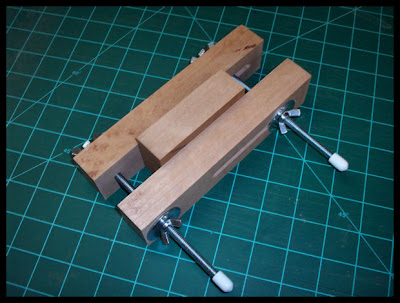
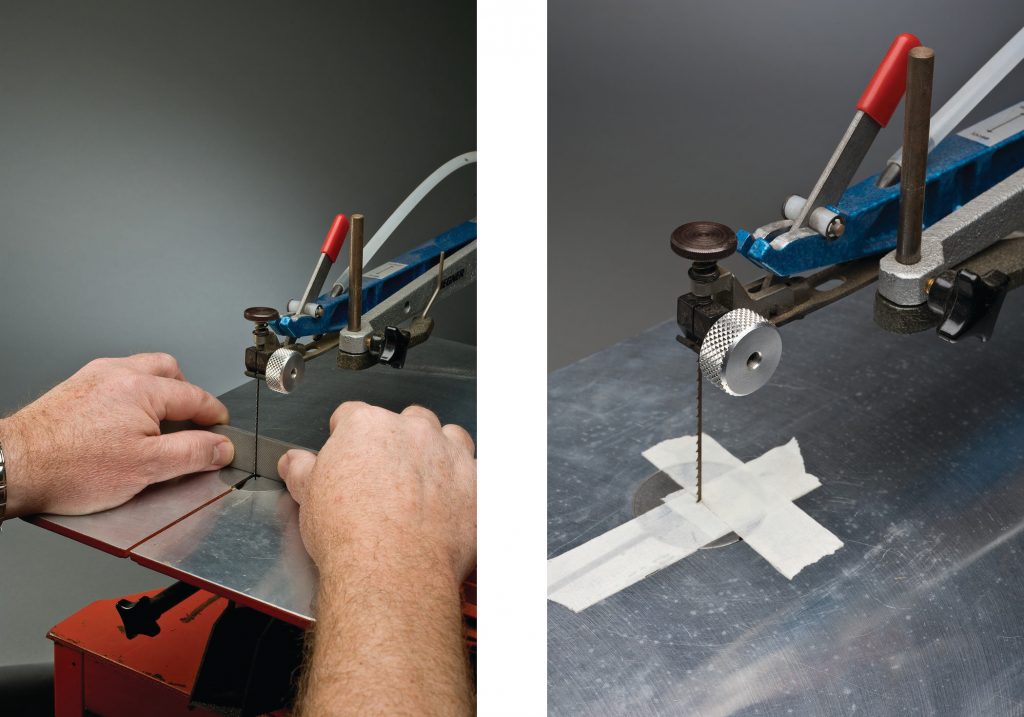
Small pieces require the support of a zero clearance insert around the blade. Making one of these out of wood can be a project in its own right! However, a quick and dirty solution is to present a small piece of card to the blade and tape it in place on the table. I’ve never found the holding of small pieces whilst cutting them to be a problem but perhaps I’ve just been lucky, lol. People who are more cautious than me could always hold their work in a home-made clamp, rather like the sort you’d use when compound cutting.

Sorry if my availability is haphazard - I have a piano exam in a fortnight and it’s taking all my spare time. When that’s over things won’t improve much because lockdown is easing and word seems to have spread around local sports teams about my enthusiasm for action photography. I’ll still try to monitor this board when I can though.
 
Do these links help?

In the first image it shows someone rounding over the back of the blade with a file to make sharp turns easier. However, I find the difference this makes is marginal and weakens the blade significantly.

1-1a-combo-1024x717.jpg


I could'nt get this video embedded!

https://youtu.be/UfoNaguzdVk

Mod Edit: hopefully fixed for you Gill
Bob

[youtubessl]UfoNaguzdVk[/youtubessl]


Here's an example of the sort of clamp I mentioned:

3djig.jpg


An alternative would be to hold the workpiece in a normal small clamp or even a clothes peg!
 
novocaine":2rau147f said:
Ive been known to use a pair of pointy sticks. Or gluing it to a bigger peice of its something delicate. All else fails I'll reach for the jewelers saw and do it by hand.

"Cut by Hand"! My good man, why do I have all this equipment?! :lol: :lol: :lol:

Gluing to a bigger piece was option 2 and it was a better effort.
 
Gill":31rjxq5n said:
Small pieces require the support of a zero clearance insert around the blade. Making one of these out of wood can be a project in its own right! However, a quick and dirty solution is to present a small piece of card to the blade and tape it in place on the table. I’ve never found the holding of small pieces whilst cutting them to be a problem but perhaps I’ve just been lucky, lol. People who are more cautious than me could always hold their work in a home-made clamp, rather like the sort you’d use when compound cutting.

Sorry if my availability is haphazard - I have a piano exam in a fortnight and it’s taking all my spare time. When that’s over things won’t improve much because lockdown is easing and word seems to have spread around local sports teams about my enthusiasm for action photography. I’ll still try to monitor this board when I can though.

Thanks for the reply.
Good luck with the exam!
And the photography. Hope they pay?

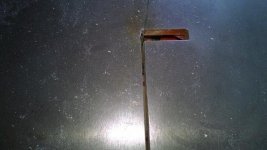
These machines were not built for zero clearance inserts.

See pics

Small Hegner

M1_Cut.jpg

Polycut

Polycut_Cut.jpg

Will revert to next option.
 
Gill":1ewtred4 said:
Do these links help?

In the first image it shows someone rounding over the back of the blade with a file to make sharp turns easier. However, I find the difference this makes is marginal and weakens the blade significantly.

1-1a-combo-1024x717.jpg


I could'nt get this video embedded!

https://youtu.be/UfoNaguzdVk

Mod Edit: hopefully fixed for you Gill
Bob

[youtubessl]UfoNaguzdVk[/youtubessl]


Here's an example of the sort of clamp I mentioned:

3djig.jpg


An alternative would be to hold the workpiece in a normal small clamp or even a clothes peg!


Thanks for the link and pics.

Next option ..........

I will give the card option a try. There are another 2 gnomes to cut.
 
fiveeyes":31czxc31 said:
When cutting, mostly routing on my table router, I use an old handscrew clamp. It works well.
I have seen some that a machinist would you use, that no bigger than your fingers.
YMMV


I will see what I have in the garage, no intention of spending more money on these machines. :shock:
 
What glue is used to get the pattern to stick to the wood and that is easy to remove afterwards?

I have always used Pritt Stick, but it is not that easy to remove the paper afterwards.

I have also tried Pritt liquid which is the same as PVA glue and also not that great when cleaning up the cut-out for painting.

When I have repetitive makings of the same pattern, I would cut out a template and just draw the pattern on. (see xmas trees, flowers etc.)
 
I've always used repositionable spray mounting adhesive when gluing directly to the wood. However, I have also covered workpieces with low tack masking tape first, then glued the pattern directly over the tape with permanent glue. This is great if you don’t have repositionable adhesive spray and it has the added bonus that the masking tape lubricates the blade as you cut.

I wonder what sort of replies you'd get to these questions over at the 'other place'. :twisted:
 
All my recent template cutting on the router table had one side of the work that wouldn't be seen so I could screw the template on. Previously when I've had to stick the template on I've use double sided carpet tape and it was a pain to get off afterwards.

I saw something on youtube a while back that sounds like what Gill said above - stick masking tape to the job and to the template as well then superglue the taped surfaces together. Instant double sided tape that should peel OK when you need it to. Not actually tried it myself yet.

Might work with your small pieces on some scrap board you can hold safely.
 
I've never really seen much point in making templates for the scroll saw. Eventually you’re bound to cut into them. Perhaps a stencil for rapidly transferring patterns might be more practical.
 
The masking tape and super glue trick works really well, I have used it for template routing.
If you look at the videos I posted for the bass you will see me doing it a number of times.
 
Gill":2h9udyia said:
I've never really seen much point in making templates for the scroll saw. Eventually you’re bound to cut into them. Perhaps a stencil for rapidly transferring patterns might be more practical.

Agreed. It was more about a method of holding a small piece onto a larger piece so that is easy to handle and also removable...and on that we also agree :)
 
Robert":30wdkxrb said:
Gill":30wdkxrb said:
I've never really seen much point in making templates for the scroll saw. Eventually you’re bound to cut into them. Perhaps a stencil for rapidly transferring patterns might be more practical.

Agreed. It was more about a method of holding a small piece onto a larger piece so that is easy to handle and also removable...and on that we also agree :)


I only use the template to draw the pattern onto whatever medium I am going to use (pine, MDF, hardboard).
I will also only make a template for stuff that will be repetitive.

Once off or 'complicated' patterns I will then glue it onto the medium.

Then it is a hassle to get off once cut, have to wet the paper and using a Stanley blade scrape it all off. Then get the glue residue off before painting.

Here are some repetitive cuttings

viewtopic.php?f=25&t=4993

viewtopic.php?f=25&t=4352


.
 
See the advice off Sue Mey website

https://scrollsawartist.com/safety-first/

"When cutting very small pieces of wood, use a cardboard backing to help you control the wood and ensure that your fingers are away from the blade."


From 'experience' the blade will not cut off a limb, BUT it can cut through the skin with a bloody mess to be cleaned up :o :oops:
 
Back
Top