Steam bending was done on Friday to replenish Steve’s stock.
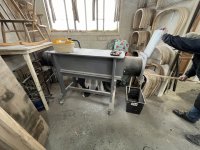
The steaming box can be made from different materials and Steve used to use ply. This one is made from a thick plastic pipe which slopes forward slightly. The wood being steamed is suspended on stainless steel bars inside the pipe. The pipe wall is about 12mm thick – I think it’s some sort of heavy duty drainage pipe … Steve found it on his doorstep after a discussion in the pub one night about needing to build a new steamer and is still trying to find out who to thank!
The steam is generated by the wallpaper stripper which is kept topped up using the kettle. The white pipe at the front is the drain.
Steve is loading up here and the pieces stay in for two hours before being bent.

On the wall are the various formers that Steve uses for the chairs he builds.
A former is already bolted to the bench and the steel strap is in place ready to make a bend.
The piece being steamed is inserted with the end against the left handle and any gap between it and the right handle filled with one of the spacers on the rhs of the table.
The wedges at the top are knocked in very tight, left handle pulled in, right handle pulled in and a bar clamp applied to hold them in place.
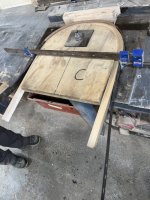
The handles are removed and the clamped-up pieces are then left for 48hrs.

The wood can be bent in any direction – this was an example Steve showed us which is used by walking stick makers …
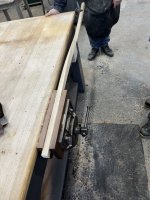
Sorry, there are no more pictures but it takes two hands to do steam bending!
That’s the end other than for me to say what a great week it was.
This course is run by Steve who has been making and restoring Windsor chairs for over forty years. It’s all hands-on coaching from a craftsman using tools to get the job done the traditional way. Steve also spends a couple of weeks teaching at The Chippendale School each year. When you feel stupid (as you’ve measured your seat arm from the wrong side of the block etc) he just tells you it’s only a piece of wood and helps you get back on track. He’s a top bloke - those that go to the Harrogate show will probably have met him ...

The other chap on the course with me had attended one previously with another “maker” down in Sussex. The course he did is about £400 dearer to make a chair with a seat made from edge jointed Poplar. Class sizes were 8-10 (it’s no more than 2 with Steve) and while there was a turning demonstration the only use of the lathe by attendees was for sanding. If anyone is considering a course, I’d suggest asking a few questions before deciding which one is right for you.


