• Hi all and welcome to TheWoodHaven2 brought into the 21st Century, kicking and screaming! We all have Alasdair to thank for the vast bulk of the heavy lifting to get us here, no more so than me because he's taken away a huge burden of responsibility from my shoulders and brought us to this new shiny home, with all your previous content (hopefully) still intact! Please peruse and feed back. There is still plenty to do, like changing the colour scheme, adding the banner graphic, tweaking the odd setting here and there so I have added a new thread in the 'Technical Issues, Bugs and Feature Requests' forum for you to add any issues you find, any missing settings or just anything you'd like to see added/removed from the feature set that Xenforo offers. We will get to everything over the coming weeks so please be patient, but add anything at all to the thread I mention above and we promise to get to them over the next few days/weeks/months. In the meantime, please enjoy!

Sliding Sash Pricing Help!

meccarroll

Nordic Pine
Joined
May 12, 2016
Messages
815
Reaction score
180
Hi all, this is a possible job for a friend of mine who's son is in the process of purchasing/moving house and wants to upgrade some single glazed sliding sash windows to double glazed (Sashes Only).

I have been asked if I could make the new sashes. It's a supply only job for new sash frames with draft seals.

My friend will fit them, supply glass and weights etc.

It's been about three years since I last made a sash (and that was on a repair job) so does anyone have any idea how long these should take with reasonable trade equipment and what would be a fair price to charge?

I have spindle moulders, tenoners, mortice machine etc and all the blocks needed to. I am not great at pricing so any help would be appreciated.

Mark

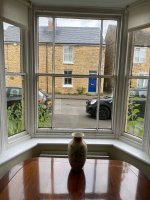
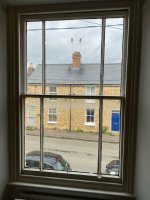
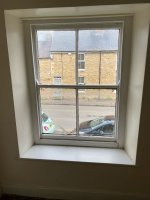
Pics of windows in question:
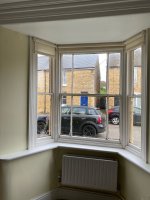


Bay1.jpeg
Bay2.jpeg
Slider 1.jpeg
Slider2.jpeg
 
no idea to be honest, but I do know it should not be cheap, never under value yourself, that's my advice.
 
It largely depends on how you construct them as you have two completely different styles of sash there with one being more time consuming to produce than the other, but I would say about £100 per sash in Accoya, unpainted and unglazed.
 
Presumably if you know the sizes you can price the components:


The type of frame you show is really just a 4 sided box with M+T joints, possibly with a sash glazing bar down the middle? You will pay a premium for buying ready made, but if you took nominal dimensioned timber and milled it yourself would your time be cheaper or more expensive? This might at least give you a ball park figure for making a sash from components, and allow you to compare to making profiles from scratch?
 
Looks like a lambs tongue moulding. I have some suitable cutters you are welcome to borrow, Mark. Lovely narrow profiles as well. Right up my street. I'd charge £1000-1500 a window.

How are you/he going to fit a double-glazed unit in the same thickness sash frame ? How is he going to fit the dgu's ? From the inside or the outside ? dgu's....Georgian bars in the glazing ? Is there going to be enough room for the weights ? Is there a parting slip ? Will it's length catch on the longer sash weights? DAMHIKT.
 
I'd charge £1000-1500 a window.

That’s the way to make money!

I was going off roughly about £25 per sash for material, £75 for labour, so £400 material and £1200 labour.

It’s realistically 4-5 easy-going days of work to produce 16 sashes to suit slimlite glazing, so say it’s 40 hours maximum, works out at £30 a hour.

I’m in the middle of a similar job, 5 boxes with slimlite sashes with glazing bars, boxes done in a two days, sashes done in three days, fitting up should be another day and then it’s another couple of days for paint and finishing.
 
While it would be nice to earn more, you can’t charge any more than what’s fair in this game unfortunately, there’s always someone willing to undercut you and no matter how you dress your business up nine times out of ten a customer will go for the cheapest option rather than choosing for quality of work. From what I’ve heard a lot of joiners in England are struggling to compete with people importing joinery from factories out in Eastern Europe. That’s not currently a problem here but there is a large firm who employs over 20 people that is undercutting on work around here significantly, I believe their current modus operandi is it’s cheaper to lose a few hundred pounds a week and have the work in rather than losing thousands a week in wages and having no work.

One silver lining is it appears what they’re producing is in softwood to quite a low standard, so there may be a boon in a few years time when it all falls apart in the Pembrokeshire weather. This is what it looked like in Welsh Paradise this morning up until lunch time: IMG_3693.jpeg
 
Fortunately I only ever worked on Listed Buildings as far as windows etc were concerned and 'educated' my clients.
 
It largely depends on how you construct them as you have two completely different styles of sash there with one being more time consuming to produce than the other, but I would say about £100 per sash in Accoya, unpainted and unglazed.
Thank you Trevanion, I did see two versions of sash also but would think the ones without horns would be more cost effective and productive.

I have made quite a few single glazed box sash windows in the past but because of my confined space (which slows me down) I can't really be as productive I should so have to adjust my rate to what is fair hence the ask on pricing.

Not exactly sure which is the best plan for selecting the double glazing relating to making the sashes but I would not be putting horns on the sashes. Jointing would be open finger jointing (Multiple overlapping joints). It's faster than if adding horns.

Ironically I did also think around the £100-£120 mark per sash so you have confirmed what I was thinkng so I may try that and see what happens.
 
I think it would be a pity not to put horns on as they are more in keeping with the look and feel of the externals going by the house on the other side of the road.
 
Looks like a lambs tongue moulding. I have some suitable cutters you are welcome to borrow, Mark. Lovely narrow profiles as well. Right up my street. I'd charge £1000-1500 a window.

How are you/he going to fit a double-glazed unit in the same thickness sash frame ? How is he going to fit the dgu's ? From the inside or the outside ? dgu's....Georgian bars in the glazing ? Is there going to be enough room for the weights ? Is there a parting slip ? Will it's length catch on the longer sash weights? DAMHIKT.
Thank you for the very kind offer Roger, I think I may have suitable cutters already but will check.

Original Sliding sash windows all have parting beads so the method is likely widen the sahes and rebate over the staff bead/outter box to accomodate the extra width of the sash.

Glazing from outside with beads.

I did ask in a previous post about such things and it is possible to use heavier weights of a different section size and material.

The person who has asked about this is a good friend so I will fully explore all options before moving foward, hence the ask for help.
 
I think it would be a pity not to put horns on as they are more in keeping with the look and feel of the externals going by the house on the other side of the road.
I know where you are coming from Roger, all the sliding sashes I have made in the past have had horns on but they do take longer to make and cost more. It's a point worth raising when I submit a price, so I will.
 
Not exactly sure which is the best plan for selecting the double glazing relating to making the sashes but I would not be putting horns on the sashes. Jointing would be open finger jointing (Multiple overlapping joints). It's faster than if adding horns.

I personally find horns faster than dovetail jointing, but that's due to doing the horn profiles on the spindle moulder in a jig four at once rather than cutting them out on the bandsaw and sanding each one individually which is very time-consuming.

If you go with 12mm slimlite glazing you will only need a traditional 8mm rebate, however anything larger you will need a 15mm rebate minimum and you may run into an issue if you're removing part of the tenon as you rebate as you will be doing the same on the meeting rails which may make them weak unless you make them larger than traditional to make the tenon stronger.
 
If the house is in a conservation area then the first move should be to check if DG is allowed.
Hi Mike I did ask that tonight and the return answer was it is not in a Conservation area.

If you look at the second picture supplied in the thread you will see a house over the road with a top hung sash in one of the the bedroom windows. Also the rear of this property (proposing the double glazing upgrade) also has replacement UPVC windows installed. I have been informed the new purchaser just wants to keep in line with the general apperiance of the road.
 
I personally find horns faster than dovetail jointing, but that's due to doing the horn profiles on the spindle moulder in a jig four at once rather than cutting them out on the bandsaw and sanding each one individually which is very time-consuming.
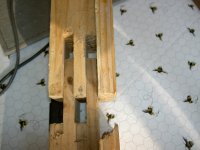
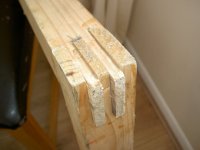
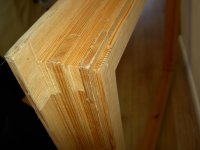
I am thinking about making the meeting rails larger and using finger joints:
PICT3468.JPG
The first two photos are of a frame I made up and keep so I can use it for setting up my slot tenon cutters on my spindle moulder, it saves me having to try to set everthing up from scratch.
PICT3469.JPG
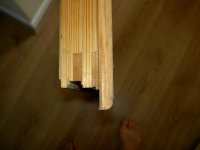
I use this joint on double glazed sashes mainly because of the weight of the glass puts a lot of load on a single mortice and tenon joint and a lot of the sash is machined away when producing a storm proof section.

PICT3470.JPG
PICT3471.JPG

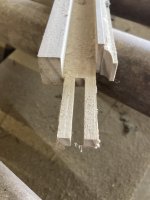
When you look at the end section of a storm proof sash which is going to be double glazed there is not much room there for a normal tenon.

If I use a finger joint I can use it on all of the joints so just need to set up my spindle moulder but if I do traditional mortice and tenon joints I will need to use my tenon machine and mortice machine. Now which way do I go?
 
I am thinking about making the meeting rails larger and using finger joints:

I use the same method for 24mm double glazed sashes but I do a twin mortice and tenon below a horn for the meeting rails as the tenons are only 8mm x 10mm by the time you take the rebate out of the 28mm section which means they are quite fragile. I wouldn't have thought they would have much holding power without being locked into a mortice, if beefed up a bit and I did a twin dovetail that would likely work without needing horns.
 
I use the same method for 24mm double glazed sashes but I do a twin mortice and tenon below a horn for the meeting rails as the tenons are only 8mm x 10mm by the time you take the rebate out of the 28mm section which means they are quite fragile. I wouldn't have thought they would have much holding power without being locked into a mortice, if beefed up a bit and I did a twin dovetail that would likely work without needing horns.
I have only made single glazed sliding sashes before using horns so not had to think about working around a thin meeting rail and double glazing.

28mm meeting rail is super thin! 1 1/8", I would not go that thin myself but if you are matching up against what is already there then I suppose you have no choice.

Original sliding sashes sections were for a sinle sheet of glass and it apears to be quite difficult to use or try to keep to the same section sizes for double glazing.

The finger joint I use is incredabully strong if made properly, it has more material at the corner joint than a single mortice and tenon and the glue locks the wood together so super strong. You have made some good points though which are worth considering as a alternative.

You are a lot more experience than me in joinery especially in the area of double glazed sliding sashes, I'm learning but you have the T Shirt. I have not got the job yet but I will mull over everthing you have mentiond. Thank you much appreciated.
 
If you tenon those vertical dividers into the meeting rail then that will strengthen the sash and help maintain the elegance of a 28mm meeting rail!
 
I’ve also produced triple glazed sliding sash windows including Venetian sashes before, not something I would be quick to do again as each Venetian weighed 1/4 of a tonne once fitted up.

This is my meeting rail section, it is thin but it matches most windows you would encounter around here:

IMG_3696.jpeg


If you tenon those vertical dividers into the meeting rail then that will strengthen the sash and help maintain the elegance of a 28mm meeting rail!

Yes, you can mortice into the top meeting rail but it’s difficult to get a strong hold on the scribe on the top rail, I scribe the duplex glazing bars and then run a 13mm stainless steel screw from the back through the moulding into the bar.
 
This is my meeting rail section, it is thin but it matches most windows you would encounter around here:

View attachment 27694

Wow that look frigile I can see why you choose two mini tenons with a horn. Once you machine the groove for the cords there can not be much left but obviously still works.

I assume you use a double glazing silicone in that groove etc?
 
Yes, Hodgsons Silfix U9.
Thank you for confirming the double glazing silicone.

I did submit a price on your advice and so far it looks promising.

I will contact a local glass company about possible glazing options based on the advice received.

A lot of very useful input from everyone on this thread for which I am very grateful. Thank you all.
 
I've got the matching pairs -scribe etc
You are a gem Roger! I think I may already have mould and scribe cutters (I do have them in standard Ovalo sections) but have not yet checked as to lambs tongue as I am still still in the process of drawing my daughters kitchen in CAD and want to get the basic design finished this week if possible.
 
Back
Top