• Hi all and welcome to TheWoodHaven2 brought into the 21st Century, kicking and screaming! We all have Alasdair to thank for the vast bulk of the heavy lifting to get us here, no more so than me because he's taken away a huge burden of responsibility from my shoulders and brought us to this new shiny home, with all your previous content (hopefully) still intact! Please peruse and feed back. There is still plenty to do, like changing the colour scheme, adding the banner graphic, tweaking the odd setting here and there so I have added a new thread in the 'Technical Issues, Bugs and Feature Requests' forum for you to add any issues you find, any missing settings or just anything you'd like to see added/removed from the feature set that Xenforo offers. We will get to everything over the coming weeks so please be patient, but add anything at all to the thread I mention above and we promise to get to them over the next few days/weeks/months. In the meantime, please enjoy!

Essential kitchen tools - 2024

RogerS

Moderator
Staff member
Joined
Jul 21, 2014
Messages
15,491
Reaction score
1,223
Location
Somerset
1) Pair of snub-nosed pliers to grip the wee bit of metal foil to unseal an HP Sauce bottle. Works equally as well with the tin foil seal on M&S honey

2) Pair of electricians side-snips to cut those wretched bottle caps loose of their gaoler

Any others ?
 
Last edited:
1) Pair of snub-nosed pliers to grip the wee bit of metal foil to unseal an HP Sauce bottle. Works equally as well with the tin foil seal on M&S honey

2) Pair of electricians side-snips to cut those wretched bottle caps loose of their gaoler

1) 2 stabs with a knife to form a cross, no need to remove the whole seal.
2) Never felt the need to remove them. Unscrew and pour from the side away from the attachment.


Only just discovered how useful a strap wrench can be. Had to buy one to dismantle a tap a week or so back.
 
A dishwasher, or a wife. Mine would say a chef. :)

Those captive bottle tops are the devil's work or rather an EU directive to help us oldies who can't bend over to pick up the caps if we drop them. ;)
 
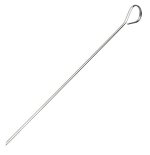
UniversalTool.jpg

The Universal Tool as we call it. Gets used for all sorts of jobs, mostly prodding and poking unsurprisingly, other than its intended use.
 
1) Pair of snub-nosed pliers to grip the wee bit of metal foil to unseal an HP Sauce bottle. Works equally as well with the tin foil seal on M&S honey

2) Pair of electricians side-snips to cut those wretched bottle caps loose of their gaoler

Any others ?
I'm struggling to recognise this "wretched bottle caps loose of their gaoler" can you mention an offending product Roger ?
 
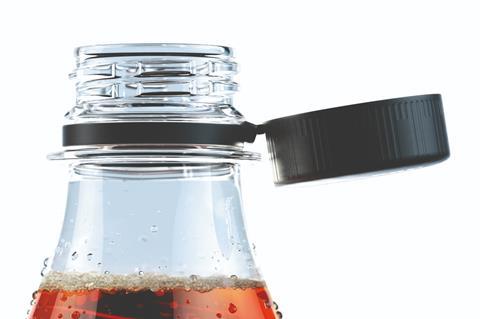
I assume he's referring to these:

264966_ccepattachedcapsportrait_517234_crop.jpg


It's a relatively recent regulation that plastic bottle caps be attached to the bottles, AIUI to prevent them from getting loose and choking wildlife to death.
 
Yes, technically it only applies in the EU, but why would the manufacturers bother running a separate production line just for the UK when the new EU ones are also legal here?

Things like milk bottles have very different designs here so there's no commercial benefit to adapting them (yet), and similarly anything else that has a bottle shape that's only sold here.
 
Thanks for the wildlife bit I was wondering why it was necessary, The problem with some of them though is the tiny connectors that act as a tamper detector, they can dig into your lips when drinking from the bottle, most aggravating.
Ian
 
Thanks for the wildlife bit I was wondering why it was necessary,
I'd heard it was from a recycling perspectvie...but can see the relevance to wildlife.
The problem with some of them though is the tiny connectors that act as a tamper detector, they can dig into your lips when drinking from the bottle, most aggravating.
Ian
Precisely so, Ian. That's why you need side-cutters!
 
I wondered why they had suddenly started making bottle tops impossible to remove! Very occasionally I have a McMuffin :whistle:with a small bottle of insanely expensive tropicana orange juice and it has the annoying captive caps.
 
While in Greece recently on a beach not cleaned for the tourists, there is an enormous amount of bits of plastic amongst the sand if you take the time to look closely. Of the identifiable bits, there are a lot of plastic bottle caps. For recycling purposes, the cap will get lost and end up not getting recycled unless it is attached to the bottle (anything in domestic kerbside recycling smaller than about a tennis ball probably will fall through the machinery). So please, either find a way to live with the captive cap, or at least be sure to put it back on the bottle before putting it in the recycling.
 
Thanks for the wildlife bit I was wondering why it was necessary, The problem with some of them though is the tiny connectors that act as a tamper detector, they can dig into your lips when drinking from the bottle, most aggravating.
Ian
Drinking from the bottle Ian?

Surely Carruthers has some cut glass goblets handy for such an eventuality?
 
Tip for the day. When you open the cap, open it until you feel some resistance then apply a bit more pressure…et voila, it locks open and out of the way. Still a bugger to drink from.
 
Check you have the latest advice for where you are. The trend now is caps left on (including screw caps on wine bottles), and not to crush cans / plastic bottles. Probably changes over time with technology for sorting.
 
I t
Check you have the latest advice for where you are. The trend now is caps left on (including screw caps on wine bottles), and not to crush cans / plastic bottles. Probably changes over time with technology for sorting.
Interesting. I just check the advice in my area, it says to squash plastic bottles and leave the lids on. I routinely squash(or we'd need a bigger bin) but have been leaving the lids off.
It doesn't mention whether or not to squash cans, but I tend to, once again for space reasons.
 
There really should be a national standard for recycling, land fill and incinerator (power generation) waste, rather than every local authority doing it's own thing. It's been interesting where we live as the local authority went multi bin and then pared back on it as the effect was people found it annoying and put more in the general refuse bins. Their spend on fly tipping has also gone up a lot since they introduced the booking system at the tip apparently.

We've found we produce a lot less waste these days so I suspect government policies have educated us all. All food waste goes in the hot composter, all garden waste is either burnt (weeds or leaves - cardboard waste used to get the bonfire going) or composted (especially leaves which we vacuum up and shred). I know some people think bonfires should be banned. Along with log burners. We don't :whistle: We tend to use catering size for all consumables in tins etc and if at all possible don't buy anything in plastic bottles except for 5l detergent, surfactant etc and milk. Hence although general refuse is collected fortnightly, the bin is never more than a quarter full. Plastic, tins and glass can be mixed in a brown bin where we live and even with sales from our catering business it is unusual for us to more than half fill that wheelie bin. Paper (we don't get much post as the world is online) is shredded and used in the smoker for the bees along with grass.

Interesting how the world has changed.
 
The fixed caps have been here since early this year, and will eventually extend to the glass bottles. For now, they are on the smaller plastic bottles and paper juice containers. So far, I find them easy to twist off and remove without leaving anything pointy to interfere with drinking from the bottle (when Caruthers is not available).

Recycling the plastic bottles and cans can be easy during one of the frequent trips to the store. All of the stores that sell drinks in returnable or recycleable containers have automated machines to accept the items and generate a refund receipt. Multiple-use bottles are automatically stacked for retrieval by the bottling companies. One-way bottles and cans are scanned for the recycling code and immediately shredded by the same machine. The scanning process spins the bottle or can, so they cannot be crushed or flattened.
 
Different countries approach to this is interesting.
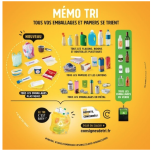
All plastics (inc crisp wrappers and all food containers), card, paper, tins etc go in one bag or bin collected every week. Only glass we have to take to nearest drop off. This is the norm across the whole of France I believe.
Screen Shot 2024-08-20 at 14.20.01.png
When we visit various regions in the UK I am aghast how much plastic or carton stuff is either "check locally", or "take to larger stores", or "not recyclable ".
Our household waste is also collected weekly.
 
I agree that there should be a national system.
Here, we have garden waste, for which we pay extra, I don’t have one as most stuff gets composted or I (with permission) put it in my neighbour’s 😀
Then alternate weeks we have landfill (ours is rarely more than a third full) and recycle, which is always full.
So it’s pretty straightforward.
At Easter we had a holiday in Suffolk, the thing was so complicated, we just chucked everything in the landfill bin!!
Apparently they wouldn’t take glass, so I put all of the empties in the glass bin at the pub over the road as recommended by a local.
 
That French setup is pretty close to what we have here in Cambridge - all plastic food packaging, including stuff which is labelled as not recyclable, goes in the blue wheelie bin for recycling. The main difference is that we can put glass in there as well. They've put a lot of effort into telling people that they can in fact recycle things which tell you not to.

Head over to my mother's place in Suffolk, though, and the rules are completely different. Metal, paper/cardboard and hard plastics only in the recycling bin, glass to be taken to a bottle bank, soft plastics go to landfill, and nothing smaller than a cricket ball is allowed in the recycling bin. They're advised to store up things like foil until there's enough to scrunch together into a ball larger than that size. It probably wasn't designed to discourage people from recycling, but if you did want to do that then the result would look a lot like what they've produced.
 
We have four recycling wheelie bins for each house with different collection cycles. The brown bin is for bio (garden and kitchen waste) and is collected weekly. The yellow bin is for the items shown in Andy's post above, and is collected every two or three weeks, normally on the same day as the brown bin. The blue bin is for all paper products and is collected every three to four weeks. The black bin is for everything else and is collected every three to four weeks.

Glass bottles are taken to any of the many glass collection bin stations. The stations have bins for green, brown, and white glass. Because of the noise associated with glass bottles and jars being dropped into the bins, we cannot dispose of glass on Sunday, federal holidays, or during any of the mandatory quiet times during the day.

There are two places to dispose of bulk garden waste, normally at no cost.
 
Here in my town in Oregon we have four bins for home collection: one for paper, cans/tins and some plastic bottles but not other plastics. One bin for garden waste (anything compostable including kitchen scraps). One bin for everything else that can go to a landfill.These three are collected weekly. One other bin for glass bottles is collected monthly. Once or twice a year there is also a recycling day for toxics like paints and solvents. There is also a recycling center where one can take motor oil, computers/electronics, and large metal stuff (like a bed frame). Once a year they also will accept toxics like paints and pesticides. Residents of the county can also take large things directly to the landfill and pay an extra fee per load. Currently $36 for as much as one can load into a pickup truck.
 
We have always been ‘recyclers’ and when we moved were surprised by the lack of it in the estate.

A glass bin and paper bin were introduced. Surprising how fast the glass bin filled up, these old people can sure drink!

Kitchen waste goes into a black bag into the wheely bin, emptied on a Friday. Every second week the bins are cleaned and sanitised.

The garden waste is not an issue. The garden services are responsible for the common property gardens, owners for their own gardens. However, the garden people will remove the waste, just dump it on the pavement.
(Yesterday we trimmed the dead branches of the trees and shrubs and filled up their truck.)

Moving on a couple of years, a proposal was submitted by an owner to use a recycling company.

They supply a clear heavy duty plastic bag. These are collected each Wednesday, and they then leave a new bag.

Into the bag goes tins, glass bottles, plastic containers, paper, cardboard. Shredded paper goes in a separate plastic bag and then into the big bag. They have a sorting facility.

They also supplied 10 wheely bins which are used at the offices, kitchen and frail care facility, and the cost per month for this service is about GBP61.00 split into currently 300 units and growing (gets added into the levies).
 
About five miles away, is a power from waste plant, apparently fuelled by stuff put in the recycle that either can’t be recycled or is contaminated.
There seems to be quite a few of these dotted around the country.

Has anyone else noticed that almost on a weekly basis that a recycling company somewhere in the U.K. has a major fire that burns for days on end causing major pollution.
 
In Northumberland and elsewhere a company called Suez generate electricity from what would normally end up in landfill.

SUEZ Cornwall generates 20MW, for example
 
I read an article by a well qualified scientist some while back who maintained that all plastic recyclable or not should go straight to incineration for electricity production. The recycling processes consume so much energy and labour and so much of the plastic is wasted for one reason or another it makes more sense just to use it.
 
There’s plenty of information out there to refute that.
 
There is a trade off from that in the amount of hazardous pollutants allegedly produced by those incinerators. I don't know what the stats are and it's not a simple equation but you get nowt for nowt.
What published figures I've seen from the facility seem to have a pretty good control of any emitted pollutants and it would appear that there is a considerable amount of useful material in the recoverable solid matter


I personally can't envision a better or more cost effective way of handling garbage.
 
Locally there is a "Resource Recovery Park". They are building a hydrogen generation facility to take recyclable plastics as the raw material. This is in addition to a hydrogen generation plant, which in time will work its way through the various colours of hydrogen, being built. These hydrogen generators will send their hydrogen to factories in the region via a network of pipelines.

There is also a power from waste plant being built and I attend meetings of local councils and the builders/owners/operators. The measures they take to ensure there are no nasties in the waste are very impressive and a million miles form the old incinerators. About 1/3 of the plant is dedicated to removing any nasties from the exhaust gases. A lot of the outputs such as bottom ash are also recycled. The site is also part of the CO2 capture program which will take CO2 from local factories and dump it in the old gas fields in Liverpool Bay so the CO2 produced will be captured in time.

I am not dyed in the wool green but I must admit that the steps being taken locally are impressive. Whether they are economically viable without subsidies is another question. My only gripe is the use of mains gas for the hydrogen generation facility and "green" energy.

Local fly tippers are in a different league:

IMG_20220109_104553.jpg


The one on top was full of rubbish as well. The road was closed for a couple of days until it was removed. No one noticed it being towed to where it was left.
 
Back
Top