• Hi all and welcome to TheWoodHaven2 brought into the 21st Century, kicking and screaming! We all have Alasdair to thank for the vast bulk of the heavy lifting to get us here, no more so than me because he's taken away a huge burden of responsibility from my shoulders and brought us to this new shiny home, with all your previous content (hopefully) still intact! Please peruse and feed back. There is still plenty to do, like changing the colour scheme, adding the banner graphic, tweaking the odd setting here and there so I have added a new thread in the 'Technical Issues, Bugs and Feature Requests' forum for you to add any issues you find, any missing settings or just anything you'd like to see added/removed from the feature set that Xenforo offers. We will get to everything over the coming weeks so please be patient, but add anything at all to the thread I mention above and we promise to get to them over the next few days/weeks/months. In the meantime, please enjoy!

A few upgrades to a bench grinder

Dr.Al

Old Oak
Joined
Dec 31, 2020
Messages
3,558
Reaction score
2,236
Location
Dursley, Gloucestershire
Name
Al
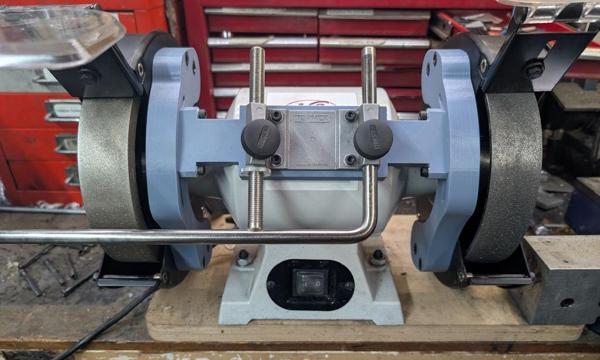
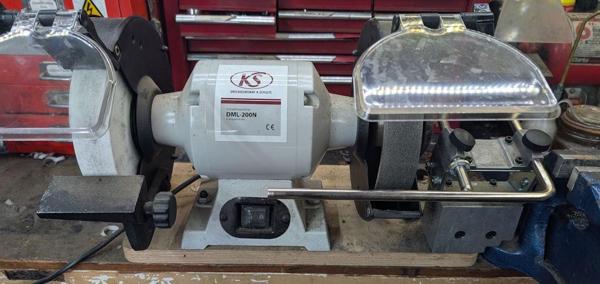
I've decided to make a few upgrades to one of my bench grinders. This is a "before" photo of the grinder:
2025-10-13-01-bench-grinder-before_600.jpg


It's a fantastic machine, a 200 mm diameter medium speed (1450 rpm) grinder that came with an 80 grit CBN wheel (on the right) and a 180 grit aluminium oxide grinding wheel on the left. The provided tool rests (one of which you can see on the left) are much better quality than on any of my other grinders, but I replaced the right one with a Tormek BGM (Bench Grinder Mount) as it's nice to be able to use the Tormek jigs with the bench grinder.

Since doing that, I rarely use the actual Tormek except for turning tools (for hand tools I follow the course CBN grind with bench stones). Given that both Richard Raffan and Keith Rowley consider a 180 grit wheel plenty good enough for turning tools, my plan is to use the left-hand wheel for turning tools at which point the Tormek will be used even less often.

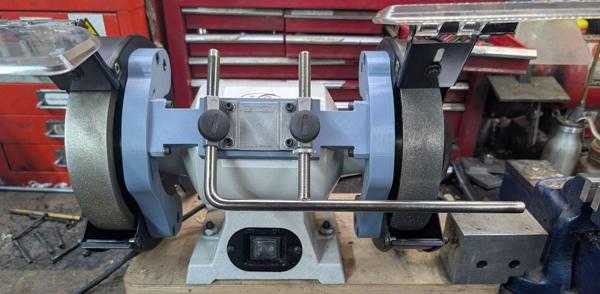
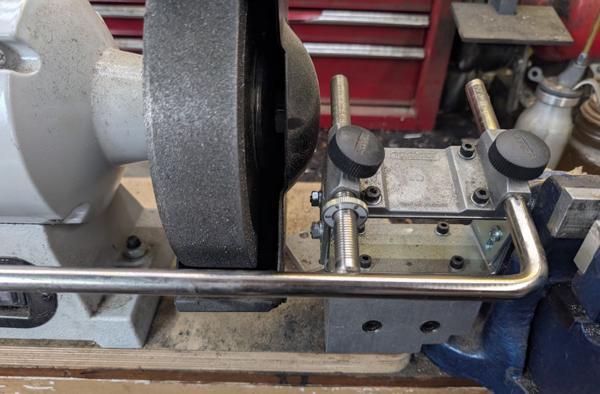
The bench grinder is bolted to a bit of thick plywood , which in turn is held down to the bench with some big thumbscrews. That means I can move the grinder to another area of the workshop if I need to, although I rarely do so. The location it is currently in is a bit of tight squeeze. It's as far over to the left as it can be while still allowing the drawers of the red Bisley unit to open. The BGM mount on the right-hand side had to have a bit milled out of a block of aluminium to go over the top of the bench vice mount:
2025-10-13-02-bench-grinder-before-showing-vice-avoidance_600.jpg


It also gets in the way of the bench vice a bit, so I often have to remove the Tormek bar in order to work on stuff in the vice.

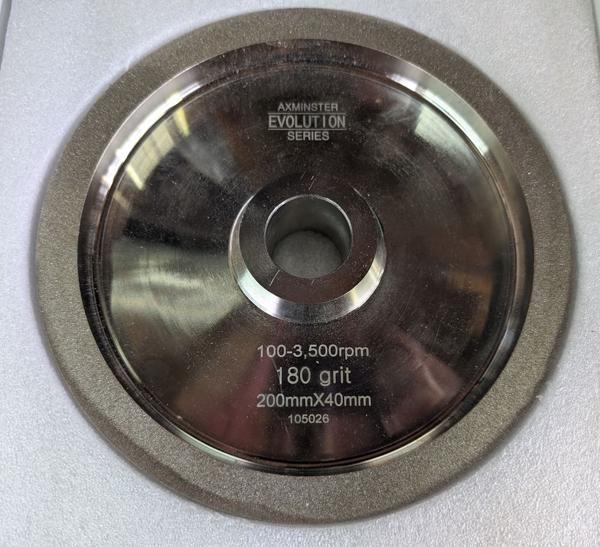
The thing that spurred me on to give this already fantastic machine a bit of an upgrade was being offered a relatively cheap (but still quite pricey) deal on this 180 grit CBN wheel:
2025-10-13-03-new-cbn-wheel_600.jpg


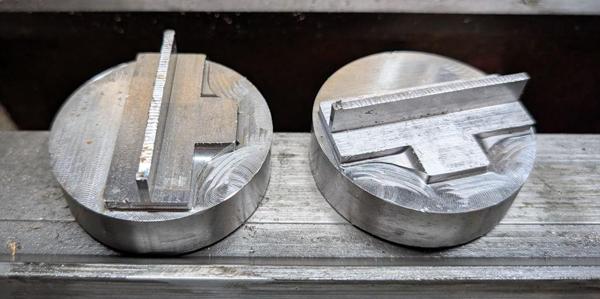
It's 200 mm diameter and 40 mm wide, so the perfect size for the medium-speed grinder. The bore, however, is 31.75 mm (1¼" in antediluvian units), whereas the shaft on the grinder is 15.85 mm (just under 5/8"). Thus, some new bushes were required. I did a bit of skip-diving and found these off-cuts of stainless steel of some sort:
2025-10-13-04-skip-dive-steel_600.jpg


They're about 63.5 mm (2½") diameter, which is a lot bigger than what I need, but that's fine. They're about 16 mm long (ignoring the milled big sticking out), which should do fine.

The first job was to hold them in the chuck and use a carbide tool that I only use for roughing jobs like this (as it leaves a pretty rough finish):
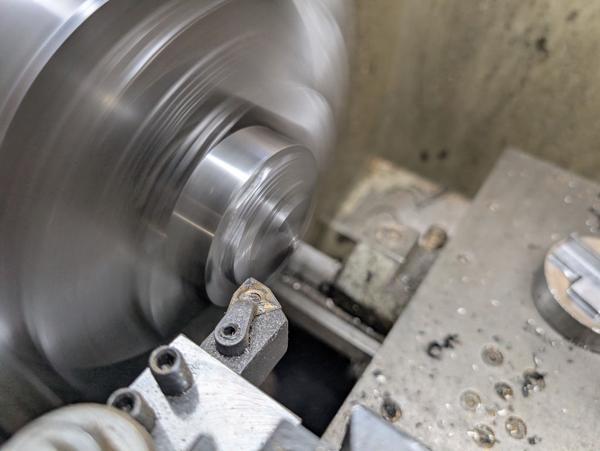
2025-10-13-05-roughing-off-milled-bit_600.jpg


It wasn't looking too bad straight off that tool...
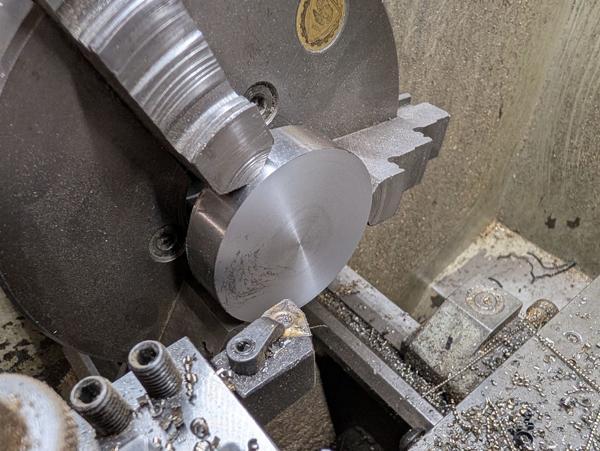
2025-10-13-06-smoother-face_600.jpg


... but I gave it a clean up pass with a sharper carbide tool anyway:
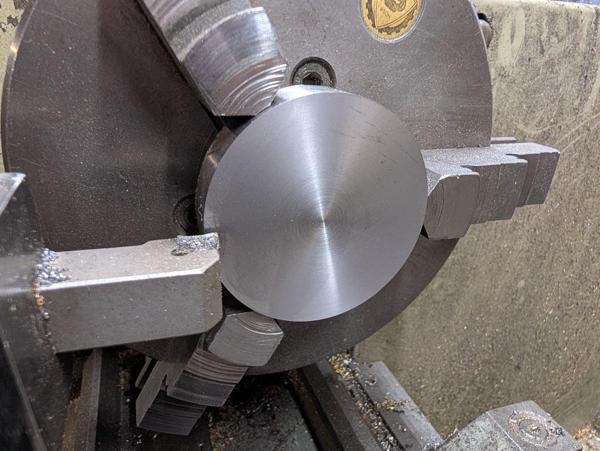
2025-10-13-07-clean-up-pass_600.jpg


Each piece then got mounted in the outside jaws and I used a pointy tool to get inside the outer jaws so I could turn the smaller diameter:
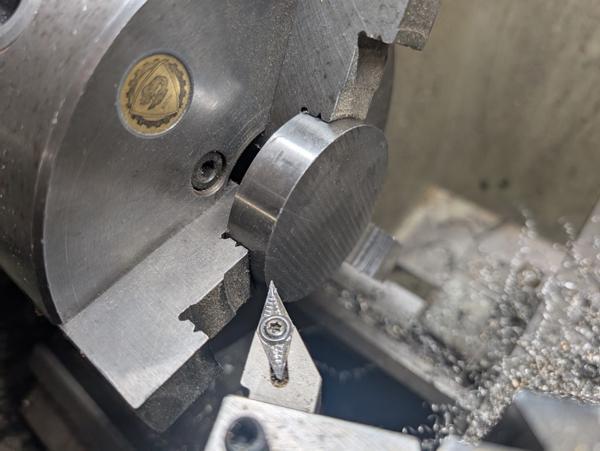
2025-10-13-08-pointy-tool-reverse-jaws_600.jpg


I didn't go all the way into the face at the outer diameter (so I didn't risk hitting the jaws). The outer diameter was going to get reduced later so it seemed safest to just leave it like that for now.
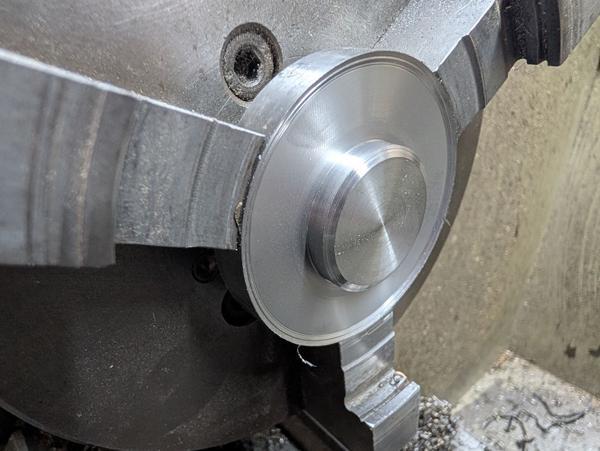
2025-10-13-09-finished-shaping-first-end_600.jpg


After shaping that 31.75 mm diameter bit (and checking it was a good fit in the CBN wheel, which I could offer up to the lathe), I spot drilled, drilled 6 mm, 10 mm and 13 mm and then bored the hole out to 15.88 mm:
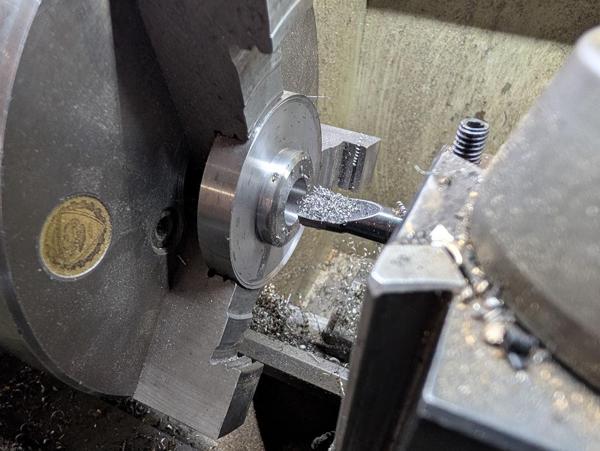
2025-10-15-01-boring-hole_600.jpg


I had no way of checking that bore size without removing the part from the lathe, but I was feeling confident in my measurements, so I took it out of the chuck and offered it up to the grinder and thankfully it was a lovely fit.

After getting both parts to the same stage, they got put back in the normal chuck jaws and the outside diameter reduced to 50 mm:
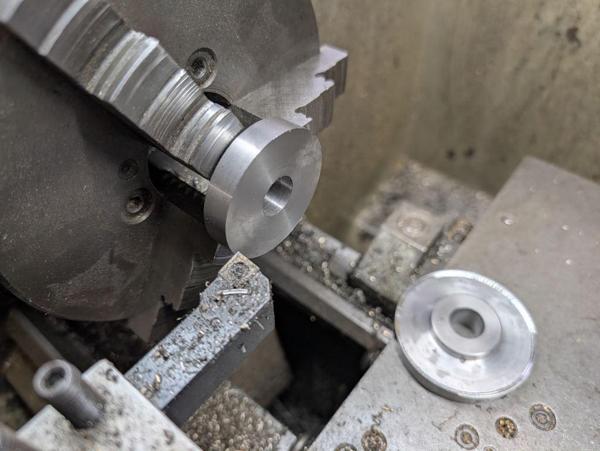
2025-10-15-02-reducing-diameter_600.jpg


After a bit of chamfering and tidy-up, I was left with two finished bushes:
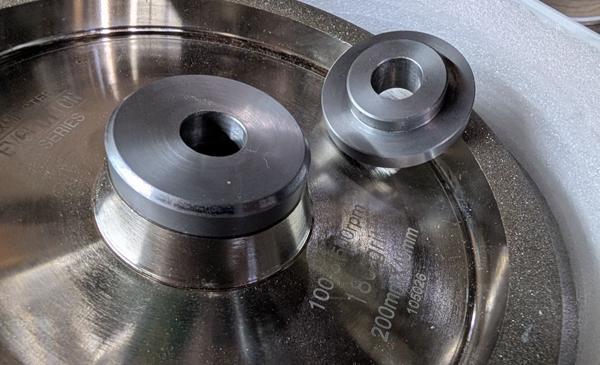
2025-10-15-03-two-finished-bushes_600.jpg


I was very happy to see that everything fitted perfectly:
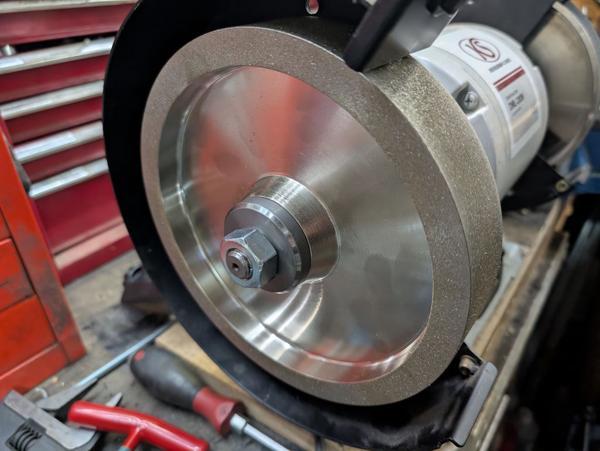
2025-10-15-04-they-fit_600.jpg


To be continued...
 
Nice Dr.Al, you do some interesting machine work. Sadly my metal lathe gets used seldom but has come in handy when needed.
 
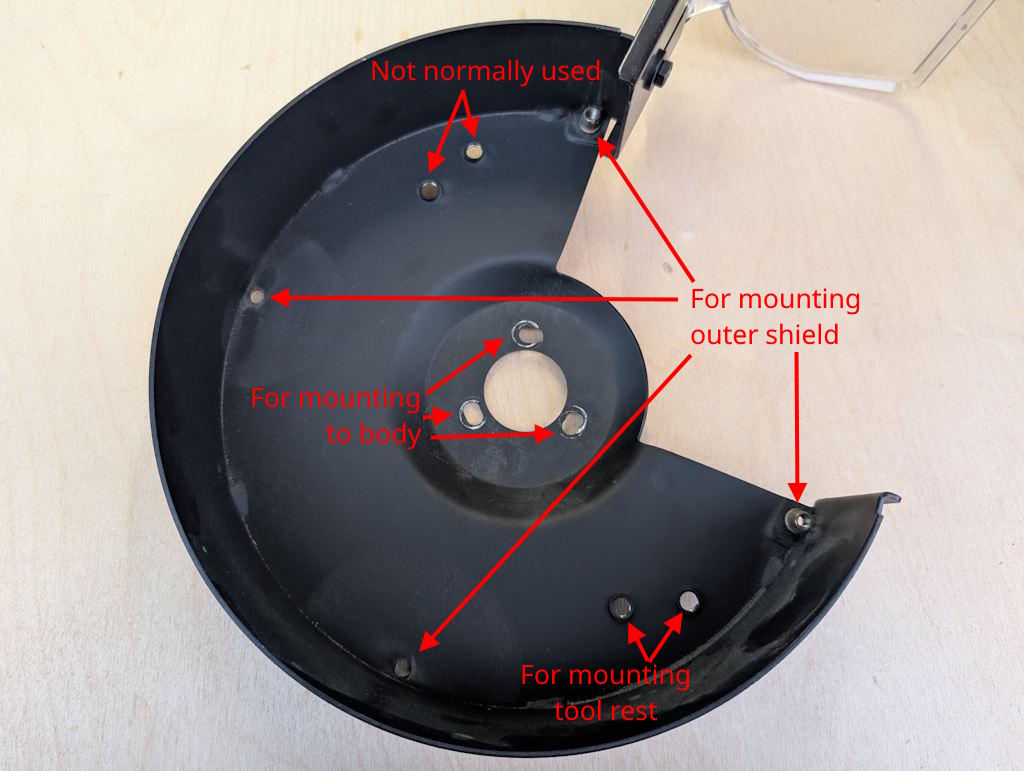
While I had the grinder apart, I took the opportunity to try to improve a minor foible. This is what one part of the left-hand wheel cover (shield) looks like:

2025-10-15-05-inside-cover.jpg


That's the part that mounts to the grinder; the outer shield mounts to the four mounting points highlighted in the image. The two points nearest the opening have rivnuts inserted into the holes, so the (button head Phillips) screws can simply be tightened into the integral thread. The points nearest the rear are just plain holes, so the screws need nuts.

I can see why the manufacturer decided to do it that way: the rivnuts are visible from the opening so it's easy to line up the screws to go into the hole. The ones at the back can't really be seen, so it's a bit easier to line up with an oversize opening when you can look through that opening from the outside face.

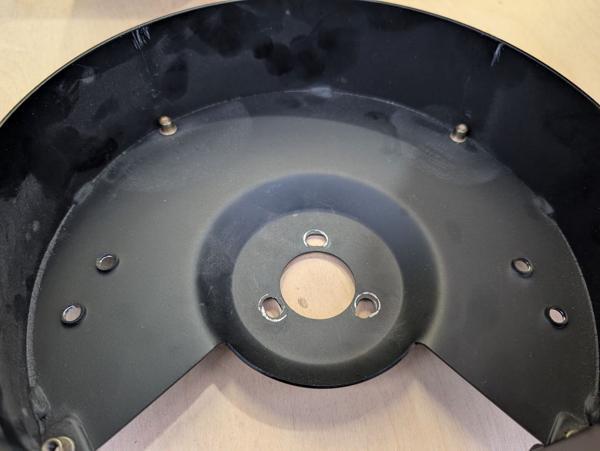
However, using a nut means I need two tools to take the cover off rather than just one (and this grinder has no exhaust vent, so I have to take the cover off every now and again to clean out the metal dust). To make it easy to possible to remove/refit the cover with a single tool, I decided to drill the holes out slightly wider and fit some rivnuts in the back as well:

2025-10-15-06-extra-two-rivnuts_600.jpg


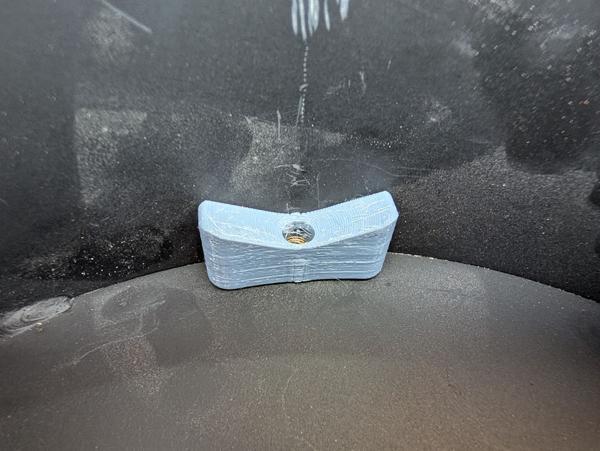
To make it easier to line the screw up with the threaded hole, I 3D-printed some little surrounds. These taper in to the centre of the hole so, when inserting a screw "blind", it'll naturally want to go into the right place.

2025-10-16-01-3d-printed-screw-aligner_600.jpg


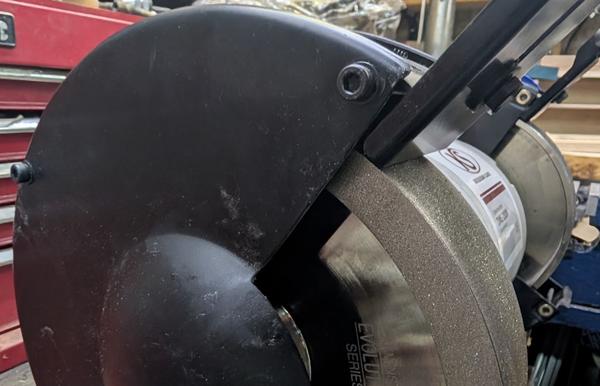
As a result of fitting the rivnuts, the rear screws didn't need to be as long any more (they didn't need to protrude through the inner cover in order to allow room for a nut). Those two (per side) therefore needed replacing. While I was doing that, I thought I'd also replace the front ones. They're now all M5×65 mm cap screws so I can use an Allen key instead of a Phillips screwdriver.

2025-10-15-07-cap-screws_600.jpg


Still a few more upgrades to go (and I think, perhaps, it gets more interesting from here on in).
 
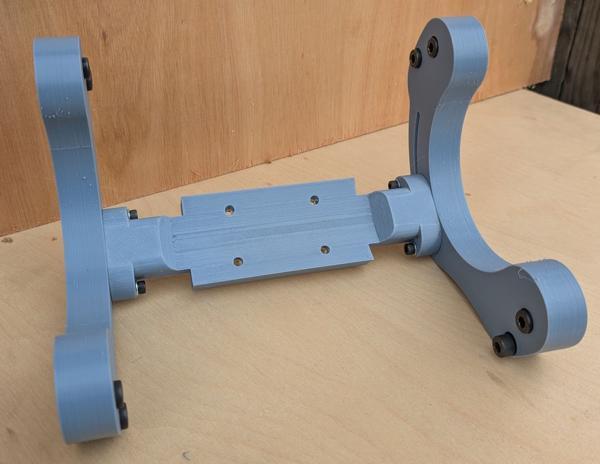
Over the course of a couple of days during the week, my 3D-printer made this:

2025-10-15-jig-01-printed-jig_600.jpg


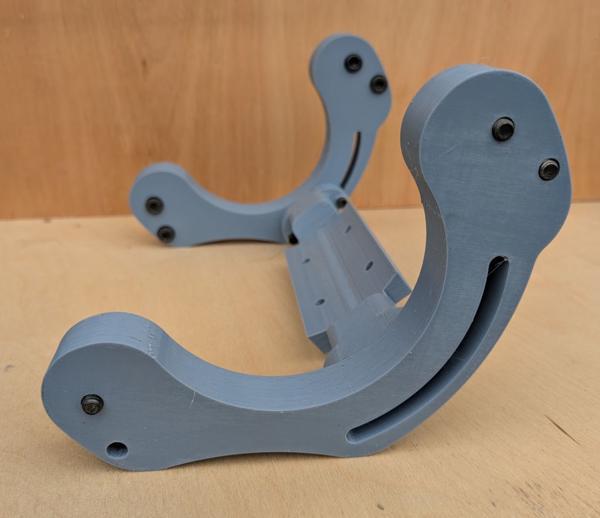
Another view:

2025-10-15-jig-02-printed-jig_600.jpg


The middle part is attached to the outer part using four M5×30 mm cap screws, which engage with nuts that are a close sliding fit in the slots in the side pieces. The central part can hence be slid around the slot by loosening the four screws, sliding it into a new position and then tightening the screws again (without having to get a spanner on the nuts as they can't rotate in the slot).

Remember the photo where I'd labelled all the screw holes on the inner cover piece?

2025-10-15-05-inside-cover.jpg


You might have noticed that there are two (M8 threaded) unused holes near the top of the cover. I think the reason for those holes is so that the cover plates (left and right) can be made as a single symmetrical design. On the left-hand cover (shown) the bottom two holes are used for mounting the tool rest. On the right-hand cover, the other two holes are used.

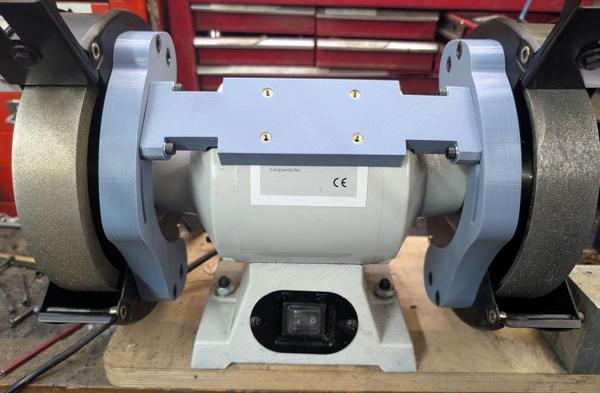
The outer four (M8) screws on each 3D-printed side piece go into the tool rest mounting holes on the two wheel covers (taking advantage of the previously unused threaded holes) and the curved side of the central plastic piece fits snugly up against the body of the grinder:

2025-10-16-12-slider-at-top_600.jpg


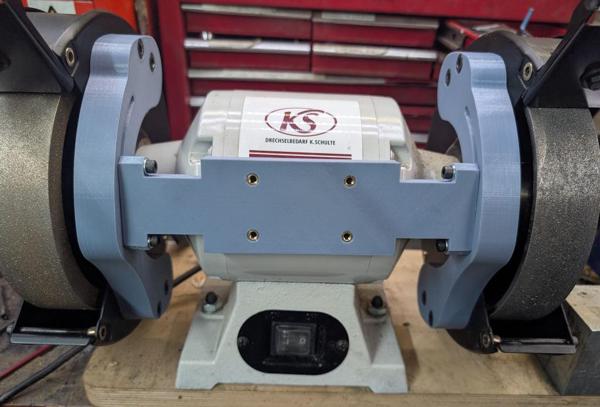
I can rotate it around the body (if required) by loosening the four M5 cap screws attaching the central piece to the outer frames:

2025-10-16-13-slider-at-bottom_600.jpg


Those four central holes with M5 threaded inserts are in just the right place to allow me to mount the Tormek BGM and then the Tormek "universal support" can be fitted and used with either of the two CBN wheels:

2025-10-16-14-bgm-left_600.jpg


2025-10-16-15-bgm-right_600.jpg


I'd wondered if it would be stiff enough (being 3D-printed and without increasing perimeters or in-fill), but it seems fine from what I can tell so far. I expect the design will get tweaked at some point to incorporate some protrusion-setting features (for the Tormek jigs) and that sort of thing, so I may increase the fill density then (now that I know the design is right); however, for now I think it'll be fine.
 
Last edited:
Have you ever considered a career in engineering? I think you'd like it and do very well! :)
 
I thought it would be interesting to try to make a new "universal support" for the Tormek tools. The thread on the universal support is a bit of an unusual one:

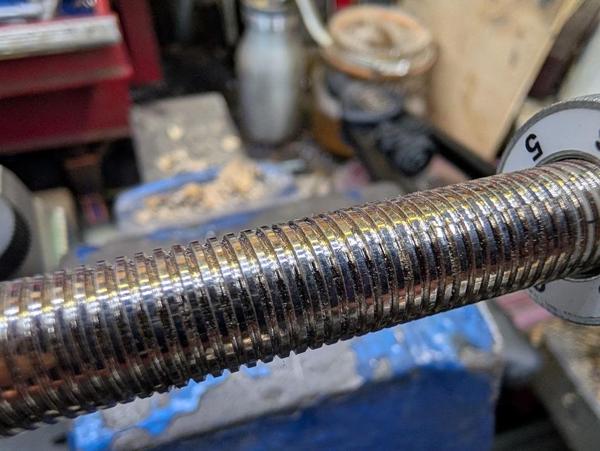
2025-10-16-02-unusual-thread_600.jpg


It's (a tiny bit under) 12 mm diameter and it's a 1.5 mm pitch thread with what looks like a 60° thread shape. However, the thread hasn't been fully formed so it has large flats on the top. The reason for that is so that the clamp screw (which bears directly on the thread) won't damage the thread form (as it would if the threads were fully formed with narrow "lands" at the outer diameter).

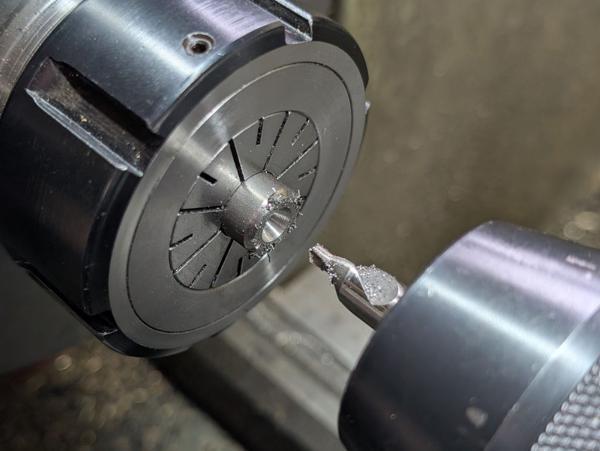
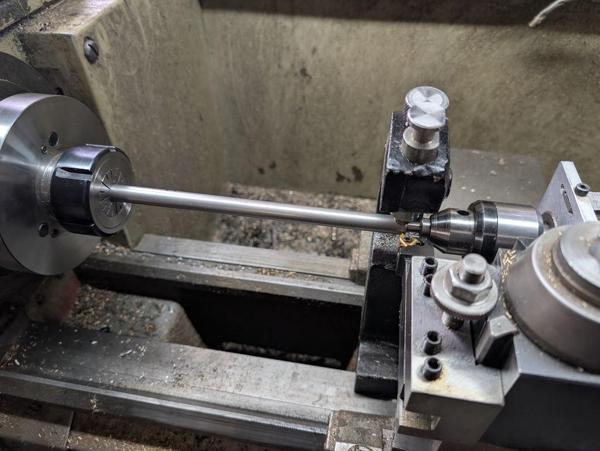
To make my own universal support, I need to reproduce that thread. I bought a metre length of 12 mm diameter 303 stainless steel and, after chopping a bit off, I put it in the collet chuck (I used a collet chuck here as I knew I'd need it later), faced and chamfered the end and then used a centre drill to form a centre hole in the end of the bar:

2025-10-17-01-the-rarely-used-centre-drill_600.jpg


I rarely use centre drills as the thing I do most often that might involve them is starting drilled holes. Spot drills are much better for that purpose, so the centre drills only come out for their originally intended purpose.

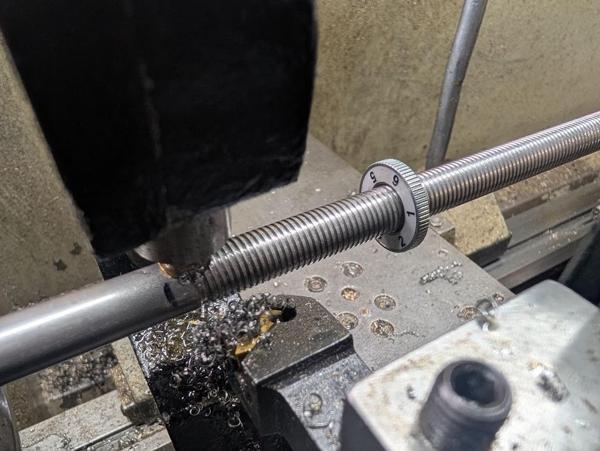
Another rarely used tool is a travelling steady. This is a fairly long thread, so I thought it seemed a good idea to take the time to set it up:

2025-10-17-02-setup-with-travelling-steady_600.jpg


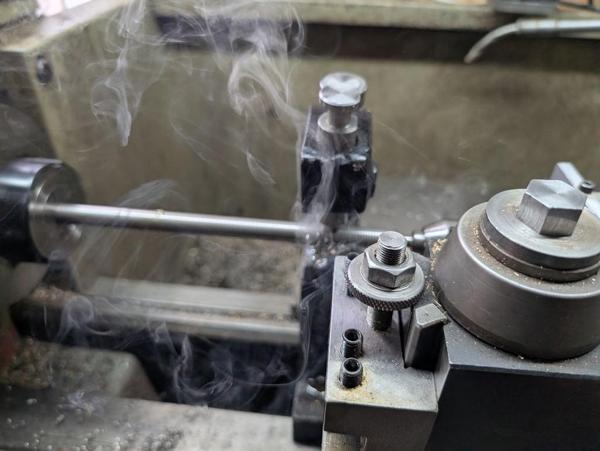
As I said earlier, the thread is a nice & civilised 1.5 mm pitch (the benefit of the Tormek being made in Sweden rather than the USA!). That made it fairly straightforward to keep taking long passes and being able to disengage the half-nuts at the end of each pass. I used lots of cutting oil (partly for cutting but also to keep the travelling steady lubricated). I tried to take an "action shot" during a cutting pass but apparently I got the camera focus wrong, sorry:

2025-10-17-03-tried-to-take-an-action-shot-but-got-focus-wrong_600.jpg


As it started to look vaguely right, I started taking light passes and checking with the Tormek nut after every pass. In not too long at all, the nut was running up and down the thread nicely:

2025-10-17-04-the-nut-fits_600.jpg


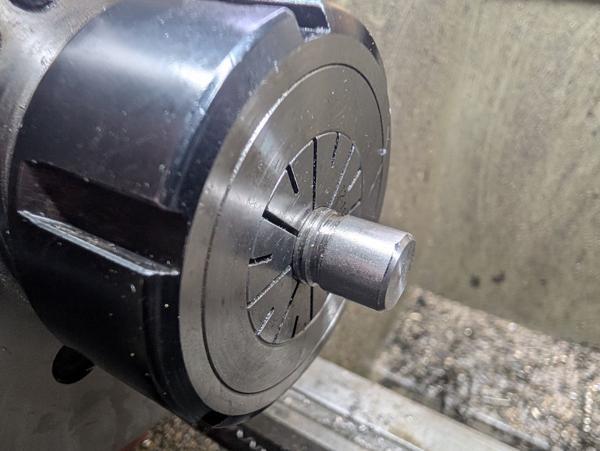
After sawing off the excess in the bandsaw and then reversing the part in the collet chuck, I could tidy up and chamfer the end:

2025-10-17-05-cleaning-up-the-other-end_600.jpg


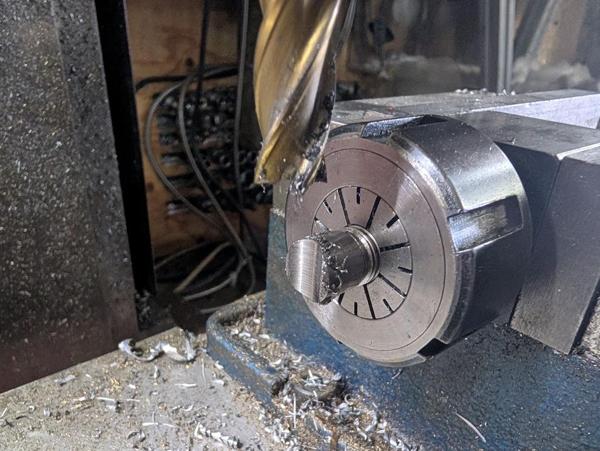
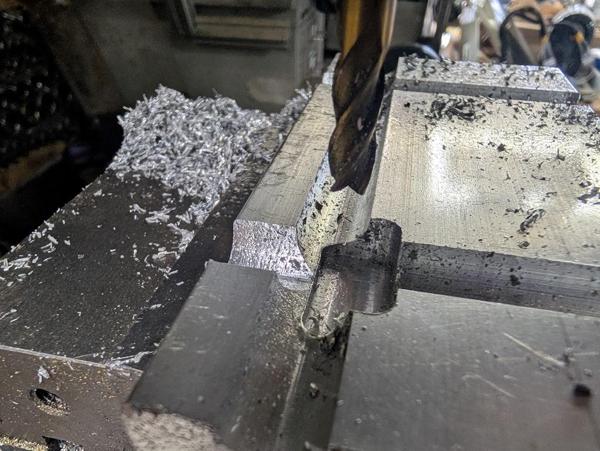
I then got rid of most of that tidied up face (but kept the chamfer) by putting it in a collet chuck in the milling machine vice and plunging a 12 mm end mill across the face (in a few passes):

2025-10-17-06-milling-a-curve-in-the-end_600.jpg


"Off camera" (as the youtubers like to say) I also made another (unthreaded) bar with the curved notch (for the other of the two support bars) and tidied up and drilled/tapped M6 the ends of the bar that will form the rest itself.

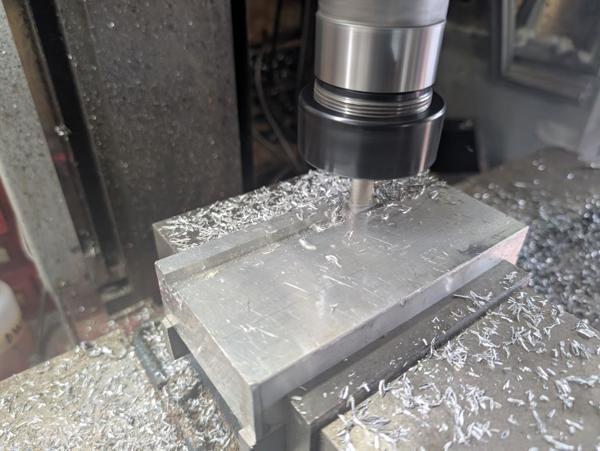
After digging around in my random aluminium bits drawer, I found this lump and used a 12 mm ball-end end mill to cut grooves in it:

2025-10-17-07-milling-aluminium-round-nose_600.jpg


I'm sure a square-ended end mill would have been fine here, but I had the ball-end one and I figured would be a closer fit and would help wick the welding heat away a bit better.

Speaking of welding, I also used a smaller (8 mm) centre-cutting end mill to make a bit of a pocket around the weld area to allow me to flip the part over after the initial tacks:

2025-10-17-08-hollowing-out-clearance_600.jpg


The finished jig, in need of a thorough clean before use:

2025-10-17-09-finished-jig_600.jpg


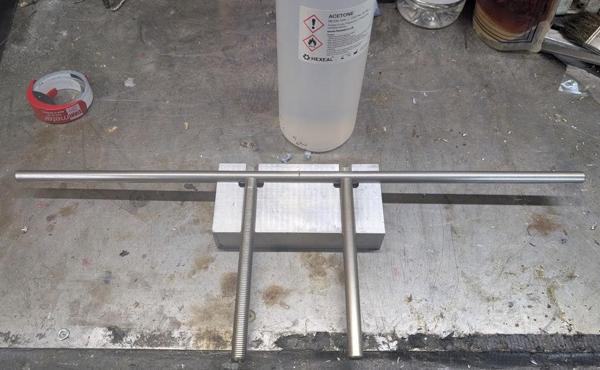
Everything (all three bars and the jig) got a thorough clean with acetone and then everything could be assembled ready for welding:

2025-10-17-10-cleaned-and-ready_600.jpg


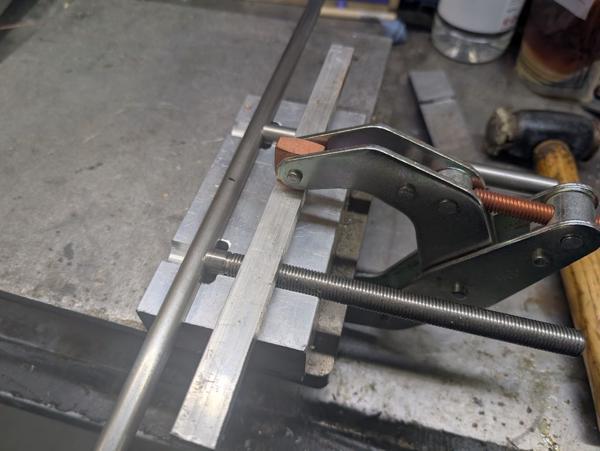
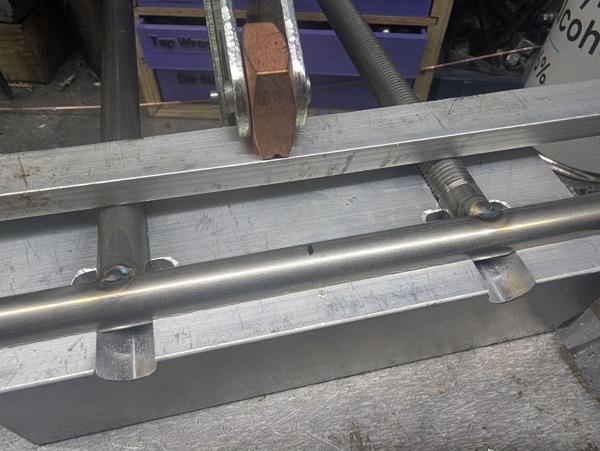
I'd been planning to use two or even three clamps to hold the parts in the jig, but in the end a single one did the job fine as the curved ends of the two clamped pieces had the effect of clamping the long bar in place quite rigidly:

2025-10-17-11-one-clamp-does-the-job_600.jpg


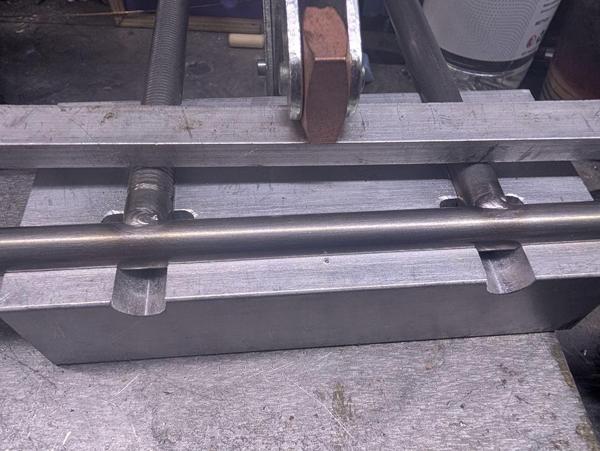
I tack-welded the first side:

2025-10-17-12-tacked_600.jpg


Then flipped it over and welded across the second side:

2025-10-17-13-welded_600.jpg


I then flipped it back again and welded across the first side, but didn't take a picture as it would have looked the same as the above.

I must apologise at this point as the photos have been getting worse and worse throughout this post. I think I have a (bad) habit of touching the phone camera lens with my fingers, which were quite filthy and hence the pictures were getting fuzzier and fuzzier.

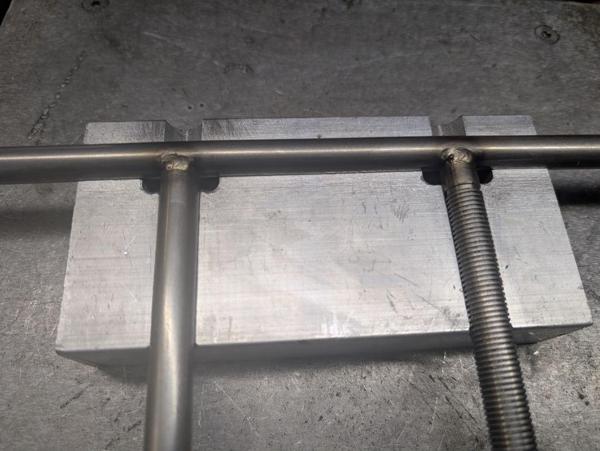
Anyway, after finishing the welding and letting everything cool down, I was really happy to see that the part fitted snugly back into the jig, implying I hadn't suffered from too much distortion during welding:

2025-10-17-14-fits-back-in-jig-lens-needs-cleaning_600.jpg


I could also try fitting it to the bench grinder and (after cleaning the camera lens!) get a photo of it in situ:

2025-10-17-15-all-done-and-fitted_600.jpg


As the two wheels are exactly the same diameter (and, being CBN wheels, will stay the same diameter), I can set up a jig on the coarse wheel, roughly grind a tool to shape and then switch straight over to the finer wheel without having to move the support arm. that should save a bit of hassle, which is nice.
 
The last job I wanted to have a go at was inspired (as, partially, was the last post) by a This Old Tony video.

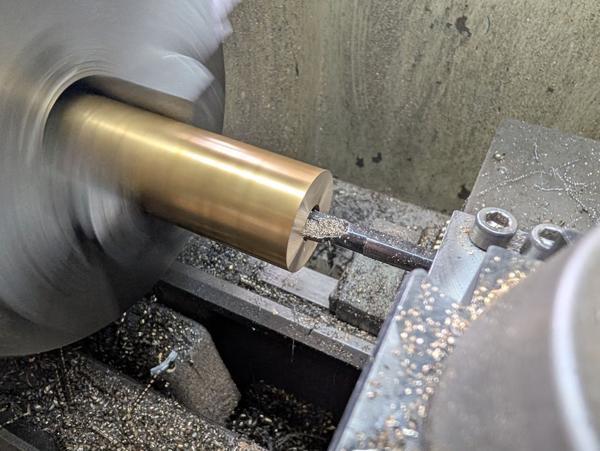
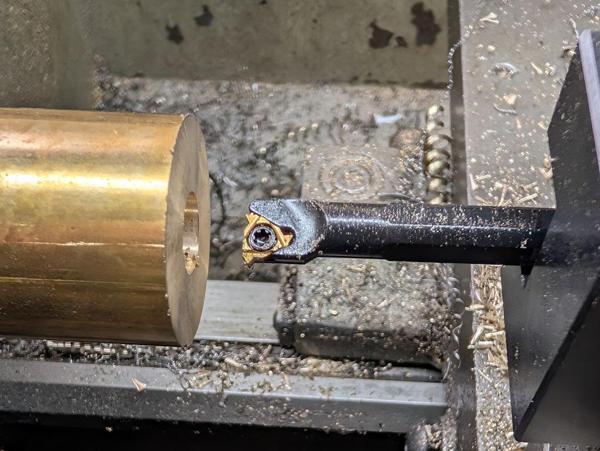
After measuring the bore size of the Tormek adjustment nut, I put a bit of 32 mm diameter brass bar in the lathe chuck and drilled it out to 10 mm. I then used a small boring bar to increase the bore size to 11.4 mm:

2025-10-16-03-boring_600.jpg


I've got an 11 mm, and 11.1 mm, an 11.5 mm and an 11.6 mm drill, but no 11.4 mm one. I'm sure the 11.5 mm would have been fine, but I wanted to match the original nut as closely as possible given that the thread is such an odd one with limited thread engagement.

The next job was to cut the thread. For this I used a recently-acquired small internal threading tool, which will (I think) go into a 10 mm or bigger bore:

2025-10-16-04-tiny-threading-tool_600.jpg


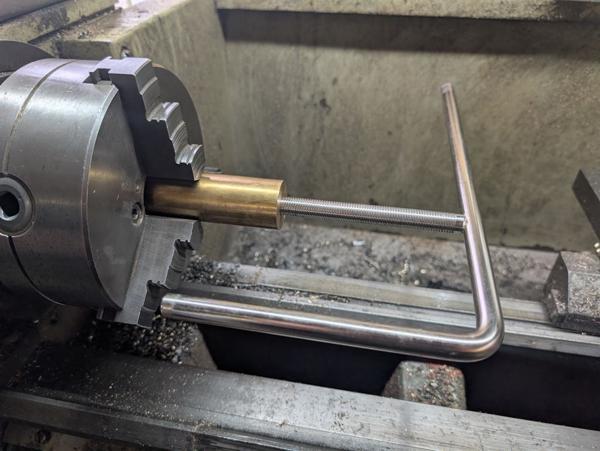
After going back and forth with the threading tool a few times, I started test fitting after each pass until the standard support bar fitted (at this point, I hadn't yet made my custom one but I wanted it to fit the standard bar anyway):

2025-10-16-05-test-fit-of-bar_600.jpg


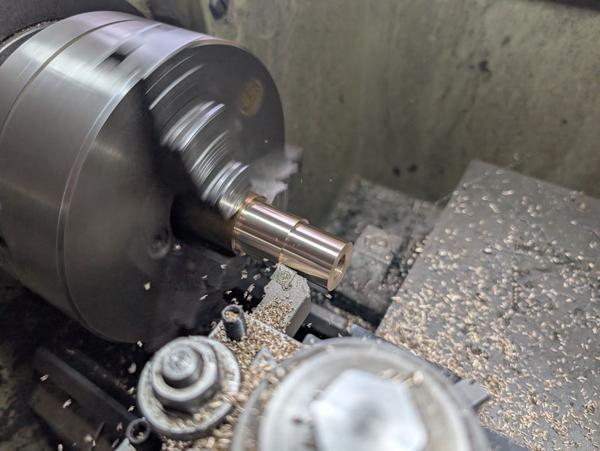
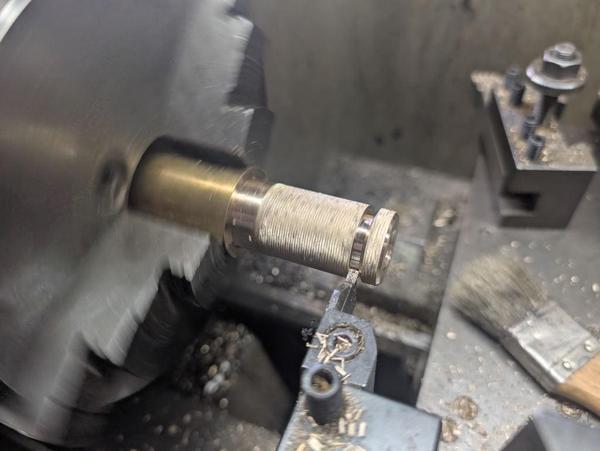
I then turned the outside diameter down to 24 mm (to match the standard nut)...
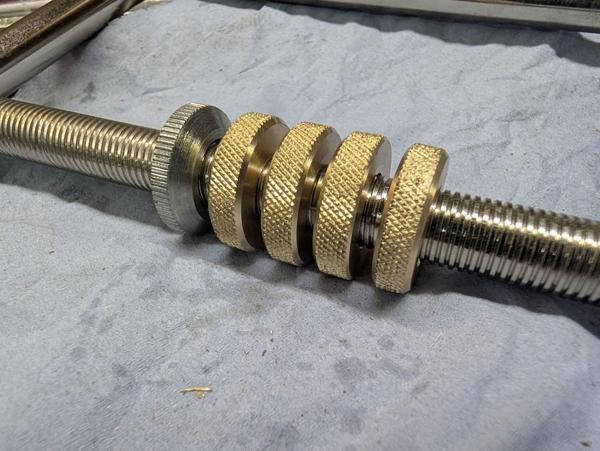
2025-10-16-06-turning-outside-diameter_600.jpg


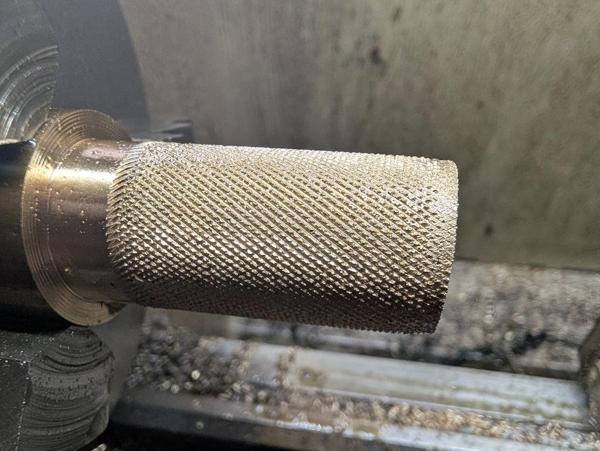
... and knurled the outside:
2025-10-16-07-knurling_600.jpg


The knurl wasn't great (probably not enough oil flow to clear away the swarf), but it'll do:

2025-10-16-08-knurl-is-okay-ish_600.jpg


I then went through a sequence of facing off, partially parting, chamfering and then finishing parting (and rinse and repeat):

2025-10-16-09-parting_600.jpg


The home-made soft jaws then got used to hold the parts so that I could clean up the parted off end:

2025-10-16-10-cleaning-up-rear-face_600.jpg


With that done, I had four new nuts:

2025-10-16-11-four-new-nuts_600.jpg


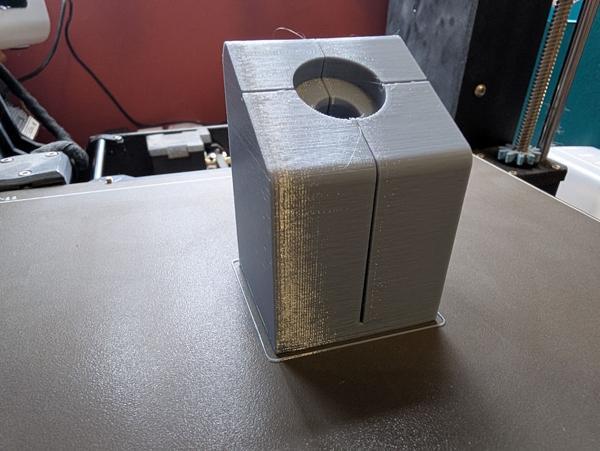
In the meantime, the 3D printer had been busy again making this little jig (which was printed with a fairly high in-fill percentage and with quite a few extra perimeters to make it as strong as possible):

2025-10-18-01-printed-jig_600.jpg


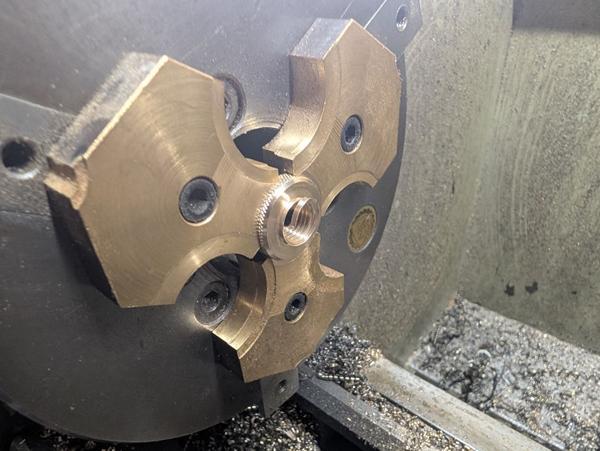
That jig went in the milling machine vice. The table could easily be positioned such that the spindle would be in the right place as I could reference off the four sides of the jig. A 12 mm end mill was put in the spindle and plunged down through the nut:

2025-10-18-02-milled-hole_600.jpg


I did three out of the four nuts, but it'll be easy enough to do the fourth one at a later date if I ever decide to.

With that, the speed nuts were finished and could be tested on the bench grinder. It works well. It's a bit stiff re-engaging the threads after sliding it up and down, but it got easier after a few uses and even while stiff it was far quicker than winding the nut all the way by hand.


As I'd made spares, I could also remove the original nut from the Tormek itself (using the method Tormek recommend for moving the nut swiftly) and fit a speed nut over there too:


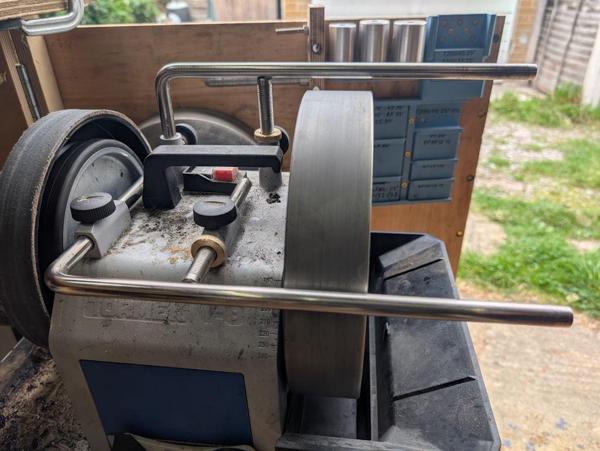
As the home-made bar has freed up the universal support that used to be on the bench grinder, I can now use the spare on the Tormek and just keep one in each mount:

2025-10-18-03-two-bars-on-tormek_600.jpg


With three speed nuts, the two original nuts and the one new nut that I didn't drill out, I've now got one speed nut and one normal nut for each bar.

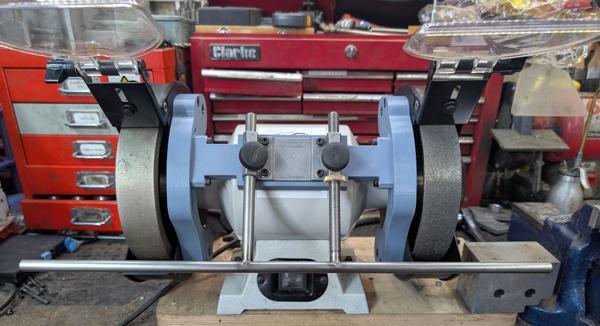
That, as they say, is that: the end up my little series of bench grinder updates. Just time for a completed photo:

2025-10-18-04-final-photo_600.jpg


Thanks for reading.
 
Back
Top