• Hi all and welcome to TheWoodHaven2 brought into the 21st Century, kicking and screaming! We all have Alasdair to thank for the vast bulk of the heavy lifting to get us here, no more so than me because he's taken away a huge burden of responsibility from my shoulders and brought us to this new shiny home, with all your previous content (hopefully) still intact! Please peruse and feed back. There is still plenty to do, like changing the colour scheme, adding the banner graphic, tweaking the odd setting here and there so I have added a new thread in the 'Technical Issues, Bugs and Feature Requests' forum for you to add any issues you find, any missing settings or just anything you'd like to see added/removed from the feature set that Xenforo offers. We will get to everything over the coming weeks so please be patient, but add anything at all to the thread I mention above and we promise to get to them over the next few days/weeks/months. In the meantime, please enjoy!

Any reason not to use sanding sealer ?

RogerS

Moderator
Staff member
Joined
Jul 21, 2014
Messages
15,492
Reaction score
1,223
Location
Somerset
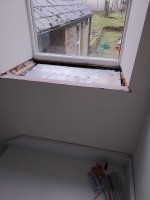
Putting an oak shelf into this window area.
20240105_153730.jpg

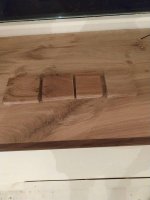
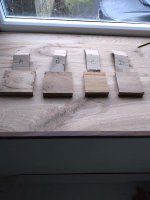
I've done a trial finish on three scrap pieces - Chestnut Microcrystalline Finish, Polyx raw and Sanding Sealer.

Our preference is for Sanding Sealer as it doesn't mess up the inherent beauty of simple, plain oak. Any reasons NOT to use it 'as is' with no further coatings of anything else ?

Please note....we have not painted our walls that colour...just Samsung's phones awful camera.
 
RogerS":24e563gg said:
Putting an oak shelf into this window area.


I've done a trial finish on three scrap pieces - Chestnut Microcrystalline Finish, Polyx raw and Sanding Sealer.

Our preference is for Sanding Sealer as it doesn't mess up the inherent beauty of simple, plain oak. Any reasons NOT to use it 'as is' with no further coatings of anything else ?
Sanding sealer is great stuff Rog (I use it all the time on the lathe for finishing) but it's not particularly durable, especially if bums are going to be parked on the oak. I'd be inclined to use it as a first coat and then apply somat over the top to resist wear; my choice would be Osmo PolyX, matt or satin which as a floor finish :shock: is just about bullet proof - Rob
 
Thanks chaps.

Good point re possible wear, Rob, but the height is far too high for anyone to leap up and deposit theeir derriere so I don't think that's going to be an issue.

Two more good points, Ian, but the glazing is (a) double-glazed and the area is (i) extremly large and (ii) very airy. The window has been in for a couple of years now and never any condensation.

It is North facing and we never get any direct sunshine there. Don't really get any light there TBH :(
 
I’m with Rob on this.
Sanding sealer and a denib then Osmo.
Or you could use a wax instead of Osmo, I like wood wax 22
 
IMG_1358.jpegOne coat of celullose sanding sealer followed by two coats of Ronseal polyurethane satin interior varnish is my favourite finish. It gets a very light sand and is then waxed.
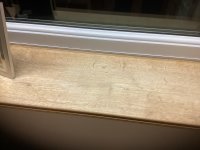
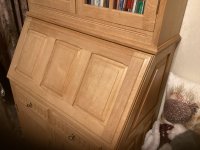
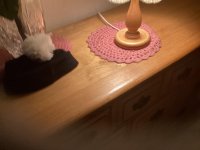
The first photo of a window board of a south facing window which fad been in use for more than twenty five years. It has faded but not to badly.. The writing bureau is about the same age and gets a lot of sun, the chest of drawers sees no direct sun and probably a little darker in colour.
 

Attachments

  • IMG_1360.jpeg
    IMG_1360.jpeg
    276.6 KB · Views: 1,116
  • IMG_1359.jpeg
    IMG_1359.jpeg
    224.4 KB · Views: 1,116
If you don't want it to look glossy or "finished" then Osmo Raw is pretty good and very durable. It has a slight white pigment which is barely visible on oak as long as you are very sparing with application. It withstands water, wine, coffee cup rings etc. Can finish dead flat or slight lustre.
 
When I made our new bed, in ash, I wanted to keep the pale look. I tried out all the finishes I had in the cupboard and did a UV test in a window. There was a fair bit of discussion about it on the second page, here
viewtopic.php?f=26&t=6588&start=25#p107381

I ended up using a Polyvine water based polyurethane which is still looking good, with no yellowing or deterioration. Elsewhere I've used it over sanding sealer on pine but I just used it straight on the bare wood for the bed.
 
Phil Pascoe":3kettbqm said:
I've never seen the logic in applying something specifically made and intended to be abraded off as a finish.

It's just shellac, and shellac has been used as a finish for centuries.
 
Phil Pascoe":34qwdlod said:
I've never seen the logic in applying something specifically made and intended to be abraded off as a finish.

I think I have seen the explanation that you use it on woods where the surface is a bit soft or wooly, or where the growth pattern is so irregular that you can't sand with all the grain.

It reinforces the fibres and hardens them so the abrasive can cut across them cleanly, rather than just plucking bits out of the surface.
 
Many thanks all for the input.

So here's a wee exercise. Below are four pieces cut from the same board. In daylight and indoor lighting.

They have been finished using four different finishes which are :

1 - Liberon Special Pale French Polish
2 - Sanding Sealer
3 - Chestnut Microcrystalline Wax
4 - Polyx Raw

As you can see, different result but which is which ? Anyone like to have a go ?

20240105_174625.jpg
20240106_090923.jpg
 
Just to throw in my there 'a'pence…

I understand sanding sealer to seal open pores prior to the application of finishes, which benefits from sanding of the surface, leaving the pores filled, ready for finishing.

In my sphere, spruce insrtument tops are soft and open pored. Sanding sealer saves me £s of nitro-cellulose lacquer.

Also, e.g., if using a CA glue for purfling or binding, a coat of sanding sealer assists bonding to those open pored surfaces, whereas if using a water based glue, no sealer is required.
 
Back
Top