• Hi all and welcome to TheWoodHaven2 brought into the 21st Century, kicking and screaming! We all have Alasdair to thank for the vast bulk of the heavy lifting to get us here, no more so than me because he's taken away a huge burden of responsibility from my shoulders and brought us to this new shiny home, with all your previous content (hopefully) still intact! Please peruse and feed back. There is still plenty to do, like changing the colour scheme, adding the banner graphic, tweaking the odd setting here and there so I have added a new thread in the 'Technical Issues, Bugs and Feature Requests' forum for you to add any issues you find, any missing settings or just anything you'd like to see added/removed from the feature set that Xenforo offers. We will get to everything over the coming weeks so please be patient, but add anything at all to the thread I mention above and we promise to get to them over the next few days/weeks/months. In the meantime, please enjoy!

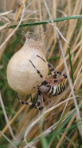
Came across this scary beast in the garden.

Cabinetman

Sequoia
Joined
Oct 11, 2020
Messages
5,757
Reaction score
1,424
Location
Lincolnshire Wolds + Massachusetts
Name
Ian
Measures about 2” leg to leg and it can give a sting like a bee. Not going to get that close, not too keen on Spiders tbh, especially ones like this!
Argiope Aurantia. The zigzag white stuff is special silk that it weaves to deter birds from wrecking its web.

IMG_4791.jpegIMG_4816.jpeg
 
Mmmm... nice find in your garden Ian - a friend more than a foe according to most of the information on Argiope Aurantia. I looked it up - so thanks for sharing the photos and naming it 😊. Quite widespread from Southern Canada down to Costa Rica it seems.
 
My wife would completely freak out if she saw that, it's bad enough with the harmless ones we get here in Northumberland.
Not good for her at the minute as it's large spider time and daddy long legs (crane flies) which she sees as spiders with wings. :rolleyes:
 
Following on... this came up in my notifications (copied and pasted part of here):
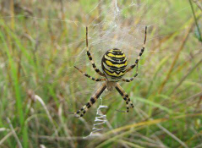
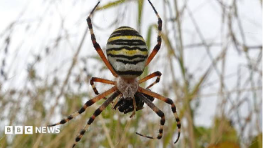
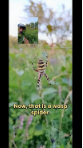
A fully grown female wasp spider (Argiope bruennichi) has been officially spotted in Cheshire, Northern England for the first time. Stumbled upon by conservationists from Chester Zoo in a rewilded field, this striking arachnid is making headlines as a clear indicator of how global heating is reshaping regional ecosystems. [1]


<b>Wasp spider</b> seen in <b>north</b> of <b>England</b> latest &#39;climate refugee ...

<b>Wasp spider</b> seen in <b>north</b> of <b>England</b> latest &#39;climate refugee ...

<b>Wasp spider</b> | <b>Cheshire</b> Wildlife Trust

🤩One of our Great Fen reserves officers found this amazing ...

<b>Wasp spiders</b> increasingly seen in West Midlands - BBC News

Ever seen a <b>wasp spider</b>? They&#39;re a very large, colourful ...


🌍 Why It’s a Big Deal: A "Climate Refugee"
The wasp spider is native to mainland Europe, North Africa, and parts of Asia. It first arrived on the southern coast of England in the 1920s but has traditionally been restricted to the warmer south.

Because these spiders require at least three months of warm summer weather and mild winters to successfully breed, scientists from organizations like the Cheshire Wildlife Trust view this northern migration as a textbook example of "climate refugees". As temperatures rise, the species is pushing more than 100 miles past its historic territory to find comfortable habitats...
 
Looks potentially dangerous but does it sting?
Interesting that in the middle pic it’s woven a zigzag to deter birds exactly the same as my one in the US, probably a member of the same online community lol.
 
That's what brought me to post to your thread Ian. Seems identical... even the zigzag to the web was mentioned. Only difference was the second name given in the scientific name - bruennichi - and not aurantia. And being found in Cheshire. Didn't want to post the full text but it was an article taken from The Guardian newspaper (link in Google but didn't copy across).
 
That's what brought me to post to your thread Ian. Seems identical... even the zigzag to the web was mentioned. Only difference was the second name given in the scientific name - bruennichi - and not aurantia. And being found in Cheshire. Didn't want to post the full text but it was an article taken from The Guardian newspaper (link in Google but didn't copy across).
Thanks, that’s interesting I shall have to dig and see what the connection could be.
Ian
 
Thanks, that’s interesting I shall have to dig and see what the connection could be.
Ian
Ian, did a Google AI and it came up with this... and it would seem there are members of the Argiope genus (question from Google at the end):

AI Overview
Argiope aurantia and Argiope bruennichi are closely related "cousin" species belonging to the same genus, Argiope. They are large, striking, and beneficial orb-weaver spiders known for their vivid coloring, extreme sexual dimorphism, and distinct web structures. [1, 2, 3]
The key similarities and differences between the two species can be directly compared below:
FeatureArgiope aurantiaArgiope bruennichi
Common NamesBlack and yellow garden spider, Writing spider, Zipper spiderWasp spider
Native RangeNorth America (widespread across the US, southern Canada, and Central America)Europe, North Africa, and parts of Asia
Abdomen AppearanceBroad and egg-shaped; mostly black with bold, irregular yellow patchesElongated; covered in transverse, parallel yellow, black, and white stripes resembling a wasp
Web DecorationSpins a thick, prominent vertical zigzag pattern (stabilimentum) down the centerSpins a similar vertical zigzag band, but usually builds its web much lower to the ground in long grass
Mating BehaviorMales experience spontaneous programmed death immediately upon inserting their second mating organMales are frequently cannibalized by the female (up to 80% of the time) if they do not escape quickly
Shared Biological Traits
    • The "Writing" Web: Both species construct a heavy, visible silk decoration in their webs called a stabilimentum. Biologists believe this serves to make the spider look larger to predators, prevents birds from accidentally flying through and destroying the web, or acts as a UV-reflecting sensory trap to lure insect prey. [1, 2, 3, 4]
    • Extreme Size Differences: In both species, the females are massive (often reaching a body length of 20–30mm), while the males are tiny, drab brown, and dwarfed by their mates. [1, 2, 3]
    • Harmless to Humans: While their size can be intimidating, neither spider is aggressive. On the rare occasion they do bite, their venom is medically insignificant to humans, causing mild localized pain comparable to a bee or wasp sting. [1, 2, 3]
Would you like to know more about how web decorations differ across other members of the Argiope genus, or are you looking to identify a specific spider you recently found? [1]
 
Back
Top