• Hi all and welcome to TheWoodHaven2 brought into the 21st Century, kicking and screaming! We all have Alasdair to thank for the vast bulk of the heavy lifting to get us here, no more so than me because he's taken away a huge burden of responsibility from my shoulders and brought us to this new shiny home, with all your previous content (hopefully) still intact! Please peruse and feed back. There is still plenty to do, like changing the colour scheme, adding the banner graphic, tweaking the odd setting here and there so I have added a new thread in the 'Technical Issues, Bugs and Feature Requests' forum for you to add any issues you find, any missing settings or just anything you'd like to see added/removed from the feature set that Xenforo offers. We will get to everything over the coming weeks so please be patient, but add anything at all to the thread I mention above and we promise to get to them over the next few days/weeks/months. In the meantime, please enjoy!

Fence posts

the bear

Nordic Pine
Joined
Jul 21, 2014
Messages
504
Reaction score
10
Location
Surrey
I need to replace about 25 metres of fencing. In order to be "in keeping" it needs to be 6 feet, close board (not panels), wooden posts and gravel boards. Concrete posts and gravel boards are therefore out. Obv the weak point is where the post enters the ground at ground level. I've done a lot of reading but welcome your thoughts and hopefully your real world personal experience. So in no particular order.

Creosote the bottom third of the already treated post for extra protection. Where to get old proper creosote from?
Blackjack the bottom third
Those heat applied post saver sleeve things.
Dipping the bottom third in old engine oil (I'm not a tree hugger but this sounds particularly env unfriendly?)
Set the post in gravel rather than concrete as it allows drainage away from the weak point.
Pre empt the post replacement in 15 years and bolt a concrete repair spur to the back of the new post (I can do this hidden so is acceptable unlike a whole concrete post)
Something else?

Your thoughts on what works best for the longest life?

Cheers

Mark
 
I've got a fair bit of experience with timber fence posts, and I still can't tell you what lasts the longest because they never really do last, or at least they don't in the Pembrokeshire weather climate. I've seen the creosote-soaked posts rot out faster than non-coated posts because a common practice here is alternating between coated posts and non-coated posts to keep costs down, as much as the creosote keeps moisture out, it can also trap moisture inside. Unconventionally, the longest-lasting timber post I've seen is my gate post, a non-treated post set in concrete and tarmac over the top, 30+ years and still solid.

Concrete posts are good, but they are fragile and it doesn't take much to crack them at the base, though the steel holds them together. If it were me, I would possibly look into galvanised box section steel for the posts and clad them with timber.
 
I think you also want to look at the quality of the wood used in fence posts. Most are really fast growth pine with rings of 1/4" or more apart..

If you can find some with narrower rings say 1/8" they will both be stronger and more durable. 🤔
 
I’ve found the problem with wooden posts is the water sits on the top of the concrete & rots the post at that point, this is where post savers really help.

I use them a lot & find them very useful, the easiest way to apply them is with a hot air gun, they can be fitted with a blow torch but it’s a lot more tricky. Another tip is to smear something like fixall or sticks like sh*t etc around the top of the post saver & the post.

I also like concrete spurs if there’s room to fit them this was my set up for supports for my GLW’s wisteria complete with post savers & spurs

IMG_20230207_164416087.jpeg

IMG_20230208_151316518_HDR.jpeg
 
I’ve found the problem with wooden posts is the water sits on the top of the concrete & rots the post at that point, this is where post savers really help.

I use them a lot & find them very useful, the easiest way to apply them is with a hot air gun, they can be fitted with a blow torch but it’s a lot more tricky. Another tip is to smear something like fixall or sticks like sh*t etc around the top of the post saver & the post.

I also like concrete spurs if there’s room to fit them this was my set up for supports for my GLW’s wisteria complete with post savers & spurs

View attachment 33055

View attachment 33056
Why bother burying the post. Have them stop above ground?
 
I'm a tree hugger and have had good results using old engine oil, it actually soaks into the timber and so can't see it going into the ground.
Not personal tryed it in the UK damp environment but an old friend from Cornwell swears by it.
 
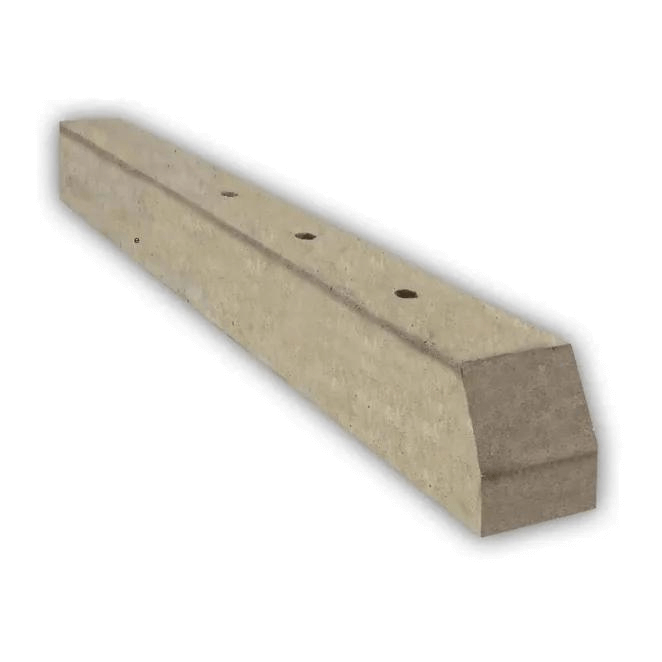
I just fixed my fence where the posts had rotted out using concrete fence spurs, they have worked really well and are totally solid.

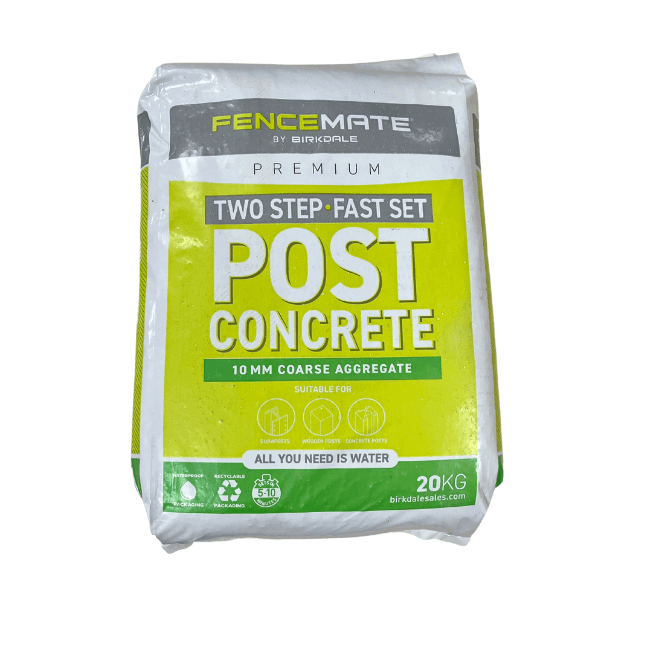
Got mine from here which was a lot cheaper than other places I looked at and their “postcrete” has aggregate in it which I think sets a lot stronger.


Sorry for the delay in replying, had a very busy easter weekend both socially and work wise.

So I'm currently leaning towards adding concrete spurs now like Doug has done and some extra protection wether that be old oil or creosote

Mark
 
Proper creosote (rather than the creocote stuff which they try to fob you off with) is still available. Or at least it was 5 or so years ago. Mail order, "professional use only", 25 litres minimum.
I built an espalier set up for fruit trees when I lived in Kirkby and was very pleased with the results. The fence posts were already treated when they came from the timber yard, but I stopped up the end of a piece of soil pipe,, shoved the post in and filled it with creosote. After a few days I took it out and turned it over. It did take a couple of weeks to do the lot, but it certainly looked good and there was no sign of decay when I left. Not many years, I'll grant you.


Delivery is a bit of an ouch.

S
 
Creosote: farm supplies or 'professional use only'. I still have quite a lot.

Bottoms of fence posts: Synthaprufe (bitumen waterproofing paint) after soaking in creosote as per Steve's suggestion above. You only really need a really big old paint tin or similar, as the pores of the end grain take the liquid up the post.

Those 'post savers' might work, but my concern would be that they're only on the surface: any post with a shake or too much moisture (so wll split at the height of summer) would still be vulnerable if it wasn't well treated.

Creosote doesn't just kill rot, but displaces/repels water. Almost every telecomms and power pole has shakes, sometimes big ones, but they last extremely well. Ditto railway sleepers, which I think are pressure treated (and, obviously, 'sprayed' with engine oil in use!).

Annoyingly, when I last looked up the subject (around ten years ago), creosote was NOT a proven carcinogen. Wikipedia said 'believed to cause cancer' (emphasis mine), not citing anything. The EU banned it (and we obviously also had to), with little evidence. OK, if the research has now found a proven link, I'll revise my view. Meanwhile I think it's yet another example of bureaucratic overreach, to the detriment, etc..
 
There’s a book available on the NIH website covering creosotes. Looks like the link is well established in both animals and people, but I only did a cursory search:


  • Cancer (coal tar products). The carcinogenic effect of creosote has been well established in animals with supporting observational associations from occupational studies. In animals, tumors appear to be the primary result from coal tar exposure by inhalation, oral, or dermal routes, typically at the site of exposure, although distal tumors have also been observed. Inhalation and dermal studies have identified neoplastic effects in the lungs and skin, while oral studies have shown additional carcinogenic effects in the liver and gastrointestinal system. In addition, numerous studies provide consistent evidence that exposure to coal tar is genotoxic.


From https://www.ncbi.nlm.nih.gov/books/NBK606215/#ch2.s20
 
That’s why it’s now trade only. The thinking is that if you are a business, then you are legally obliged to follow safe systems of work.
With any hazardous substance it’s theoretically possible that one exposure could be harmful, but in practice it’s down to repeated exposure that’s dangerous.
Sensible precautions would be to wear rubber gloves and adequate eye protection and do the job outside.
 
Thanks all,

Eric, just so I'm clear, you soak in creosote first, let them dry and then paint the bit that will go in the ground in synthaproof? I've got synthaproof, does it adhere well to the creosote?

Mark
 
Yes, exactly as you describe. I did our back garden pedestrian-sized gateposts that way They're fine after 20 years in concrete (but the fencing and the gate definitely aren't). The Synthaprufe stops around 3-4" above the concrete - fairly important for water splashing up full of grit, etc.

Stinky, but effective.
 
Back
Top