Due to bad i.e. non-existent planning I found myself having to plough a groove in a shortish, thinnish piece of wood. The pictures below illustrate the improvised solution which was so successful that I will definitely use it again in the future. I took the pics so that I would have a record of how to do it.
It occurred to me that this solution is probably regarded as fairly obvious but I could find no trace of anything like it in The Solution At Hand, the book of jigs and aids by Robert Wearing. Therefore I thought it might be of interest if I showed it on here.
Here are the pics:

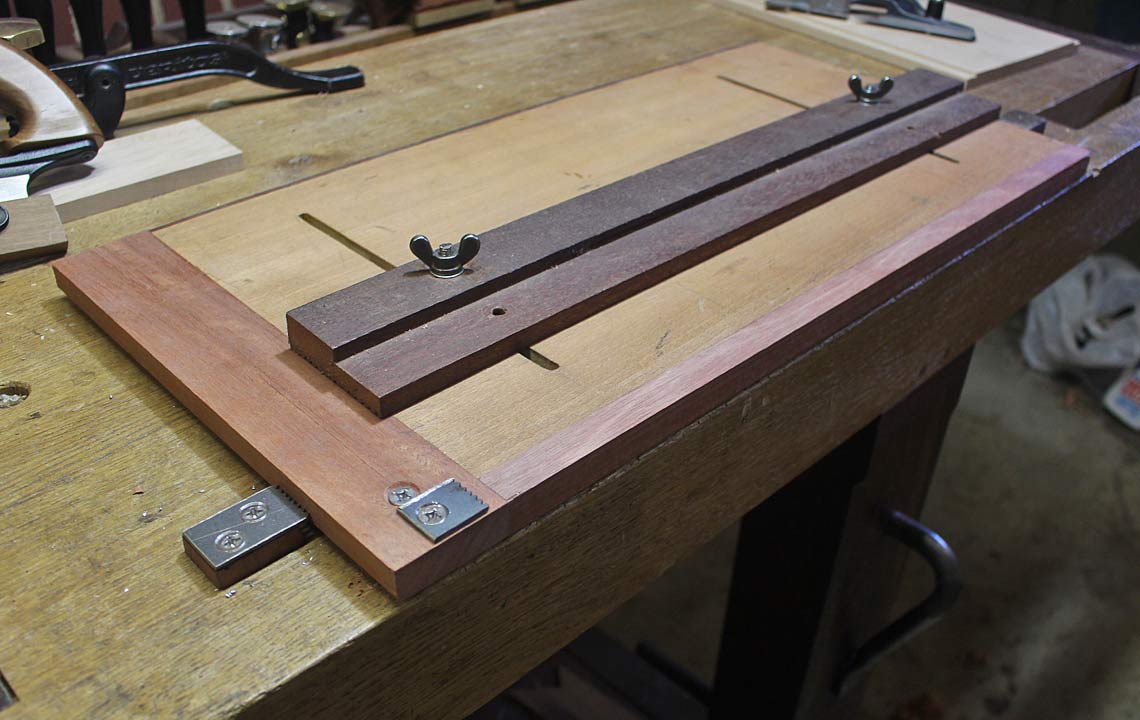
I used three bits of scrap. In the first pic, the RH bit of scrap (running along the bench) is a bit longer than the work piece. The other two bits simply grip the work piece at each end and their lengths are unimportant. The key seems to be in having the bit parallel to the work being longer than the work. It is also displaced to the right of the bench dogs. When the dog in the tail vice exerts pressure, it has no choice but to act on the ends of the work and the long bit of scrap. However, the far end of the latter then pivots about the dog nearest to it, thus pushing back on the work and holding it firmly.
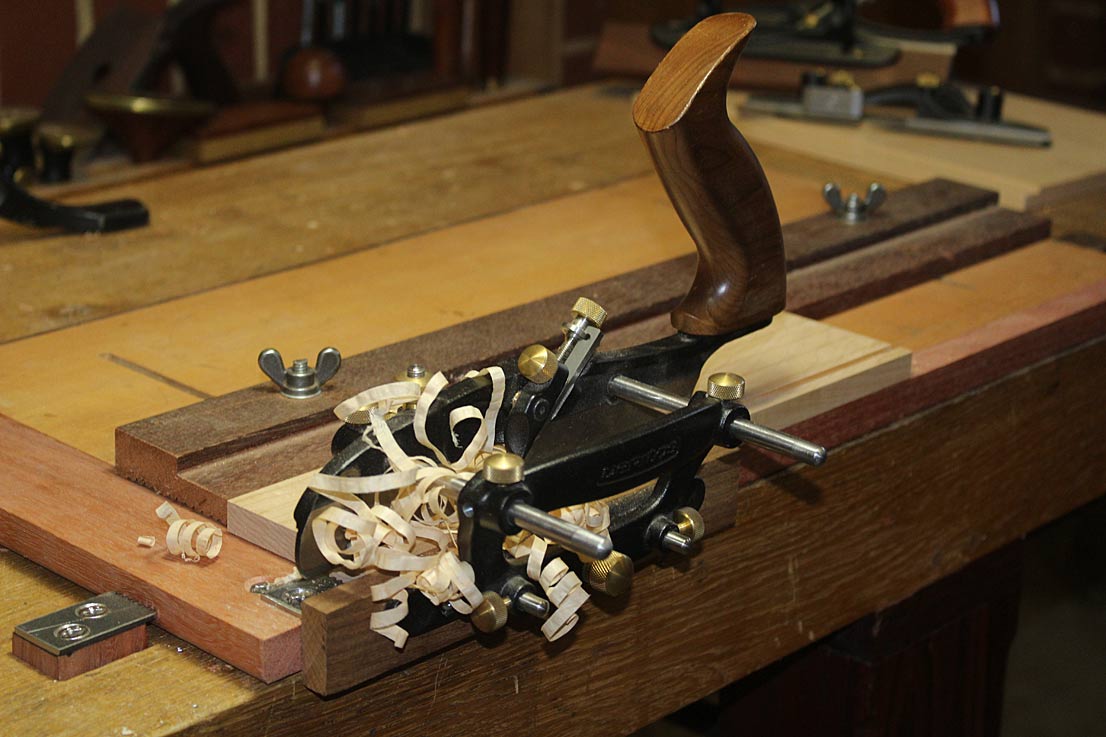
The second shot shows the arrangement again but you can just make out the start of the groove. Had I thought at the time of posting this, I would have taken a picture with the groove more developed.
I'm aware of the risk of posting something which is commonly known as if it was a "discovery" but this was certainly new to me. Does anybody already use this?
It occurred to me that this solution is probably regarded as fairly obvious but I could find no trace of anything like it in The Solution At Hand, the book of jigs and aids by Robert Wearing. Therefore I thought it might be of interest if I showed it on here.
Here are the pics:
I used three bits of scrap. In the first pic, the RH bit of scrap (running along the bench) is a bit longer than the work piece. The other two bits simply grip the work piece at each end and their lengths are unimportant. The key seems to be in having the bit parallel to the work being longer than the work. It is also displaced to the right of the bench dogs. When the dog in the tail vice exerts pressure, it has no choice but to act on the ends of the work and the long bit of scrap. However, the far end of the latter then pivots about the dog nearest to it, thus pushing back on the work and holding it firmly.
The second shot shows the arrangement again but you can just make out the start of the groove. Had I thought at the time of posting this, I would have taken a picture with the groove more developed.
I'm aware of the risk of posting something which is commonly known as if it was a "discovery" but this was certainly new to me. Does anybody already use this?

 - Rob
- Rob