
derekcohen
New Shoots
My first generation of detail/dovetail knives was designed in 2008. These used a fixed V-double bevel (middle of the knives below). The link for these is https://www.inthewoodshop.com/ShopMa...Dovetails.html
This second generation marking knife was inspired by the original blade holder design by Matt Estlea. His knife was designed around the Swann-Morton disposable blades.
Lacking metal machining tools, the blade holder in the build is designed to be made with simple tools. A second difference was the addition of an ergonomic handle in place of the straight, pencil-like handle of Matt. Below are two of the send generation knives with a first generation in the centre ...

I wanted to add a V-double bevel blade since these are easier to use when marking inside narrow dovetail sockets. The Swann-Morton blades are excellent, but need to cut at an angle owing to the bevel on each side of the blade. The issue is that Swann-Morton do not make a V-double bevel blade, and I needed to make my own.
This is what we are after ...
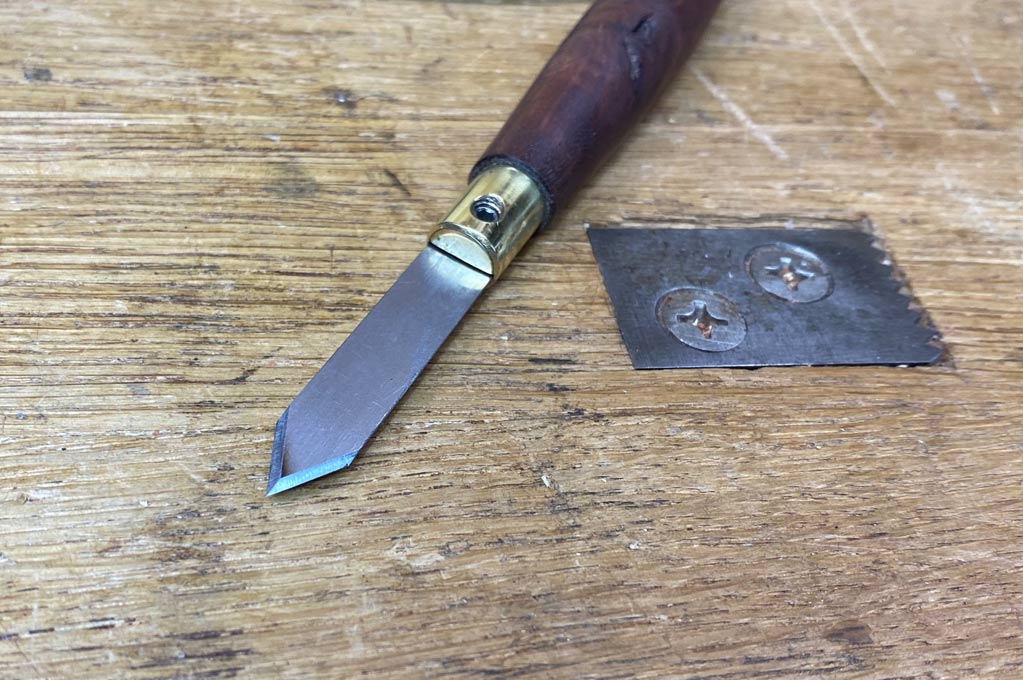
The steel used here is M2 (or high speed steel, HSS). The advantage of this is that it will hold an edge a long time, and it can be ground to shape without much concern about affecting its hardness. The problem is that it is only available in 10mm widths, and this will need to be ground back to 9mm, which is the width of the shafts of the Swann-Morton blades. The accuracy of this width is critical as an undersized blade will move in the blade holder with down force.
The thickness chosen was 0.5mm, as this will get through single kerf dovetails. The issue here is grinding and sharpening tiny bevels. The bevels are 30 degrees and the V is also 30 degrees each side, creating a 60 degree tip.
The steel in a 200mm length ...
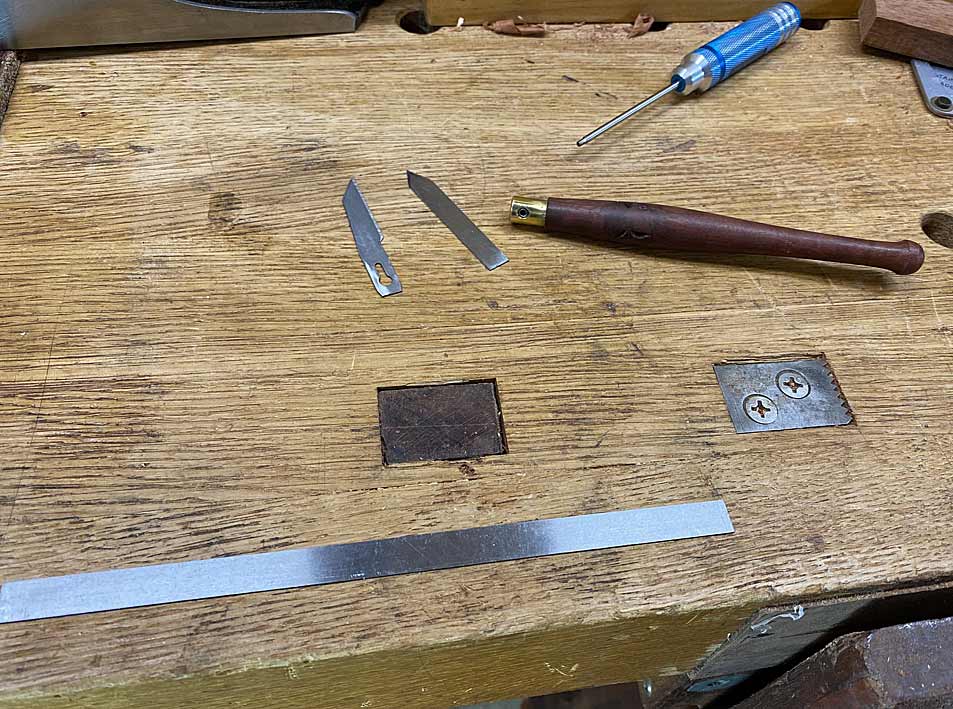
Marking off the 9mm width ...
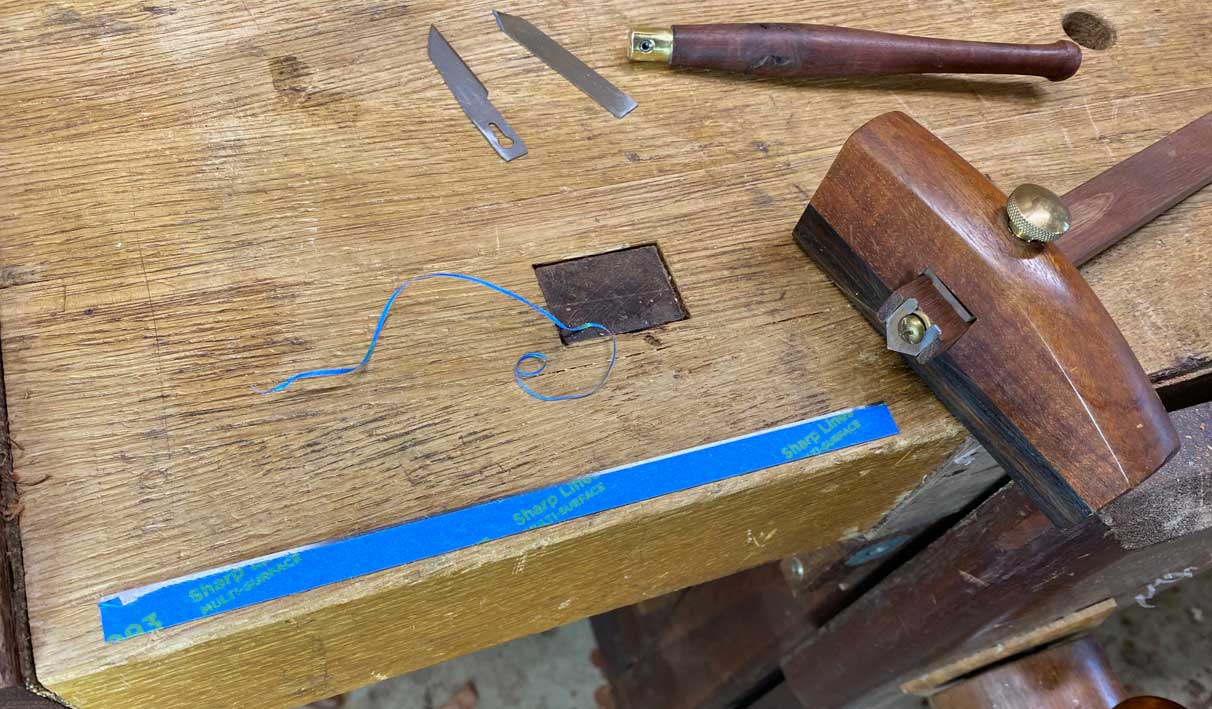
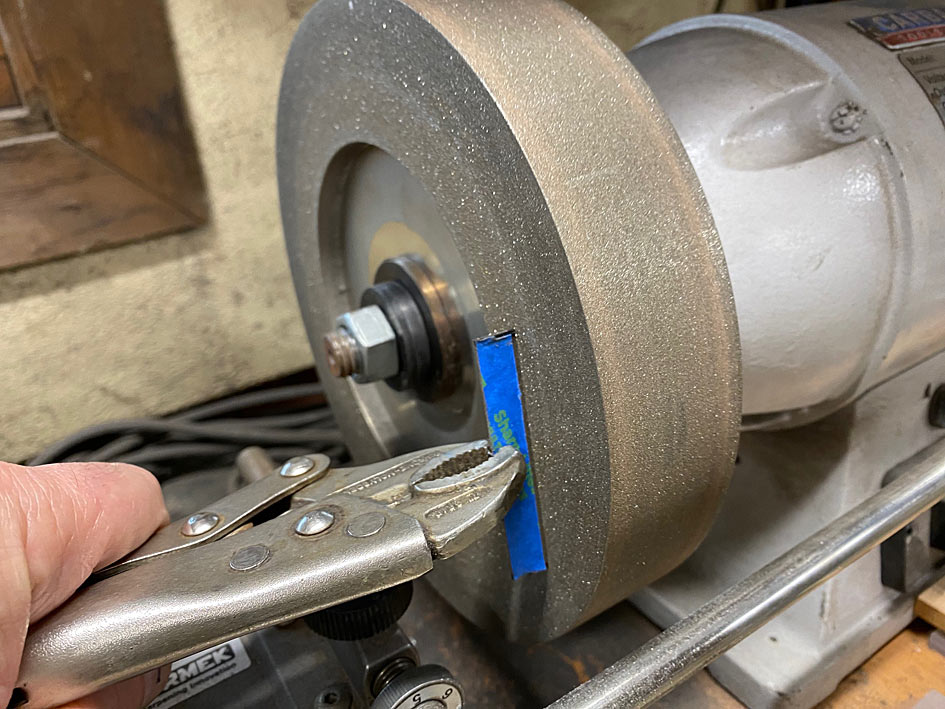
Each blank is approximately 75mm in length. Here a blank is being ground to size on the side of a CBN wheel ...
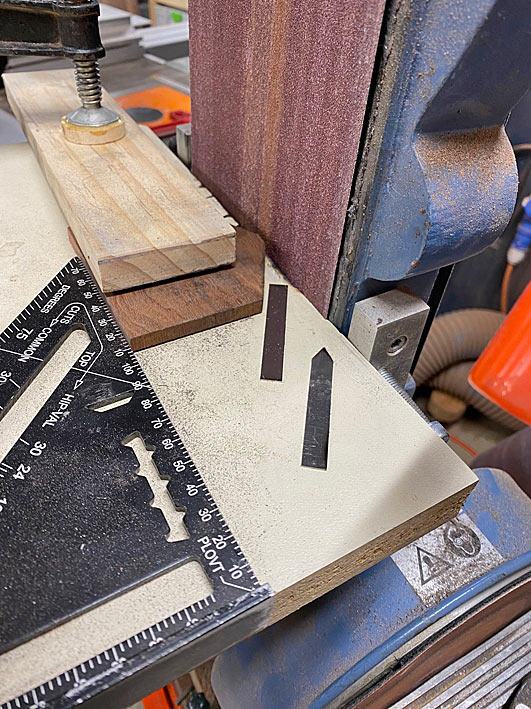
A belt sander is used to create the V profile. A simple guide aids in forming this shape. Do one side and flip it over ...
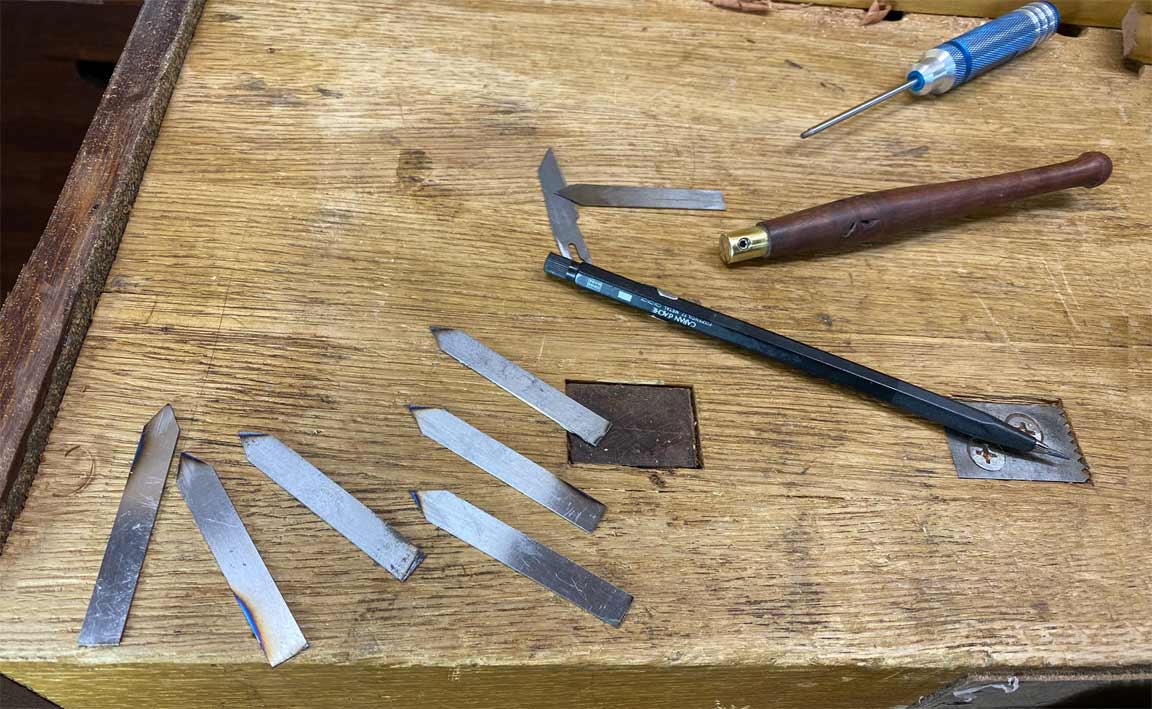
A bunch of blanks ready for grinding ...
The "secret" to grinding and honing the blanks and turning them into functioning blades is a little jig I used for the Mk1. This was modified slightly for use here. Made from angle iron ...
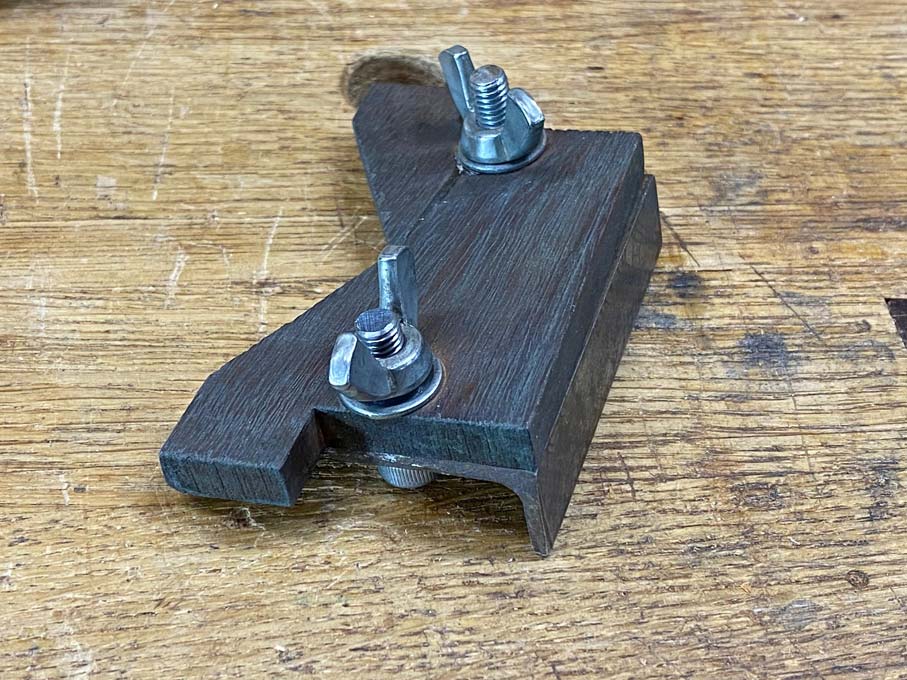
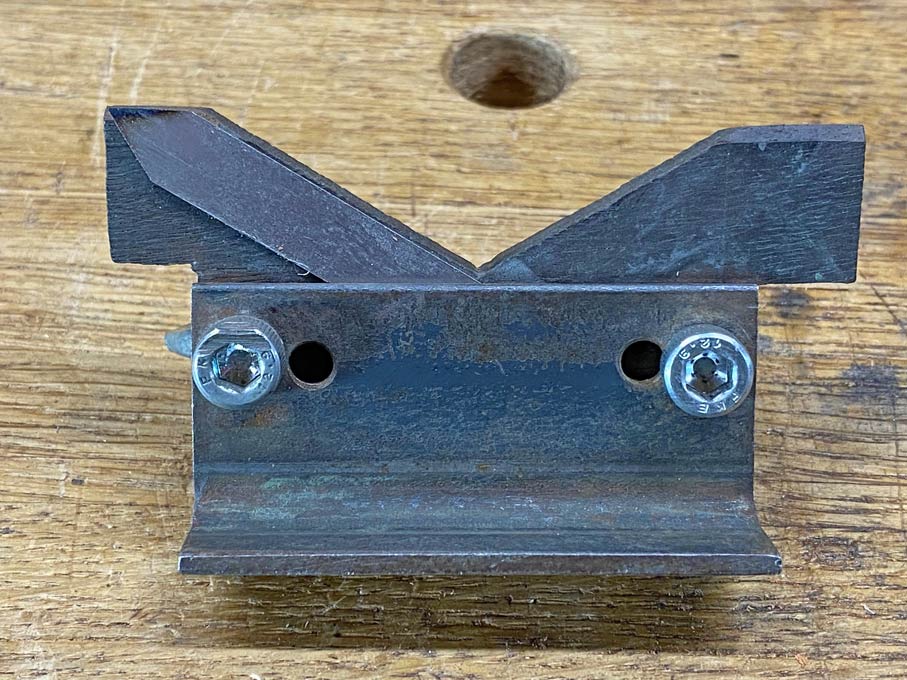
Here it is with a blank clamped inside ...
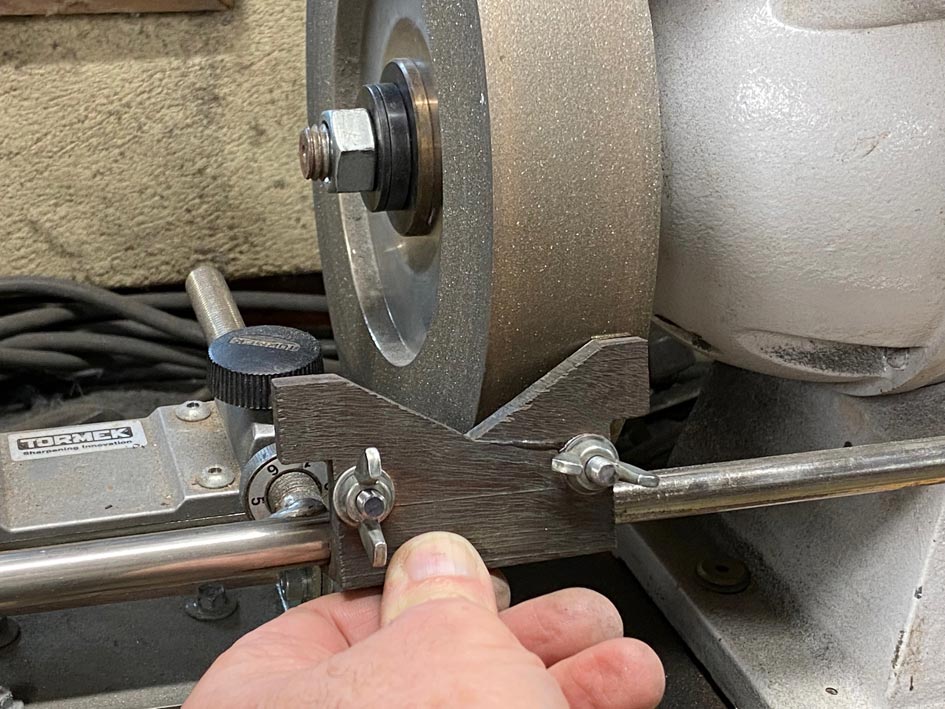
My bench grinder uses the Tormek guide rails. This was used to grind the blank at 30 degrees ...
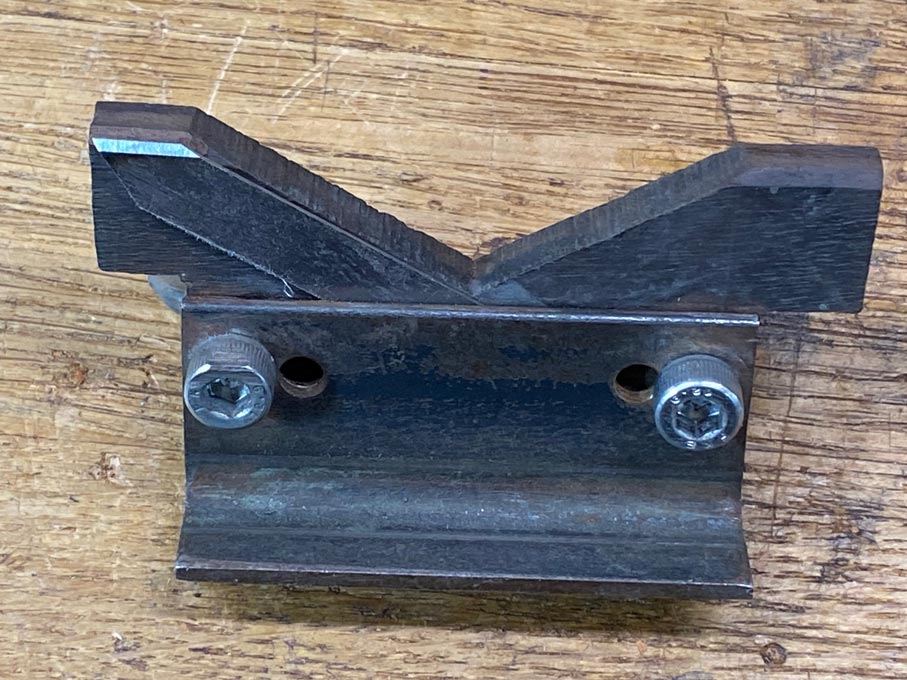
Now the other side may be done in the same way ...
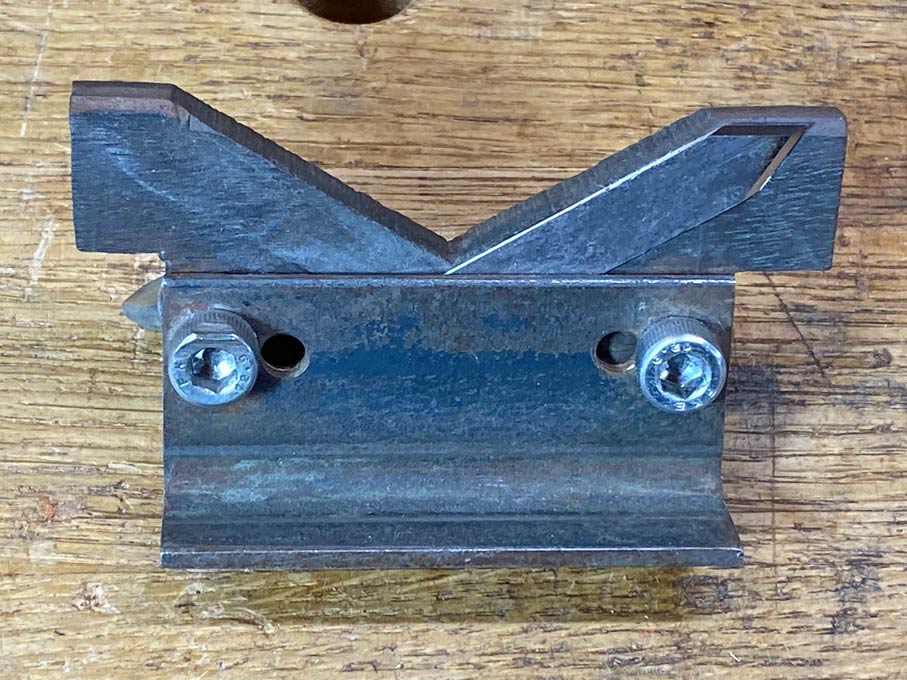
In practice, what you will do is grind one side and hone the bevel through all the grits, and only then grind the second bevel. While a blade can be ground and then sited on the jig, it is easier to retain the position.
For M2 steel, you only want to use diamonds. The plates I have are 600 grit, 1200 grit and 3000 grit.
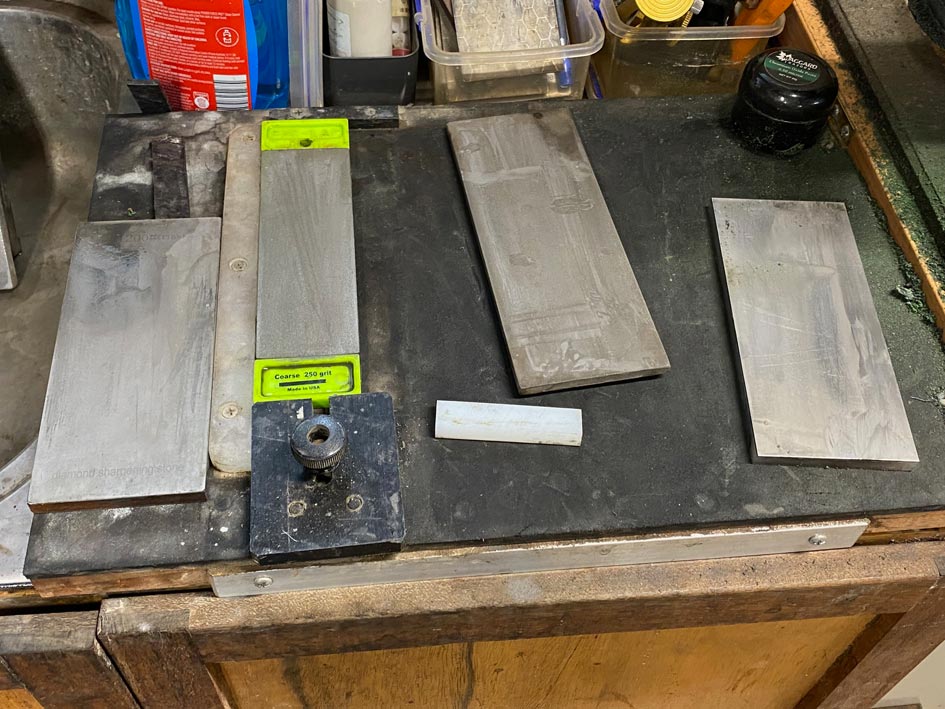
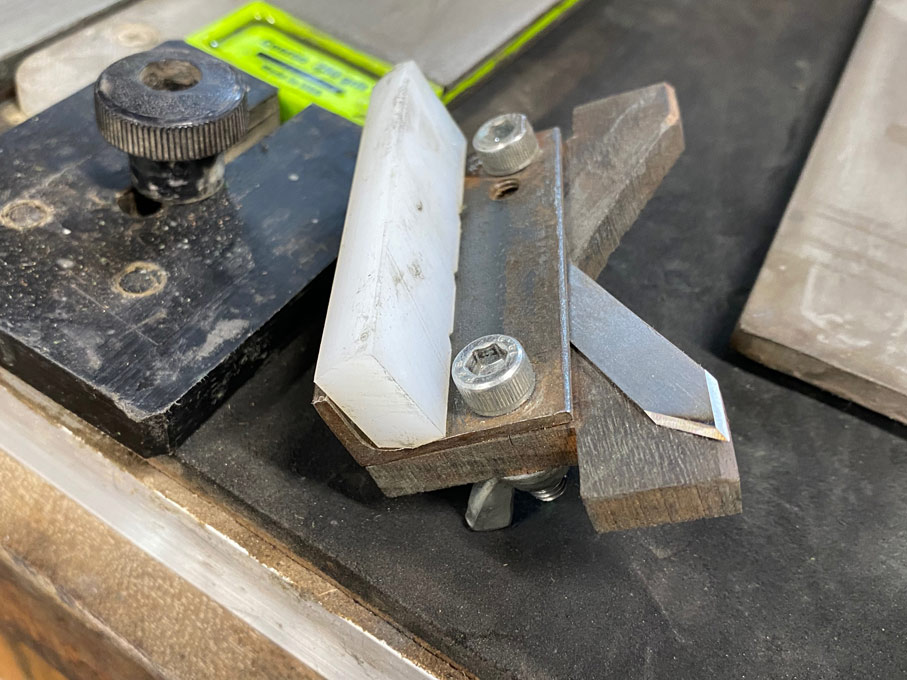
To hone the bevels on the diamond stones, the blade can be left on the grinding guide, and this will function as a honing guide with the addition of a spacer made from UHMW (or a cutting board). This enables the guide to slide on the diamond stones and hone at 30 degrees.
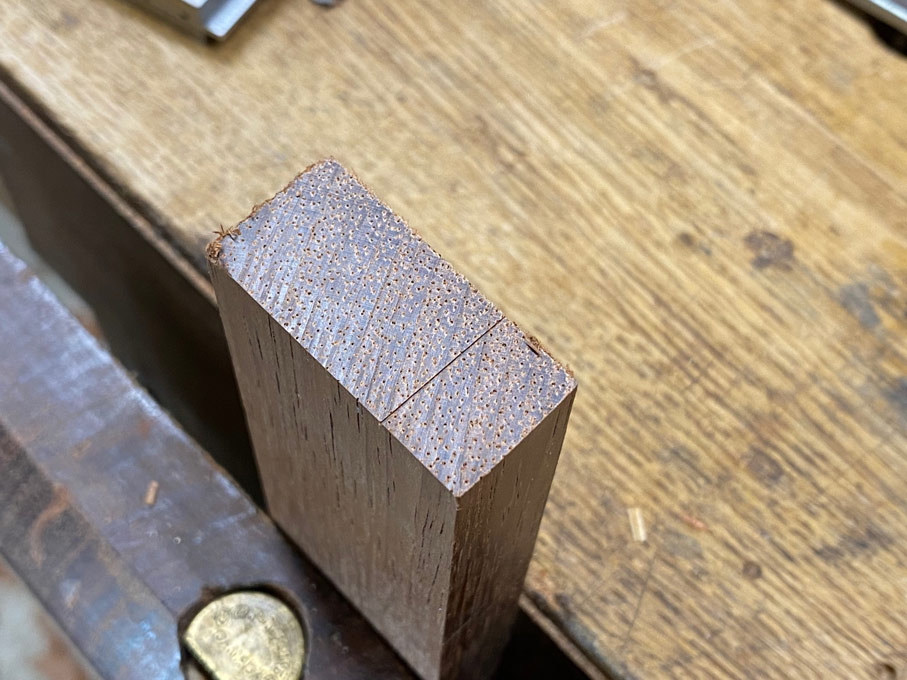
The final test is to use each blade on hardwood end grain (in this case Merbau) ...
Regards from Perth
Derek
This second generation marking knife was inspired by the original blade holder design by Matt Estlea. His knife was designed around the Swann-Morton disposable blades.
Lacking metal machining tools, the blade holder in the build is designed to be made with simple tools. A second difference was the addition of an ergonomic handle in place of the straight, pencil-like handle of Matt. Below are two of the send generation knives with a first generation in the centre ...
I wanted to add a V-double bevel blade since these are easier to use when marking inside narrow dovetail sockets. The Swann-Morton blades are excellent, but need to cut at an angle owing to the bevel on each side of the blade. The issue is that Swann-Morton do not make a V-double bevel blade, and I needed to make my own.
This is what we are after ...
The steel used here is M2 (or high speed steel, HSS). The advantage of this is that it will hold an edge a long time, and it can be ground to shape without much concern about affecting its hardness. The problem is that it is only available in 10mm widths, and this will need to be ground back to 9mm, which is the width of the shafts of the Swann-Morton blades. The accuracy of this width is critical as an undersized blade will move in the blade holder with down force.
The thickness chosen was 0.5mm, as this will get through single kerf dovetails. The issue here is grinding and sharpening tiny bevels. The bevels are 30 degrees and the V is also 30 degrees each side, creating a 60 degree tip.
The steel in a 200mm length ...
Marking off the 9mm width ...
Each blank is approximately 75mm in length. Here a blank is being ground to size on the side of a CBN wheel ...
A belt sander is used to create the V profile. A simple guide aids in forming this shape. Do one side and flip it over ...
A bunch of blanks ready for grinding ...
The "secret" to grinding and honing the blanks and turning them into functioning blades is a little jig I used for the Mk1. This was modified slightly for use here. Made from angle iron ...
Here it is with a blank clamped inside ...
My bench grinder uses the Tormek guide rails. This was used to grind the blank at 30 degrees ...
Now the other side may be done in the same way ...
In practice, what you will do is grind one side and hone the bevel through all the grits, and only then grind the second bevel. While a blade can be ground and then sited on the jig, it is easier to retain the position.
For M2 steel, you only want to use diamonds. The plates I have are 600 grit, 1200 grit and 3000 grit.
To hone the bevels on the diamond stones, the blade can be left on the grinding guide, and this will function as a honing guide with the addition of a spacer made from UHMW (or a cutting board). This enables the guide to slide on the diamond stones and hone at 30 degrees.
The final test is to use each blade on hardwood end grain (in this case Merbau) ...
Regards from Perth
Derek
