
Ok. First post (other than in welcome) on here and it is a problem.
And it is one of those ‘Well, I wouldn’t want to start from there’ type ones. In an ideal world I wouldn’t do it like this at all. However…
I have a bathroom that has been compromised when a lift shaft was out in to accommodate the old Lady when she got doddery on her pins. Late 70s I would reckon. The lift is not in use now (one of those H&C Homelifts with the unique ‘plummet’ feature because of the propensity of the gears to strip) but we may reinstate it soon.
Anyway, the window is now partially obscured and natural light gets into the bathroom via a sort of corridor around the back of the lift shaft. So:
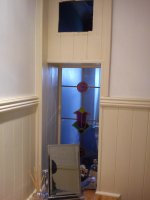
Access is through here and here.
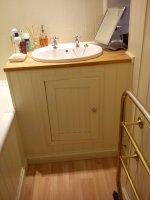
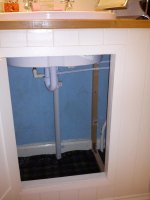
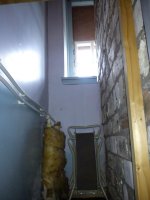
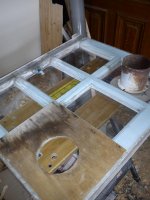
So, a bit tight. (Top window is out, ‘cause I’m repairing it just now).
In plan it looks like this (apologies for the quality – I had a pencil, a pen and a ruler and no other drawing tools down here at the time):

The two red lines are ventilation ducts stylishly done in grey 4 inch drain pipe. Which vent through the outer two panes of the upper sash. One through a clear plastic pane and one through a nailed on piece of plywood. Hmmm. Shrieks quality, don’t it.
Yes, I know vents protruding through window are ghastly. But the wall is about 750mm thick, and other than escape tunnel Charlie described above we are talking 15m height or so of scaffold bridging a lower pitched roof. So, for a temporary solution I’m going to go with still taking ventilation through the sash. In the fulness of time I may do it differently, but, for this winter…
Now, I have taken out, repaired, reglazed and repainted the two sashes (photographs available if anybody is interested – I don’t think those windows had had any attention for 40-50 years, and the paint /putty was mostly non-existent, but the wood was solid. Amazing). All that time spent playing Tetris wasn’t wasted, they do actually fit through the under basin door.
Soooo.
1. I am going to replace the drainpipes with flexible (probably insulated) ducting. If I can, I will have both vents exiting in the same pane, hidden from view from the bathroom (where the lift shaft vent used to exit). Would the best way be a floating panel of marine ply painted and sealed into the existing glazing aperture with putty, or silicon, or some form of beading with a neoprene squish strip? It might need to come out again, you see.
2. Previously the two sash windows were prevented from moving in relation to each other by the good ol’ fashioned 4 inch nail through the stiles into the frame. Any reason why I can’t just put thumb screws through the meeting rail, so essentially the two sashes are a single unit, but easily separable?
3. Is it worth trying some form of heat recovery, rather than just a straight extractor? It’s cold on this hill, this window gets a lot of weather (we’ve had -15C in my memory, plus 70+ mph winds). But it’s just a very small room, and it is really only used for guests, or washing the hound. An in line fan would be about £60, a single room MVHR about double that, if it would work with ducting.
Oh, and before anyone says anything the listing chaps know about this and seem to accept that, unless I go bonkers, whatever I do will be better than it was.
And it is one of those ‘Well, I wouldn’t want to start from there’ type ones. In an ideal world I wouldn’t do it like this at all. However…
I have a bathroom that has been compromised when a lift shaft was out in to accommodate the old Lady when she got doddery on her pins. Late 70s I would reckon. The lift is not in use now (one of those H&C Homelifts with the unique ‘plummet’ feature because of the propensity of the gears to strip) but we may reinstate it soon.
Anyway, the window is now partially obscured and natural light gets into the bathroom via a sort of corridor around the back of the lift shaft. So:
Access is through here and here.
So, a bit tight. (Top window is out, ‘cause I’m repairing it just now).
In plan it looks like this (apologies for the quality – I had a pencil, a pen and a ruler and no other drawing tools down here at the time):
The two red lines are ventilation ducts stylishly done in grey 4 inch drain pipe. Which vent through the outer two panes of the upper sash. One through a clear plastic pane and one through a nailed on piece of plywood. Hmmm. Shrieks quality, don’t it.
Yes, I know vents protruding through window are ghastly. But the wall is about 750mm thick, and other than escape tunnel Charlie described above we are talking 15m height or so of scaffold bridging a lower pitched roof. So, for a temporary solution I’m going to go with still taking ventilation through the sash. In the fulness of time I may do it differently, but, for this winter…
Now, I have taken out, repaired, reglazed and repainted the two sashes (photographs available if anybody is interested – I don’t think those windows had had any attention for 40-50 years, and the paint /putty was mostly non-existent, but the wood was solid. Amazing). All that time spent playing Tetris wasn’t wasted, they do actually fit through the under basin door.
Soooo.
1. I am going to replace the drainpipes with flexible (probably insulated) ducting. If I can, I will have both vents exiting in the same pane, hidden from view from the bathroom (where the lift shaft vent used to exit). Would the best way be a floating panel of marine ply painted and sealed into the existing glazing aperture with putty, or silicon, or some form of beading with a neoprene squish strip? It might need to come out again, you see.
2. Previously the two sash windows were prevented from moving in relation to each other by the good ol’ fashioned 4 inch nail through the stiles into the frame. Any reason why I can’t just put thumb screws through the meeting rail, so essentially the two sashes are a single unit, but easily separable?
3. Is it worth trying some form of heat recovery, rather than just a straight extractor? It’s cold on this hill, this window gets a lot of weather (we’ve had -15C in my memory, plus 70+ mph winds). But it’s just a very small room, and it is really only used for guests, or washing the hound. An in line fan would be about £60, a single room MVHR about double that, if it would work with ducting.
Oh, and before anyone says anything the listing chaps know about this and seem to accept that, unless I go bonkers, whatever I do will be better than it was.


