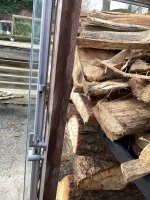
• Hi all and welcome to TheWoodHaven2 brought into the 21st Century, kicking and screaming! We all have Alasdair to thank for the vast bulk of the heavy lifting to get us here, no more so than me because he's taken away a huge burden of responsibility from my shoulders and brought us to this new shiny home, with all your previous content (hopefully) still intact! Please peruse and feed back. There is still plenty to do, like changing the colour scheme, adding the banner graphic, tweaking the odd setting here and there so I have added a new thread in the 'Technical Issues, Bugs and Feature Requests' forum for you to add any issues you find, any missing settings or just anything you'd like to see added/removed from the feature set that Xenforo offers. We will get to everything over the coming weeks so please be patient, but add anything at all to the thread I mention above and we promise to get to them over the next few days/weeks/months. In the meantime, please enjoy!

Solar Kiln, promising progress.

AndyP

Moderator
Staff member
Joined
Jul 22, 2014
Messages
14,058
Reaction score
1,549
Location
14860 Normandy, France
For reasons I still can’t get my head around we were 8 months late with our order for logs this year. Normally get them delivered in April, stacked outside for a year then bought under cover for 6 months before burning.
In order to speed up the drying process so that these can be burned next winter I decided to repurpose this mini greenhouse as a solar kiln.
IMG_4630.jpeg
The orange crate will be removed shortly and I’ve another mini greenhouse which I will also repurpose.

Outside Temperature 7°c inside the “kiln” 22°c .
IMG_4632.jpeg
Moisture content of the unseasoned logs measured between 35 and 41%. The seasoned logs we are burning now are between 15 & 20% .

My one concern is the amount of ventilation at the top of the “kiln”. The gap under the glass is about 1” at its greatest.
IMG_4631.jpeg

it will be interesting to see how quickly, if at all, the moisture content can be reduced to an acceptable level.
 
Interesting... I don't have the facility to burn logs but it's an interesting approach 🤔
 
Not that I know anything about this, but I do know about my bathroom Isn't ventilation the key; the passing of the moist air out and the dryer air in?
 
Andy, this seems to be a lot of work for you. Is seasoned firewood available or does the cost too high?
Neat Idea (y)
 
That wooden triangle on the gable would appear to offer the opportunity to gain additional ventilation, if it proves necessary.
 
Andy, this seems to be a lot of work for you. Is seasoned firewood available or does the cost too high?
Neat Idea (y)
The hard bit Scott is shifting this
IMG_4625.jpeg
Up those 7 steps on the right and stacking them neatly thus, the row on the far left now at full height. Took about 8 hours over three days ( one day rained off )
IMG_4626.jpeg
Then during the year moving the stacks into the shed
IMG_2802.jpeg
Yep burning wood keeps you warm, when you shift it, stack it, split it and sit in front of it when it’s alight.:)

Never even thought about buying seasoned wood.
 
Yep but would let rain in . I will keep and eye on condensation level.

I didn't necessarily mean remove it altogether. Fitting a grill, or drilling holes (that slope up from the outside), could give increased ventilation without admitting water.
 
Not that I know anything about this, but I do know about my bathroom Isn't ventilation the key; the passing of the moist air out and the dryer air in?
From what I’ve read about solar kilns for drying timber, circulation is key. There is room at the base for air to come in, as the hot, moist air rises it will, I hope, escape from the top. The professional solar kilns will have a fan to help the process, which is not an option for here.
 
I didn't necessarily mean remove it altogether. Fitting a grill, or drilling holes (that slope up from the outside), could give increased ventilation without admitting water.
Ah I see, sorry. That has given me an idea:unsure:. Thanks.
 
We have had a lot of trees felled recently in the main garden and the orchard. Split a lot of the log pieces. The tree guys reckoned that excessive focus on drying is unnecessary. We have been mixing freshly felled with 2 year dried. Once the fire is hot the freshly felled burns very well. Efficient modern log burner with a clear flue (2 bends only). Burns fine. Ideal for overnight. Chimney is external and easy to sweep. Very little tar.
 
Interesting Adrian, to get the fire hot enough to burn unseasoned wood then seasoned wood is needed to start with of course and until this winter is over I will not know how many seasoned logs I will have leftover.
I’m not sure if my approx 24 year old log burner would be classed as efficient and modern. The flue is straight up through the centre of the house and swept twice a year.
 
Last time I had your stats I was 17. Now 5'11",210 lbs and a 32" waist.
I've been the same weight, give or take, since I was 17, 6'2", 185lbs/85kgs (give or take a couple of kilos either way over the years), and I'm 49 now. Actively trying to put some more muscle mass on right now so for the first time in over 30 years my weight may push closer to 90kgs...
 
I am short compared to my brother and cousins who range in height from 6'3" to 6'7"
In my 50's I was around 190 lbs. I have a mesomorphic body, so that is my excuse. :unsure:
 
I am pushing 87kg again (nephrologist calls me obese).
Slightly overweight for my height. Should be about 75kg which is what I weighed when cycling.
I blame it all on covid lock down :rolleyes: and injured foot.
 
Nice solution to the problem Andy, I imagine that the size and shape of the top vent is critical to achieve the heat needed and at the same time allowing the moisture to be vented out. The only thing I can think might help is to have a cold back panel which would collect the moisture and let it run down and out the bottom allowing the top vent to be smaller which will raise the already impressive temperature difference.
I had a similar problem once and set up a large cupboard in my garage with a fan and a dehumidifier in it. Worked very well but not at all clever on the electricity front!
I did find that to gain a true picture of mc a log had to be cut in half, the moisture wicking out from the ends much faster than the middle
Ian
 
I've been the same weight, give or take, since I was 17, 6'2", 185lbs/85kgs (give or take a couple of kilos either way over the years), and I'm 49 now. Actively trying to put some more muscle mass on right now so for the first time in over 30 years my weight may push closer to 90kgs...
I have NEVER bought trousers that were not 30” waist 33” leg so have been same height & weight for 46 years. Being married to a full paid up member of the health eating club for 34 of those years has undoubtedly helped.
 
Interesting Adrian, to get the fire hot enough to burn unseasoned wood then seasoned wood is needed to start with of course and until this winter is over I will not know how many seasoned logs I will have leftover.
I’m not sure if my approx 24 year old log burner would be classed as efficient and modern. The flue is straight up through the centre of the house and swept twice a year.
Yes - our log burner is only a year old and has various adjustable baffle plates and vents that make it very controllable. It doesn't seem bothered by unseasoned wood. Very easy to sweep as the main flue run is external and the bottom cap is at head height and comes off for access. I sold our cold cast iron log burner and the new one (in different location) has been a revelation. Vastly more effective and efficient.
 
I guess yours is freestanding Adrian? Mine is inset with the chimney built around it, which does work as a kind of heatsink overnight. There are vents at the bottom of the door for intake and behind the door to control the flow up into the flue.
IMG_4638.jpeg
I would hazard a guess that replacement would be very costly and unlikely to provide any sort of payback.
 
The major keys for drying wood are temperature, relative humidity (RH), and air movement. Because, Andy, your project is drying logs to burn you're not particulalrly concerned about drying faults such as splits, shakes, warp, case-hardening, etc. So, for you the main keys to quick'ish drying are warmth to lower RH and air movement which is what takes moisture away from a log or board's surface. If you can get air moving through your chamber at a slow walking pace along with RH somehere in the region of 50 - 60% that would be ideal for fast drying. But be aware that wood at the inlet side will be drier than wood at the outlet end of air flow, unless you can reverse the airflow at equal intervals: I suspect that fact won't be of too much concern to you if all you want is logs dry enough to burn cleanly.

Interestingly, the government legislation leading to the Ready to Burn scheme and logo on bags of logs uses the wet basis (wb) for determining wood MC. The legislation requires anything labelled Ready to Burn be certified as dried to a maximum of 20% (wb) MC. 20% MC wb is the same as 25% MC dry basis (db) which is the measuring system all timber processors and merchants as well as all woodworkers that make things out of the stuff use. It's really only the biomass fuel sector that uses the wet basis for calculating wood MC. Slainte.
 
Thank you Richard, very informative as always. Air movement is key and I am relying on the heat generated behind the glass to move the cold air from the bottom up to the top and out. Time will tell.
I did not know about the two different methods of measuring MC, although am I not surprised
 
I did not know about the two different methods of measuring MC, although am I not surprised
Just in case you're not quite sure of the difference between the wet basis and dry basis methods for determining wood MC here is a link to a short blog post at Lost Art Press that appeared at about the same time as they republished Cut & Dried last year. Slainte.
 
Way to much condensation this morning. Clearly if left like this the softwood frame will rot from the water running down the glass with nowhere to go..
IMG_4643.jpeg IMG_4641.jpeg
All that condensation has come from somewhere, the logs, so I take it as a sign the “kiln” is working.
Before doing any surgery on the frame I decided to fix the front and side glass panels in a slightly open position and increase the gap under the roof glass. That rotting timber will be replaced shortly.
IMG_4644.jpeg

ventilation gap on one of the front doors.
IMG_4645.jpeg

These glass panels came from our old house in the UK and were an internal secondary glazing system. All of the hinges and fixings are made of plastic and have stood up remarkably well to being outdoors. I made that frame from pressure treated softwood a few years before we moved here so is well over 20 years old. I have another frame that I made for my FIL shortly afterwards which I made from cedar which is waiting to be erected as a second kiln.
 
I guess yours is freestanding Adrian? Mine is inset with the chimney built around it, which does work as a kind of heatsink overnight. There are vents at the bottom of the door for intake and behind the door to control the flow up into the flue.
View attachment 38835
I would hazard a guess that replacement would be very costly and unlikely to provide any sort of payback.
Yes, freestanding Andy.

You may not remember the original fireplace but we moved the whole operation to the other side of the room. The snag with being encased in brick is efficiency drops a lot. The new one is three times better than the 20 year old one we used to have.
 
We stick most of our split logs in a couple of log stores that roofed over but otherwise open to airflow. Quite sheltered. We have around 10 cubic metres under cover properly stacked and anything else is just in a heap really. Wood is not a sponge so it still dries. In storage we try to separate fast burn (apple) from slow burn (oak) and spitty (Leylandii) so that we get a mix.
 
Yep but would let rain in . I will keep and eye on condensation level.

I wouldn't worry too much about a bit of rain. It is moisture withing the cells / vessels of the wood you need gone, a bit of superficial wet will dry off quickly. Warm and moist will make for wet moldy wood IME - tried putting logs in the greenhouse, worse that leaving them outdoors
 
I wouldn't worry too much about a bit of rain. It is moisture withing the cells / vessels of the wood you need gone, a bit of superficial wet will dry off quickly. Warm and moist will make for wet moldy wood IME - tried putting logs in the greenhouse, worse that leaving them outdoors
Spot on. Wood is not a sponge. Best to keep the worst of the rain off but outdoor stacks work fine.
 
Early results are promising. Since adjusting the glass to improve ventilation there has been no more condensation.
The same log which had a MC reading of 37% a month ago is now 26%. Which surprises me.
IMG_4675.jpeg
I have now moved the crate and filled the other half of the kiln with logs that have been stacked outside and they all read around 37%
IMG_4674.jpeg

I’ll take further readings in a months time and if the MC is remains at the 26% mark I shall move them to covered storage and load the kiln with more logs.
 
Early results are promising. Since adjusting the glass to improve ventilation there has been no more condensation.
The same log which had a MC reading of 37% a month ago is now 26%. Which surprises me.
I have now moved the crate and filled the other half of the kiln with logs that have been stacked outside and they all read around 37%
I’ll take further readings in a months time and if the MC is remains at the 26% mark I shall move them to covered storage and load the kiln with more logs.
If that moisture meter is measuring on the dry basis that 26% MC you have is within about 0.2% of what can be labelled as Ready to Burn in compliance with the government legislation for the biomass fuel sector, i.e., the wood has to be ≤20% MC to be labelled as Ready to Burn. If you recall I mentioned that the moisture content determination methodology sanctioned by the government is on the wet basis. Therefore 20% MC(wb) is the same as 25% MC(db).

You can almost legally bag up your logs and sell them at the gate, ha ha. Slainte.Slainte.
 
Richard
I’ve read your posts again and the blog post that you linked to and there is still a gap in my understanding.
The moisture reader’s guide states it reads between 5% and 40% RH (relative humidity) so is it measuring as per the WB or the DB?
 
Richard
I’ve read your posts again and the blog post that you linked to and there is still a gap in my understanding.
The moisture reader’s guide states it reads between 5% and 40% RH (relative humidity) so is it measuring as per the WB or the DB?
I suspect your moisture meter reads on the dry basis (db). I say that because it appears that the user guide doesn't specify that it reads on the wet basis, or can switch. I can't tell from the photos what brand you have, but it might be worth your while contacting the manufacturer or the supplier and and asking them. If you ask them if the meter reads on the dry basis or the wet basis and can it be switched from one to the other basis ... and if the people you ask act all confused and bewildered, I'd guess it's 99.% certain it reads exclusively on the dry basis.

There are moisture meters out there sold specifically for measuring the moisture content of biomass fuel such as this one.
These folks at Humidity Services near Leeds reckon their two prong moisture meter is for biomass fuel.
Here's another one From Merlin, but as can be seen these meters tend to be a bit pricey, this one being over £1000. I suspect the one above is equally pricey.

The biomass sector is quite specialised, it seems, but if I was buying one of these meters for testing biomass fuel I'd certainly investigate on what basis the meters work on, i.e., db or wb, or if they can switch between both. Slainte.
 
Thank you Richard,
The make, for info, is Dr Meter, an American company. The model is no longer available but I have emailed them.
 
Just received a reply
“Thank you for reaching out to us with your question about the Dr.meter MD812 Digital Moisture Meter.
The MD812 moisture meter uses the **dry basis** for measuring moisture content in wood. This means that a reading of 20% on the device corresponds to approximately 25% on the wet basis, which aligns with the UK standard you mentioned (maximum 20% wet basis for firewood).”
 
Just received a reply
“Thank you for reaching out to us with your question about the Dr.meter MD812 Digital Moisture Meter.
The MD812 moisture meter uses the **dry basis** for measuring moisture content in wood. This means that a reading of 20% on the device corresponds to approximately 25% on the wet basis, which aligns with the UK standard you mentioned (maximum 20% wet basis for firewood).”
It's good that they responded. The reply confirms what I suspected. Now that you know that you are able, if you so desire, to convert the readings from the dry basis to the wet basis. I've included some conversions in the wee table below. As you can see 25%MCdb = 20%MCwb

%MCwb (Wet Basis) = %MCdb (Dry Basis)
5%MCwb -------------= 5.3%MCdb
10%MCwb ------------= 11.1%MCdb
15%MCwb ------------= 17.6%MCdb
20%MCwb ------------= 25%MCdb
25%MCwb ------------= 33.3%MCdb
30%MCwb ------------= 42.9%MCdb
35%MCwb ------------= 53.8%MCdb

If you're as nerdy as me about all this wood science stuff you could do actual conversions for every dry basis reading you might get using the following formula:
(%MCdb / (100% + %MCdb)) X 100 = %MCwb. For example:
25%MCdb converts to 20%MCwb thus:
(25%MCdb / ( 100% + 25%MCdb)) X 100 = 20%MCwb

Dr Meter have a moisture meter, model MD918 which I suspect operates in much the same way as the one you have. In the user's manual for that meter in the last paragraph of page three they state "In the drying method, the moisture content ration is obtained by measuring the difference of moisture content of timber specimen before and after drying (absolute dry)." Note my highlight of absolute dry which rather confirms, I believe, that that meter like yours, is calibrated to work on the dry basis.

All the above was probably too much information, ha ha. Slainte.
 
Back
Top