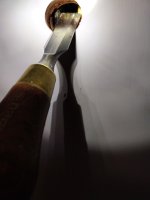
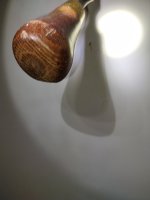
For that read 'lath and plaster'. The red arrow marks the spot but the actual entry point for the wire is tucked way down and nearly inaccessible.

The Problem
SWMBO had bought a wall-light for the en-suite. I originally thought that I could run the lighting cable down from the ceiling/wall junction to the light via some small plastic ducting fixed to the wall. It was then that I realised that the light fixed tight against the wall with no way of getting the wire, when fed over the wall surface, into the back of the light fitting. Yes, I could still run the wire down inside the trunking, get a Dremel out and grind some of the plaster away to sink the wire into. Trouble with that would be the unknown depth of the plaster and would it be enough before I started hitting a lath. Basically chasing out a channel in lath and plaster is almost certainly doomed.
Possible solution
On investigation in the loft I realised that the wall was lath and plaster and on the other side was a cavity.. But how to thread the wire down and back out. If it was a pattress (back box) being fitted to the lath and plaster wall then that would have given a nice wide opening to ferret around in to catch the wire that had been fed down in the cavity. But it isn't and the lamp is only about the size of a 2p piece where it touches the wall. And then .......
Final solution
If I gently cut a small hole through the lath and plaster using a sharp Forstner bit then that would give me some access albeit small. You can just make out the hole in the ceiling for the original wire routing,
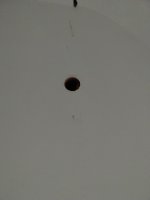
I then taped a magnet to the end of the wire

Back in the ensuite, I stuck a big lump of steel to act as magnet bait and hopefully providing better attraction than any nails in the lath and plaster. AKA chisel

Gently fed the wire down the cavity and felt the slight tug when it attached itself to the chisel...you can just make out the wire
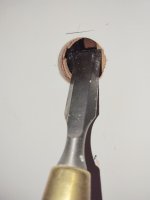
Judicious use of tapering pliers et voila

The Problem
SWMBO had bought a wall-light for the en-suite. I originally thought that I could run the lighting cable down from the ceiling/wall junction to the light via some small plastic ducting fixed to the wall. It was then that I realised that the light fixed tight against the wall with no way of getting the wire, when fed over the wall surface, into the back of the light fitting. Yes, I could still run the wire down inside the trunking, get a Dremel out and grind some of the plaster away to sink the wire into. Trouble with that would be the unknown depth of the plaster and would it be enough before I started hitting a lath. Basically chasing out a channel in lath and plaster is almost certainly doomed.
Possible solution
On investigation in the loft I realised that the wall was lath and plaster and on the other side was a cavity.. But how to thread the wire down and back out. If it was a pattress (back box) being fitted to the lath and plaster wall then that would have given a nice wide opening to ferret around in to catch the wire that had been fed down in the cavity. But it isn't and the lamp is only about the size of a 2p piece where it touches the wall. And then .......
Final solution
If I gently cut a small hole through the lath and plaster using a sharp Forstner bit then that would give me some access albeit small. You can just make out the hole in the ceiling for the original wire routing,
I then taped a magnet to the end of the wire
Back in the ensuite, I stuck a big lump of steel to act as magnet bait and hopefully providing better attraction than any nails in the lath and plaster. AKA chisel
Gently fed the wire down the cavity and felt the slight tug when it attached itself to the chisel...you can just make out the wire
Judicious use of tapering pliers et voila