Phil
Old Oak
Trivets 2015/23 & 2025
This is the 2015 thread, re-posted in 2023 with pics.
The 2015 thread pics were lost in k-ktbucket.
https://www.thewoodhaven2.co.uk/threads/trivets.8438
The design inspiration was from an article “Waffle Pattern Trivets”, pattern number 3.
https://www.craftsmanspace.com/free-projects/waffle-pattern-trivet-plans.html
Right, now the 2025 version ………………….
I was donated some Red Oak offcuts by my beehive friend and had all the American Ash offcuts from his steps project.
Timber cost = Zero.
They had already been through the planer on the EB-TP.
The Oak had a 10mm strip cut off the length which would be used for feet and the one Ash had strips cut off the long edge, 10mm, for feet.
Why feet? This is a different design to the previous ones and I was being overly cautious of heat transfer to a table surface.
The Oak would get 9 holes of 30mm drilled using a Forstner bit.
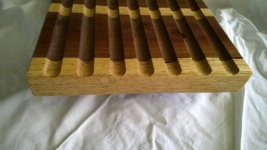
The Ash would get rounded grooves for the top.
Ash size 205mm long X 125mm wide X 23mm thick. The Ash is a bit narrow but can be used side by side in the width and length.
Oak size 200mm X 200mm. Nice size for a trivet.
See the Finishing Thread
https://www.thewoodhaven2.co.uk/threads/fuming-test.10695
The Oak and feet and one piece of Ash went into the ammonia fuming box for a couple of days. The other piece of Ash and the feet were left au natural.

The Oak was marked and drilled using the drill press.

Forstner Drilling Station

The Oak is a bit brittle on the exit side, not serious, a bit of sanding will deal with it.


Oak holes, not too shabby.
Next is the visit to the router table.
The Oak and Ash top edges received a smallish round over, made it look very good.

Oak top
Should have also done the Ash ends &&%$%#!
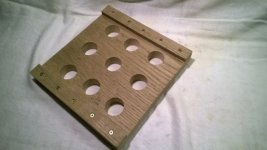
Oak feet
 {
{
Oak feet edge
The Ash was measured and marked to get 5 grooves, 8mm deep. The small round bit was used.
A tedious process, raise bit 0.5mm, rout both boards outside grooves, both sides of the top. Raise bit 0.5mm and repeat until groove about 8mm deep.
Move the fence for the next rows, repeat above process.
Finally move the fence for the middle grove, repeat above process.
The Ash is really nice to work with and has some beautiful grain pattern. New sharp router bits.

Ash Grooved
The feet were drilled, countersunk, and screwed on using 20mm screws. The Ash required pilot holes.

Ash plain & fumed feet
Some hand sanding before sealer being applied.
I used Woodoc 5 Interior. The end grain sucks it in, so be patient and keep on applying. Let dry overnight, some light sanding with 340grit.
After final coat sanding using 1500grit, takes the shine off and any dust nibs.

Sealing station

Ash fumed sealed

Ash plain sealed
The Ash had a slight unevenness on the width, this was one of the warped boards, so it required some small brown felt squares to be glued on.
Thank you for reading
Phil
This is the 2015 thread, re-posted in 2023 with pics.
The 2015 thread pics were lost in k-ktbucket.
https://www.thewoodhaven2.co.uk/threads/trivets.8438
The design inspiration was from an article “Waffle Pattern Trivets”, pattern number 3.
https://www.craftsmanspace.com/free-projects/waffle-pattern-trivet-plans.html
Right, now the 2025 version ………………….
I was donated some Red Oak offcuts by my beehive friend and had all the American Ash offcuts from his steps project.
Timber cost = Zero.
They had already been through the planer on the EB-TP.
The Oak had a 10mm strip cut off the length which would be used for feet and the one Ash had strips cut off the long edge, 10mm, for feet.
Why feet? This is a different design to the previous ones and I was being overly cautious of heat transfer to a table surface.
The Oak would get 9 holes of 30mm drilled using a Forstner bit.
The Ash would get rounded grooves for the top.
Ash size 205mm long X 125mm wide X 23mm thick. The Ash is a bit narrow but can be used side by side in the width and length.
Oak size 200mm X 200mm. Nice size for a trivet.
See the Finishing Thread
https://www.thewoodhaven2.co.uk/threads/fuming-test.10695
The Oak and feet and one piece of Ash went into the ammonia fuming box for a couple of days. The other piece of Ash and the feet were left au natural.
The Oak was marked and drilled using the drill press.
Forstner Drilling Station
- 30mm for about 1.5mm
- 20mm for 10mm
- 10mm right through.
- 30mm right through.
The Oak is a bit brittle on the exit side, not serious, a bit of sanding will deal with it.
Oak holes, not too shabby.
Next is the visit to the router table.
The Oak and Ash top edges received a smallish round over, made it look very good.
Oak top
Should have also done the Ash ends &&%$%#!
Oak feet
{Oak feet edge
The Ash was measured and marked to get 5 grooves, 8mm deep. The small round bit was used.
A tedious process, raise bit 0.5mm, rout both boards outside grooves, both sides of the top. Raise bit 0.5mm and repeat until groove about 8mm deep.
Move the fence for the next rows, repeat above process.
Finally move the fence for the middle grove, repeat above process.
The Ash is really nice to work with and has some beautiful grain pattern. New sharp router bits.
Ash Grooved
The feet were drilled, countersunk, and screwed on using 20mm screws. The Ash required pilot holes.
Ash plain & fumed feet
Some hand sanding before sealer being applied.
I used Woodoc 5 Interior. The end grain sucks it in, so be patient and keep on applying. Let dry overnight, some light sanding with 340grit.
After final coat sanding using 1500grit, takes the shine off and any dust nibs.
Sealing station
Ash fumed sealed
Ash plain sealed
The Ash had a slight unevenness on the width, this was one of the warped boards, so it required some small brown felt squares to be glued on.
Thank you for reading
Phil
Last edited: