• Hi all and welcome to TheWoodHaven2 brought into the 21st Century, kicking and screaming! We all have Alasdair to thank for the vast bulk of the heavy lifting to get us here, no more so than me because he's taken away a huge burden of responsibility from my shoulders and brought us to this new shiny home, with all your previous content (hopefully) still intact! Please peruse and feed back. There is still plenty to do, like changing the colour scheme, adding the banner graphic, tweaking the odd setting here and there so I have added a new thread in the 'Technical Issues, Bugs and Feature Requests' forum for you to add any issues you find, any missing settings or just anything you'd like to see added/removed from the feature set that Xenforo offers. We will get to everything over the coming weeks so please be patient, but add anything at all to the thread I mention above and we promise to get to them over the next few days/weeks/months. In the meantime, please enjoy!

Mike's ext'n & renovation (solar panels)

The wall saga is on-going. The boss of the limewash company is coming over this evening, and I've had Anglia Lime out previously. We'll be doing a test patch shortly, and then making a plan depending on the results of that........but I'm expecting to have a scaffold up within weeks, and to then be starting the work.
 
Those doors look really smart Mike! :cool:

Boat? Caravan?
Boat......no. My wife has helped me understand how little we need a boat in our lives. It's not impossible she may be right, unfortunately.

Caravan? I'm rather pinning my hopes on that.
 
Boat......no. My wife has helped me understand how little we need a boat in our lives. It's not impossible she may be right, unfortunately.

Caravan? I'm rather pinning my hopes on that.

"Michael, YOU will sleep in that boat, not in my house! Do you understand?!"
 
Boat......no. My wife has helped me understand how little we need a boat in our lives.
:DWives have a tendency to "help" in this way. Yours is very lovely, but she is also wrong. It will take ages to build a boat, and it will keep you busy forever and not interfering in her garden. A boat bobbing about is much nicer than a caravan, and wind is free.
 
Floating over hundreds of metres of deep water does nothing for me. Caravanning however! A caravan is on my dream project list when I have spare time in some alternate universe.

If I can’t make one I’ll enjoy watching yours. Any rough plans, will it be a teardrop or more like an early coach built caravan.
 
Floating over hundreds of metres of deep water does nothing for me. Caravanning however! A caravan is on my dream project list when I have spare time in some alternate universe.

If I can’t make one I’ll enjoy watching yours. Any rough plans, will it be a teardrop or more like an early coach built caravan.
I think I'll keep my powder dry on this one. If I do go ahead, it will of course be fully written up on here.
 
Floating over hundreds of metres of deep water does nothing for me.
We had a Sprog racing dinghy, sail #393, what a thrill sailing with a strong wind.
The other thrill was getting back upright in under 2 minutes :)
Caravanning however! A caravan is on my dream project list when I have spare time in some alternate universe.

Caravanning is great fun, we bought a third hand Jurgens 450 with all original equipment.
When stopping at a site - Teamwork people, teamwork! Forget about the playground and ablutions.
It eventually took under 30 minutes to set up camp, main tent, rally tent, ground covers, kitchen and sit down for a beer.
Down to the Cape was a 2 day journey, 1,400km with overnight and just the rally tent depending on the weather.
When we bought micro busses the kids would sleep in it, back seat folded down.
 
:DWives have a tendency to "help" in this way. Yours is very lovely, but she is also wrong. It will take ages to build a boat, and it will keep you busy forever and not interfering in her garden. A boat bobbing about is much nicer than a caravan, and wind is free.
I agree, a boat should surely be the next project! Tell your wife that your Woodhaven forum friends insisted, and she will surely understand. (Disclaimer: I've been single my entire life)
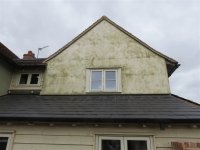
 
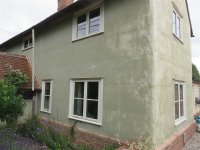
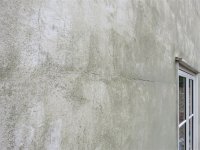
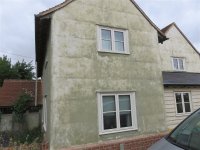
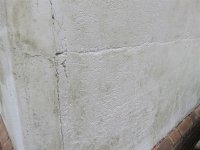
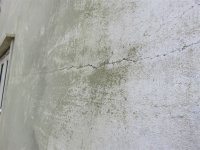
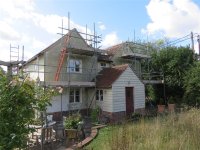
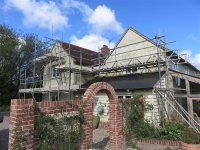
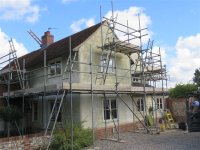
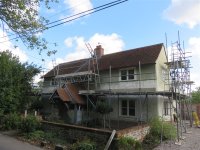
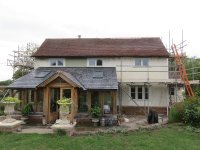
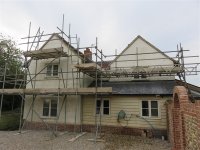
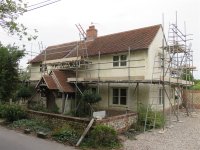
We have had a problem with our lime render for the last 2 or 3 years, and I'm finally tackling it. This was the state of affairs before I started work a few weeks ago:

IMG_8075.jpg

IMG_8076.jpg

IMG_8077.jpg

IMG_8078.jpg

IMG_8072.jpg

IMG_8073.jpg

There are in fact TWO failures in evidence. The most important is the cracking of the render, at almost every single joint between render carrier boards. The second is the limewash, which at 6 ot 7 years old should look an awful lot better than it does. I have had the boss of both companies out to site to give me their opinions, and have received a comprehensive plan for redemptive works from both. No-one is to blame, and I am bearing the cost (which is perfectly OK with me).

My take on the matter is that the "end grain" of the carrier boards has drawn water out of the lime render at a greater rate than the face of the boards, leading to a dip at each board edge, and a weakness. No matter....the point is to fix it.

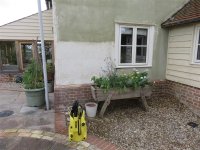
I had noticed, by accident, that a pressure washer removed the limewash rather easily. Now, this is important because the limewash is tallow-bound (tallow is animal fat). This fat would prevent the proper adhesion of anything over the render. I cleaned an area of limewash before the first visit of the chap from Anglia Lime:

IMG_8071.jpg

His design for the solution to the issue was to clean the limewash off everywhere, coat the entire surface of the house in a specialist sealing product, apply scrim (a mesh) to all of the joints and cracks, and then render over with 5 or 6mm min of a finishing render (Fine Lime) which includes lots of fibres and hair. Phew! Because stripping off the existing lime plaster would have been an utter nightmare.

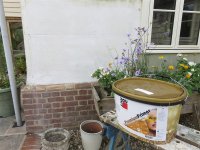
I did a test patch over the area I had cleaned previously, and called Anglia Lime back to inspect. He was happy. Again this was to his specification, and I'd left some scrim over-hanging so that we could have a good tug at the render patch and check that it had adhered well (I don't have a photo of that, just the sealed area):

IMG_8079.jpg

On with the plan....

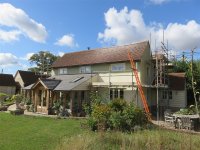
Anyway, over the last few weeks, 2 or 3 hours at a time (it's awful work), I've pressure washed the limewash off. When I got so far, I had scaffold erected, and then could finish higher up (before first):

IMG_8287.jpg

IMG_8288.jpg

IMG_8289.jpg

IMG_8290.jpg

IMG_8291.jpg

The observant might have noticed some tiles off the roof, and some ridge tiles missing. I am having some solar panels fitted in the valley, and they broke umpteen tiles in the process, which involved removing ridge tiles to access the broken ones......which resulted in broken ridge tiles. Absolute disaster, which turned a one day insatallation into three. Nice guys, very apologetic, and they did a decent job of re-ridging. Anyway...

Pressure washing was a filthy job, and I got soaked. Here I am in full protective gear:

IMG_8292.jpg

I had to scrape lime particles out of my ears, and just about remove a layer of skin to get it off my face. The southern elevation stripped incredibly quickly and easily. The north, by contrast, was incredibly slow. I have just finished the whole house:

IMG_8295.jpg

IMG_8296.jpg

IMG_8297.jpg

As you can see, the result isn't perfect. But it's good enough to satisfy Anglia Lime, and I can now move on the brushing a thick sealer to the entirety of the existing render. I may spare you those photos! What's going to be difficult, I think, is that the process of pressure washing has left the surface pock-marked and pitted. It is going to be tedious ensuring good sealant contact in this poor surface. On the plus side, the newly roughened surface will aid adhesion of the next coat of lime.
 
Ah yes. Pressure washing off a scaffold (or ladder!) to get the tricky bits high up...I remember just clenching my...my...teeth and just "going for it". I had a Victorian villa, the roof apex was 33' off the ground and my ladder's span was 28'....my wife refused to look.
 
I presume the sealant is to stop the old render sucking the moisture out of the new render to quick and help adhesion and allow the new render to fully develop. But does it have a a long term effect. As you know, Lime render is supposed to let moisture move around. Anything that inhibits the process is a concern. So how is this sealant working?
 
That looks like a hell of a job. I had to go back to December 2024 to remind myself of the cause:

"It was applied too thin and too wet, and then dried too quickly at the edges of the wood-wool boards where the "end grain" sucked the moisture out of the mix quicker than the middle of the panels did. Lime can be awkward to work with, and my plasterer got it wrong. We'll be applying, I think, 2 additional coats as well as some scrim, but the hard work is going to be in preparing the existing smooth top coat to take more coats of lime....and for that, I'll be getting a specialist out from the supplier to get his opinion."

Presumably the cracks are where the wood wool boards and corners are. Has water not tracked down behind through the cracks and blown the render in places? Is there a risk of it cracking again in the same places - I realise the cracks will be taped and sealant applied but is that not keeping moisture in?

Looks like a very expensive job all round. Best of luck with it.
 
I presume the sealant is to stop the old render sucking the moisture out of the new render to quick and help adhesion and allow the new render to fully develop. But does it have a a long term effect. As you know, Lime render is supposed to let moisture move around. Anything that inhibits the process is a concern. So how is this sealant working?
Exactly that. And the sealant is as "breathable" (vapour-open) as the lime. It's other major role is to even out the draw, so that no matter how thick or thin the existing lime is, the new stuff will dry evenly. It was supplied by a famous lime-supply company.
 
Presumably the cracks are where the wood wool boards and corners are.

Yes. There is very little cracking other than at the board edges.

Has water not tracked down behind through the cracks and blown the render in places? Is there a risk of it cracking again in the same places - I realise the cracks will be taped and sealant applied but is that not keeping moisture in?

The lime render on my house is in effect only a rain screen. The wood wool boards are on battens, and behind them is a water-tight breathable sheathing board (on the new part), and Tyvek Housewrap membrane on the old. In fact, I'm fairly sure that the new part of our house was left exposed to the weather without render for a year or two. So the wall structure is safe from water ingress. Nothing we are doing is affecting the breathability of the wall, so any moisture that has got in will get out again. Of course there is a danger that it will crack again, but the scrim should greatly reduce that risk.

Looks like a very expensive job all round. Best of luck with it.

Thanks. £1200 for the scaffold, £1000 (ish) for the plasterer, and about £700 to £1000 for the Fine Lime.
 
Exactly that. And the sealant is as "breathable" (vapour-open) as the lime. It's other major role is to even out the draw, so that no matter how thick or thin the existing lime is, the new stuff will dry evenly. It was supplied by a famous lime-supply company.
Thanks, I have had a read at the specification.
 
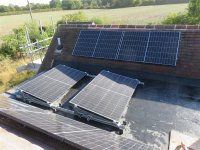
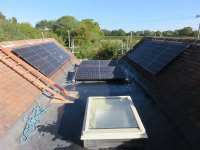
I've had a small solar array fitted:

IMG_8298.jpg

IMG_8299.jpg

The thing which is different about this little set up is that it is feeding the hot water cylinder as a priority. We are effectively using the HWC as a battery. It took a little imagination by the electrical guys to get this to work, but it makes sense to me. We heat our water using oil, and use more oil doing that than we do heating the house. This little solar set up should provide all our hot water in the summer, and, contribute a little in the winter, and that will drastically cut our oil consumption. Any surplus will be fed automatically into the house, and if that's not calling for any, it will be diverted into the grid.

The orientation of the collectors isn't optimal, but the calculations suggest it should produce about 1980 Kwh per year.
 
That is a neat idea; I had the same discussion 5 years ago when we tried to develop a 'battery storage' using water cylinders. The argument was with the Gov over use of Tariffs.

I was working in social housing and in mid to late 2019 after listening to SSE and Scottish Power talk about the need to load share on the grid asked one of the cylinder manufacturers in Scotland if we could try stripping their controls off a cylinder and use smart switches to control them instead. As Octopus Energy published their API’s 24 hours in advance on their Agile tariff we could read them using IFTT.com and when the prices dropped switch on the immersers, at this point in 2019 Octopus were selling energy through the night at 5p per kW for two hours and -5p per kW for two hours making 4hours of immerser heating cost neutral. We would then run the heating for a one bed sheltered housing property using a coil to heat the water for the radiators. Cylinder size for the flats we had in mind came back at 180l but to build in cushion we looked at 300l cylinders (this was going to be a trial in a 25 flat sheltered housing development. By the time we had done the calcs and proved that it was viable and then spoke to all the residents it was late January 2020 (this is significant). During this time, I approached octopus who were very keen on the proposal as it would prove a way to load shift using fairly simple smart switching, so they agreed to support the project and have teams talk to residents to help with account switching etc. by late Feb 202 we had tenders out and due to return first two weeks of March 2020, the smart ones out there will now see the problem looming. Covid hit and the project was shelved, meanwhile in other parts of the world Russia invaded Ukraine this also had a serious impact on this project. By the time Lockdowns were lifting and we were possibly in a position to re look at this three things had happened the company making the cylinders had taken the quiet time during lockdown to develop their own online platform to allow easier switching and monitoring of power use and securing best prices, the price of energy had skyrocketed with companies starting to fold and material costs were climbing like never before. Octopus were brilliant at first with meetings held with Greg Jackson who was very keen to push this forward however Octopus took on the customers of a couple of failed energy suppliers which meant that the low cost tariffs disappeared over night as they adjusted to the new markets (along with rising costs due to the war in Ukraine). We approached the Energy Minister as there was still a low cost tariff available to electric car users which Greg though we may be able to tap as we were effectively energy storing, we were given a green light on this and three days later the energy minister pulled our permissions as we weren’t charging batteries. No amount of argument could convince them that we had large copper cylinders full of water acting as batteries (they are not batteries according to the government).
 
Mike very neat. Did you consider solar water panels such as are common in Europe to heat the water and top up with pv as needed?
 
I did, Peter, a long time ago, but we have a pressurised system, and it would have involved having a tank with 2 heat exchange coils rather than one, which would have been an expensive purpose-made item at the time (10 years ago). Once we had a single coil tank, the only other option would have been a separate tank, or a heat store, with all sorts of pumps and controllers. I think Bob 9 Fingers had something along those lines, and it was enromously complex.
 
Think that'll work very well for you Mike. We have solar with a battery but I added a pretty simple system which detects when we are exporting via clamp on our main cable and flicks the immersion heater on. This on almost all days during approx 5 months of sun keeps our hot water tank full during the day. We also use the battery to heat water in the morning meaning our gas usage is as good as zero over the summer.
 
Did you dream the setup up Mike, or have a company do the setup for you? This is similar to what I'm interested in doing.

I did, and it took some persuading to get a company to do something somewhat out of the norm. A small local company took the trouble to design it (it's really simple), and gave me a good price. The big boys weren't really interested in my idea.
 
Can I seek clarification? Is the lecky from the solar panels heating the hot water as per an emersion heater ?
Exactly that. We had an immersion as a back up already, on it's own circuit, so all the wiring happened at the consumer unit rather than in the airing cupboard.
 
We have wet solar, as well as PV panels. They came with the house, but (the wet ones) are pretty much useless in winter, and I reckon we'd be better off with extra PV, as the diverter/immersion heater device has been around for a while, and is more versatile.
I confess that when I first heard about it, from some friends who were installing PV on their bungalow refurb, I thought it must be illegal, but since we moved into a house with panels I now understand that the whole FIT thing is crazy. Why assume we use half of what we generate and export half when it can be measured?
 
John what is this diverter/immersion heater device? Can you drop a link to one please? All our water is heated by lecky on an overnight tariff . I have no idea what the regs are here but would like to investigate as we have a large south facing roof and running cable down from the roof through two concrete floors to where the hot water tank is located is a lot easier than plumbing pipes .
 
Mike is the roof area where the panels are accessible via your sky light?
Yes. However, the installation was timed to coincide with the erection of scaffolding around the whole house to do the render, giving the installers easier access. I can go up through the skylight once in a while to wipe the panels down.
 
Back
Top