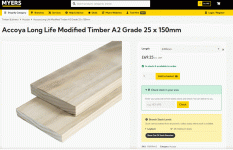
If you don’t get it from the two main importers directly (Lathams and International Timber) you do get shafted on price because other suppliers are simply buying it in from them and selling it on with a mark-up, particularly smaller quantities. We buy a reasonable volume of Accoya every year so we do tend to have better prices than someone who’s a first-time buyer or only buys small amounts.
Yes, A1 and A2. There’s not a massive difference between the grades now as you will come across bows, twists, knots, and other defects in A1, but they are more prevalent in A2. It used to be that A1 was perfect and A2 was good on one face but not now, it’s basically that you’ll have more of a chance of getting better timber with A1 than A2, but occasionally we’ve had A2 planks that could easily pass for A1.
They have to aggressively kiln it to get it down to the correct moisture content, which is less than 4%MC, so it’s just an unfortunate side effect but I suspect they could achieve the same results over a slightly longer period without the risk of the honeycomb cracks occurring.
Steve is correct about the glue, because the process destroys the cells that react to water you cannot use water-based glues such as PVA or UF. Polyurethane, epoxy resin, or EPI must be used instead.
Another consideration also is that because of the high acetic acid content of the timber stainless steel fasteners and hardware must be used to prevent corrosion and ultimately failure. I saw many jobs when Accoya first started coming about where galvanised nails have been used to fix glazing beads and they have rusted in a matter of weeks leaving orange spots around the glazing which look dreadful, also it can completely rot out door and window hardware so you must use quality hardware and coat it in an anti-corrosion coating such as ACF-50 spray or grease to help prevent that.