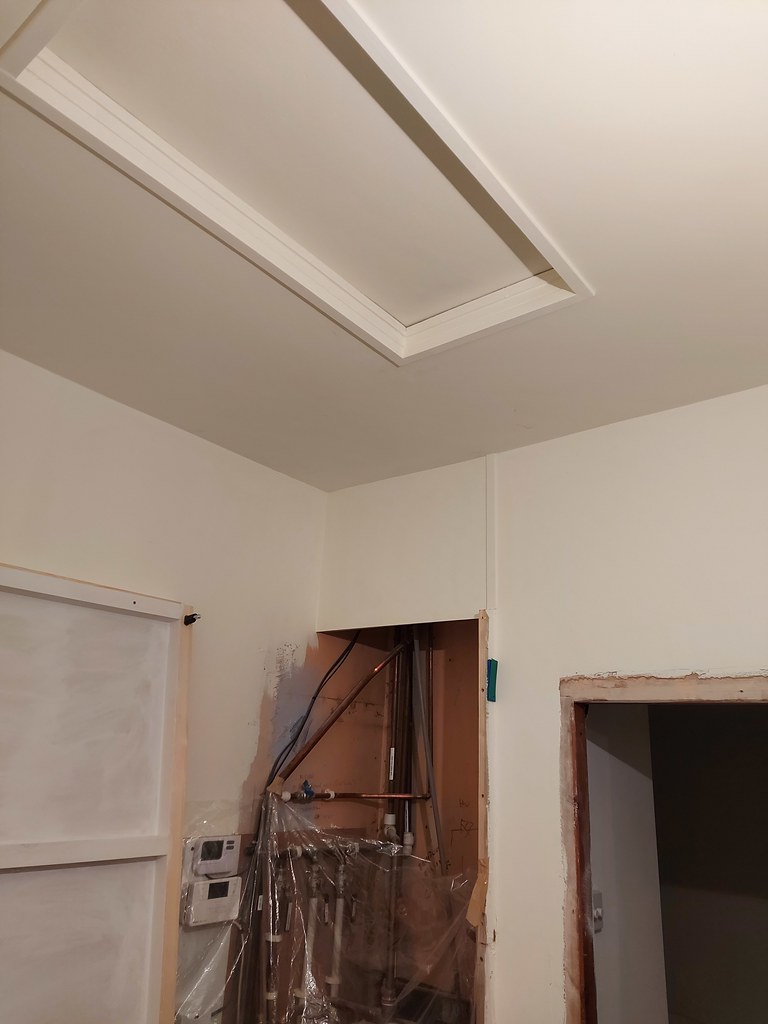
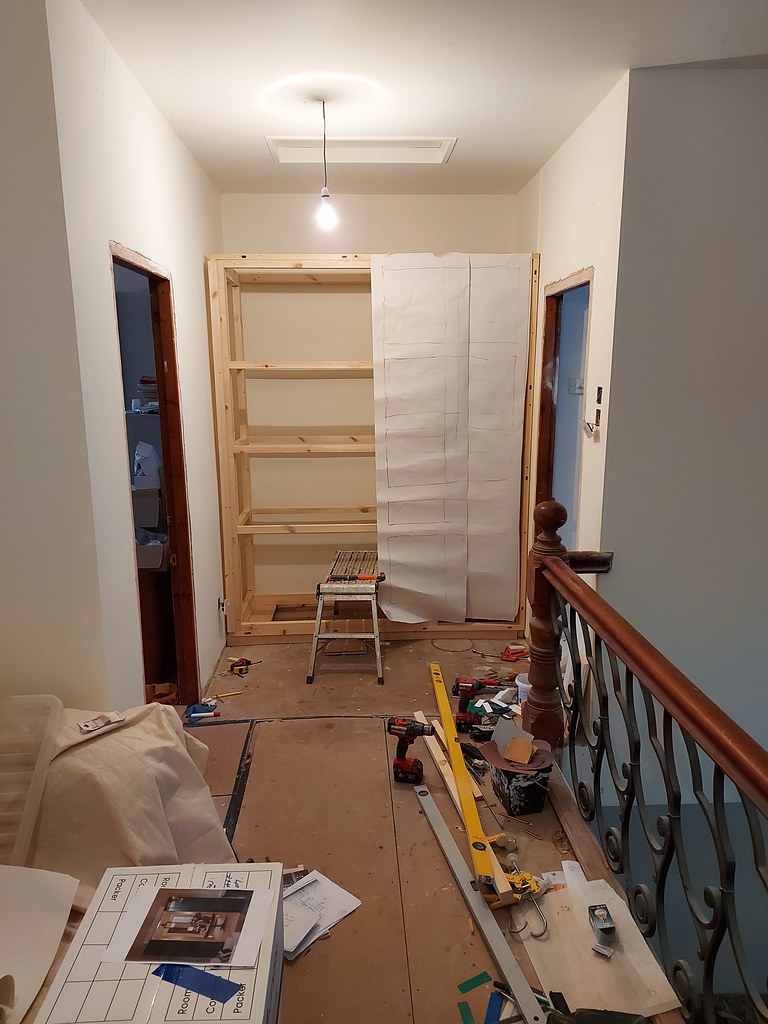
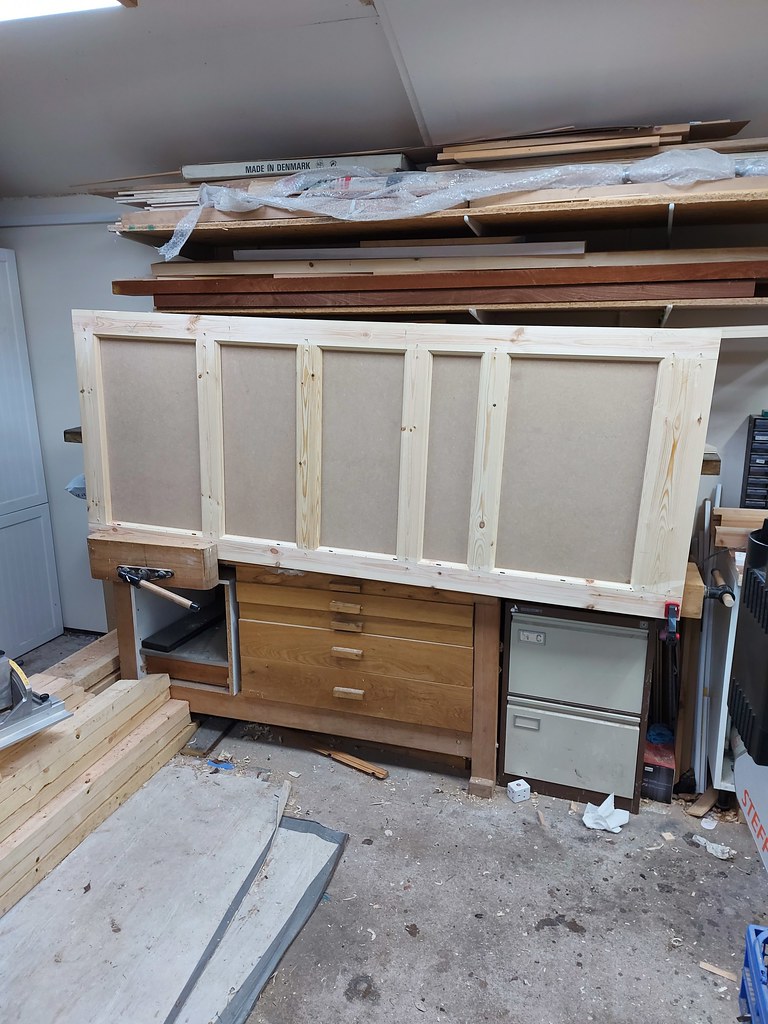
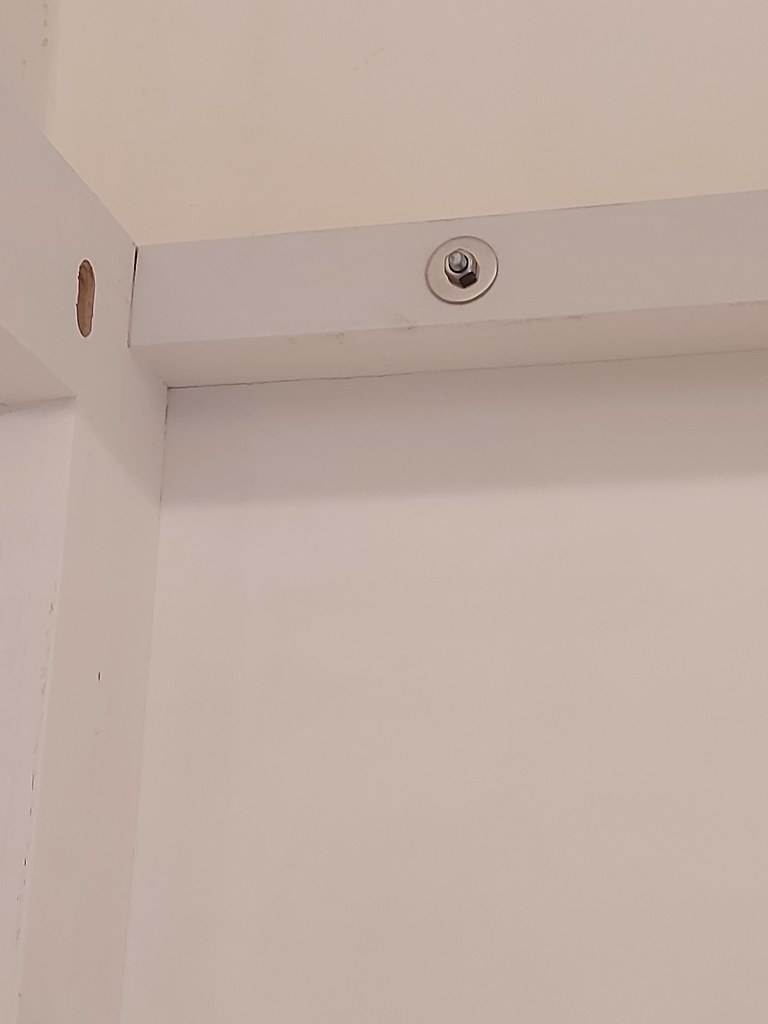
Folk may recall back in July I posed the question in this thread about the best way of providing storage space here yet allowing access to all the plumbing.
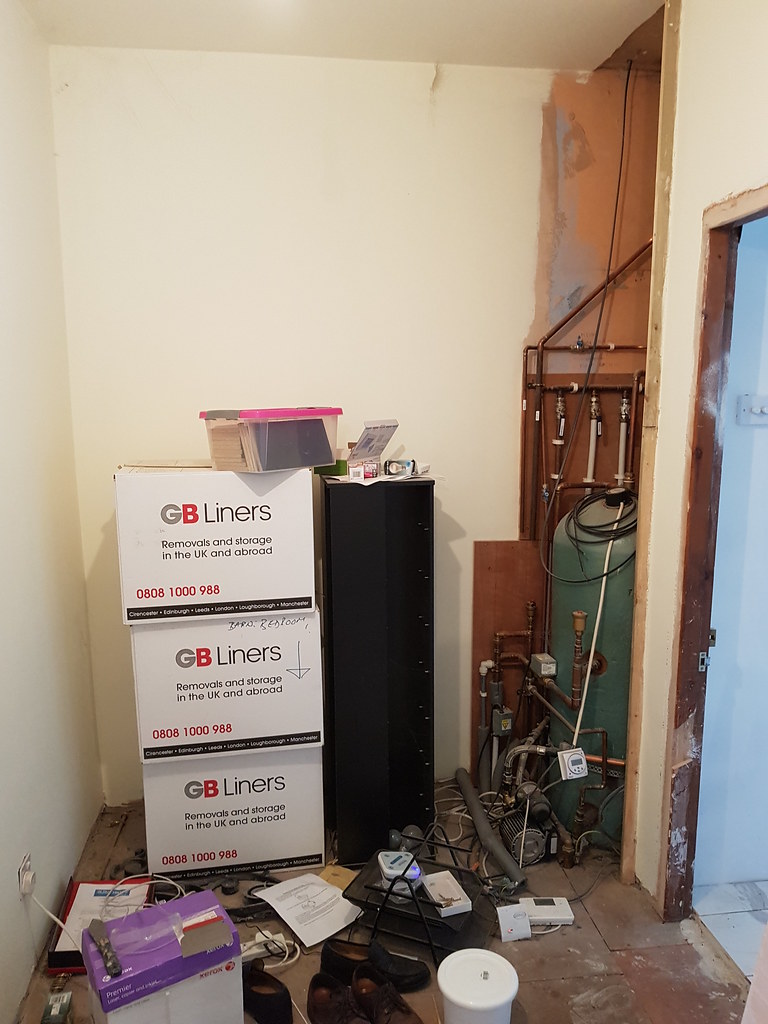
After much deliberation, I came to the conclusion that :-
This is that story.
Festool provide a different type of connector system to suit each size Domino machine. The larger DOMINO XL DF 700 jointer uses this kit at £210
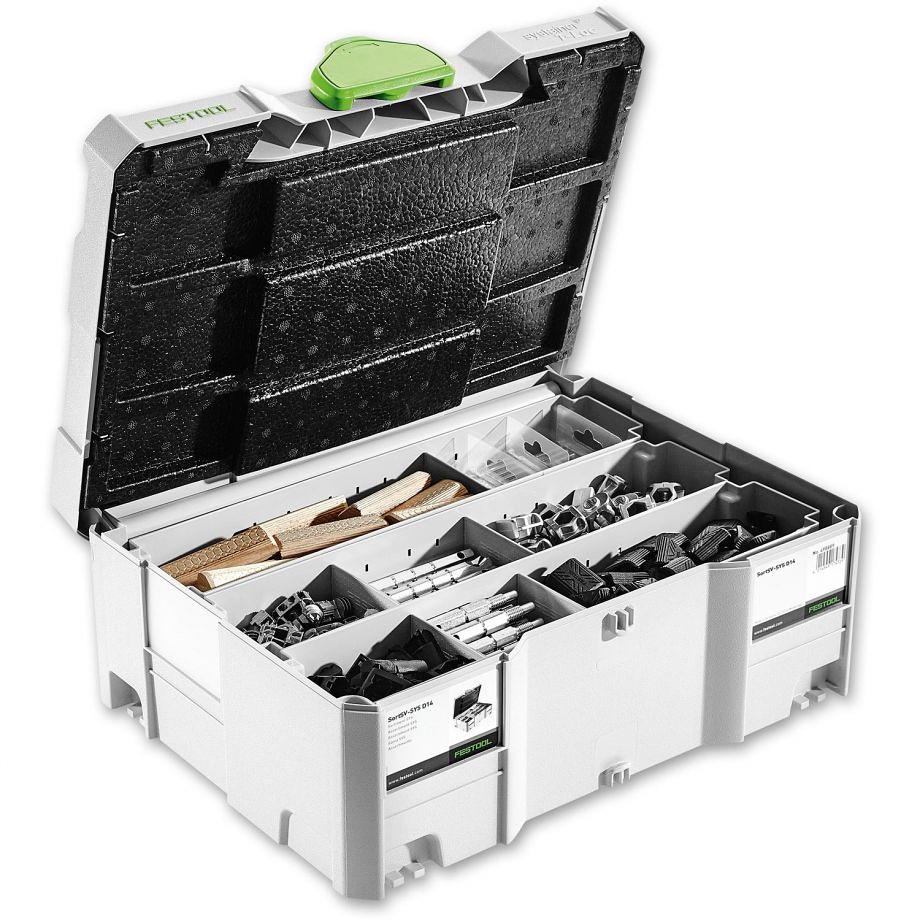
The smaller DOMINO DF500 Q-PLUS jointer uses this kit at an eye-watering £315

However on closer inspection I realised that those kits contained a lot of stuff that I probably wouldn't use and that I could just buy boxes of the parts I needed at a reduced cost. The smaller kit needs a special drilling jig - pricey - but the larger kit needs a 14mm cutter (which I already had). Decision made and so for slightly over £100 I bought four boxes of connectors.
The minimum that you need to make a connection is a :
split-anchor (or expansion bolt as some sites call them).

anchor bolt

The anchor bolt comes in three parts..the actual bolt itself plus two black plastic halves that click over the bolt at the appropriate time - of which more anon.
cross-anchor

In the Festool coding, the key letters are after the hyphen. eg. SV-AB D14/32. The D14 refers to the size cutter (in the kit for the larger Domino there is just the one size 14mm) and the 32 refers to how many in each box.
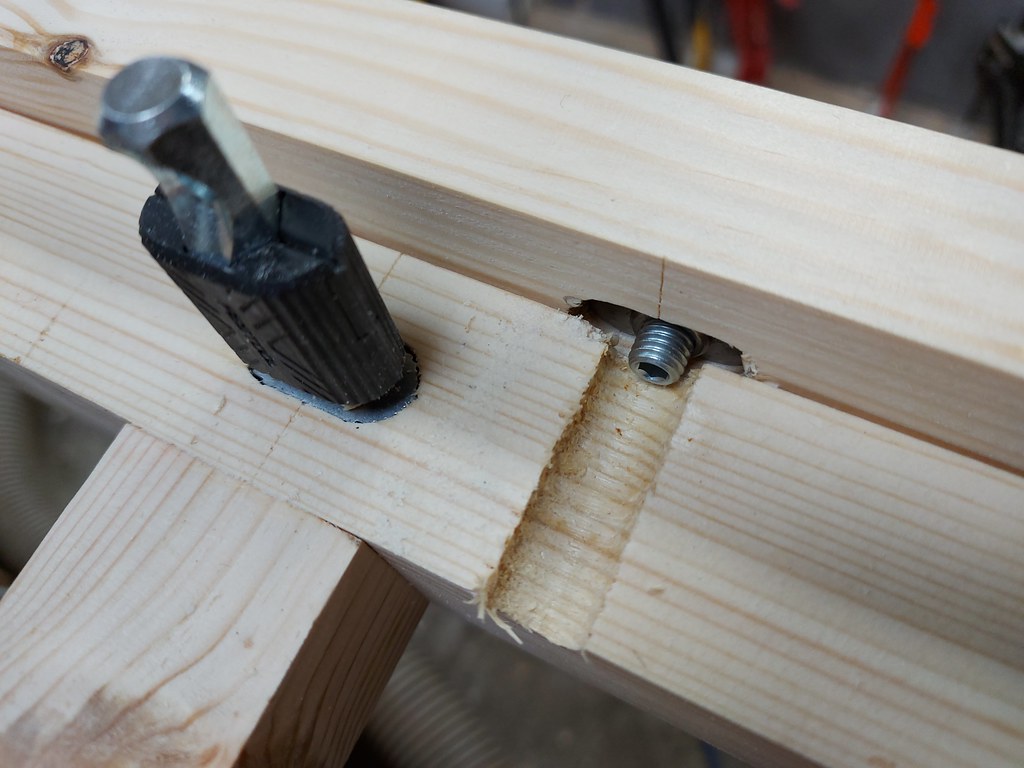
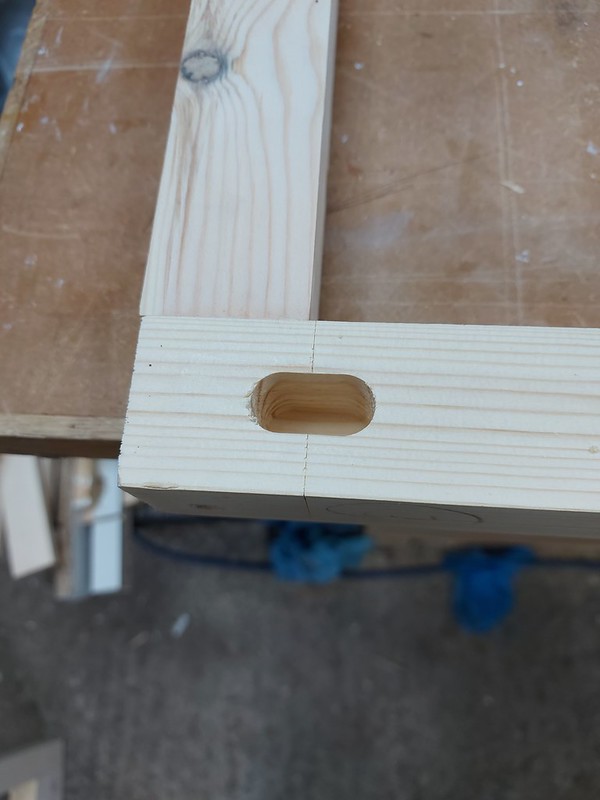
The way the connector works is that, after drilling the appropriate slot, the split-anchor is inserted and then the anchor bolt slowly screwed into it forcing those serrated jaws apart and into the wood on either side of the slot.

The anchor is then covered with the two black plastic halves.
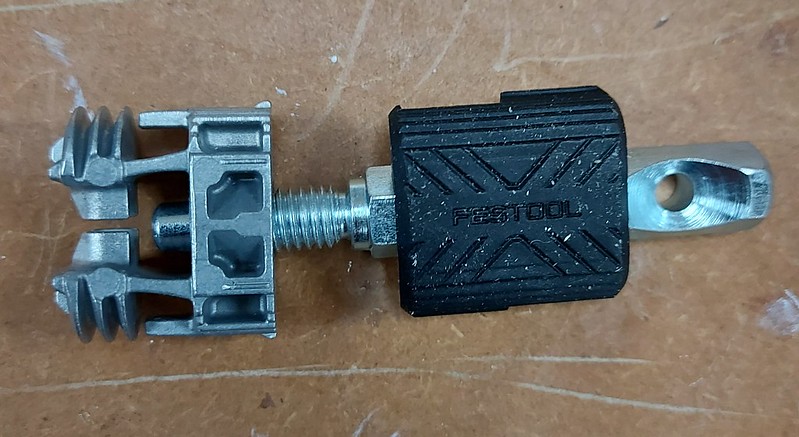
(Obviously that anchor bolt in the photo hasn’t actually been screwed in all the way!).
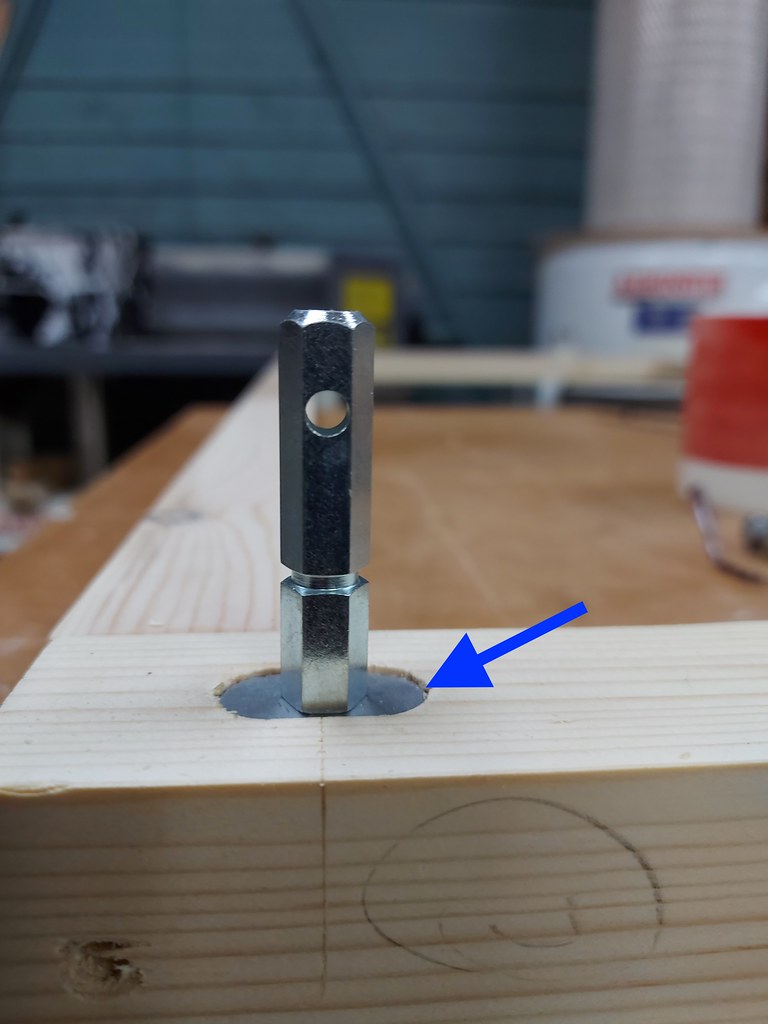
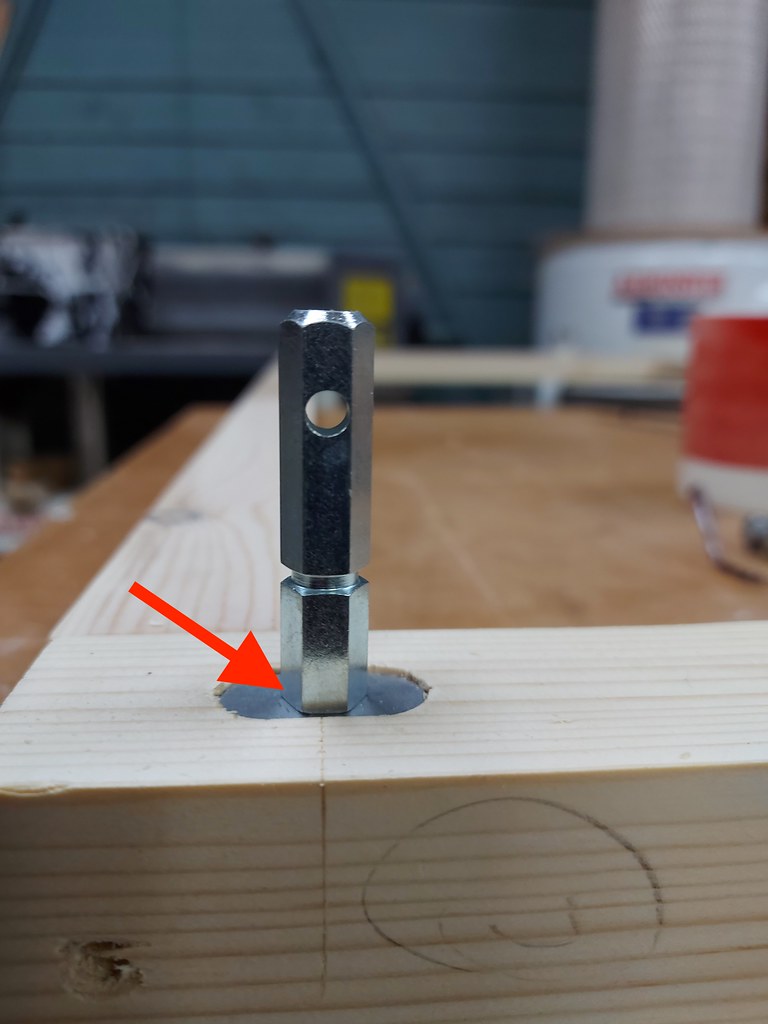
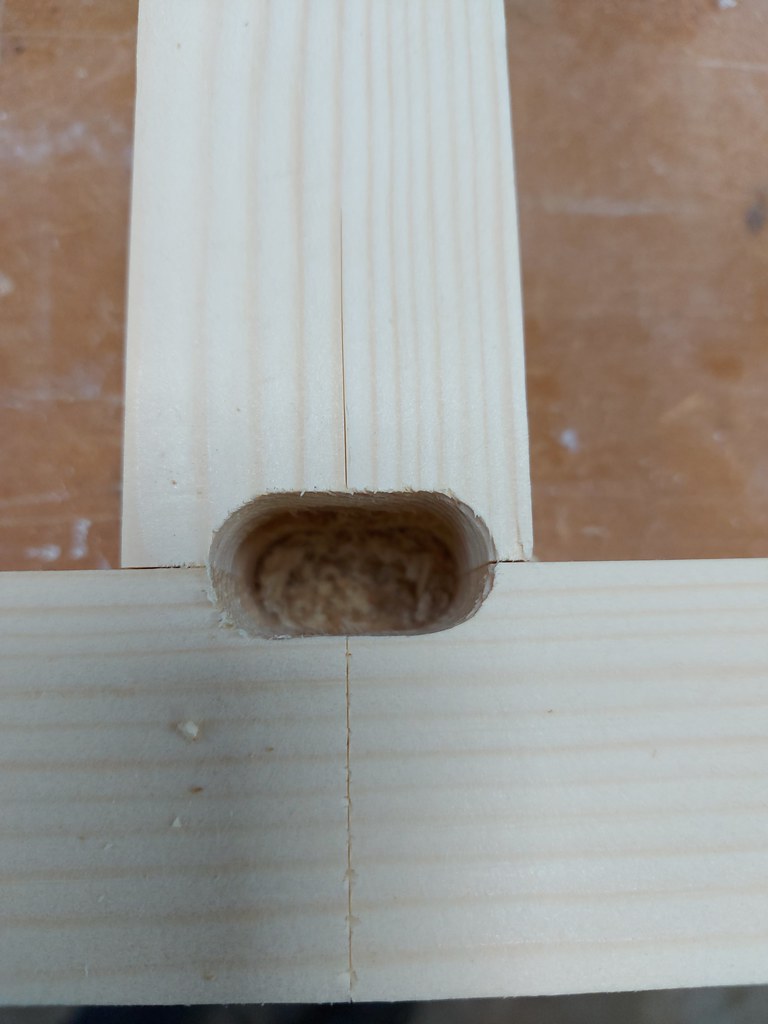
Then in the piece of timber you want to join together, another slot is cut at 90 degrees to the other one and the cross-anchor inserted.

That’s the theory. How well does it work in practice ?
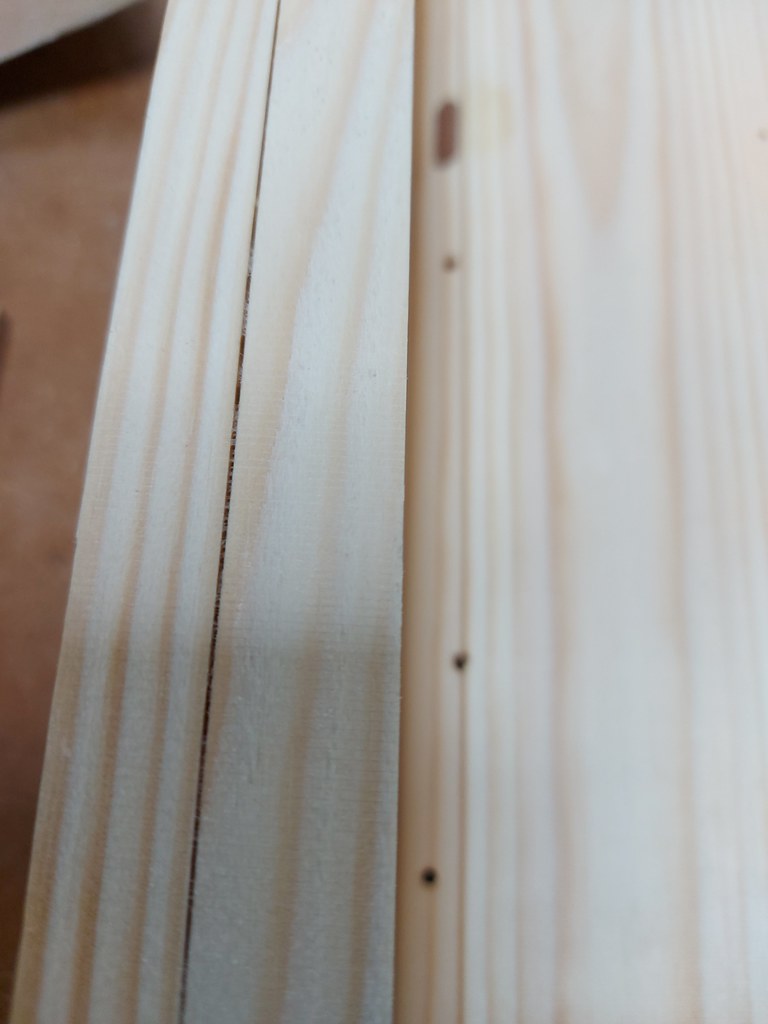
First off, you really have to keep your wits about you when cutting the slots. Remembering which side you’re cutting from and the settings required on the Domino machine is crucial. Fortunately Festool provide a drawing with the various settings needed although TBH, as mentioned in another thread I found their pictures not that obvious.

To be continued
After much deliberation, I came to the conclusion that :-
- (A) I needed quick and easy access to Mission Control and/or all the isolating valves feeding the plumbing in the house and
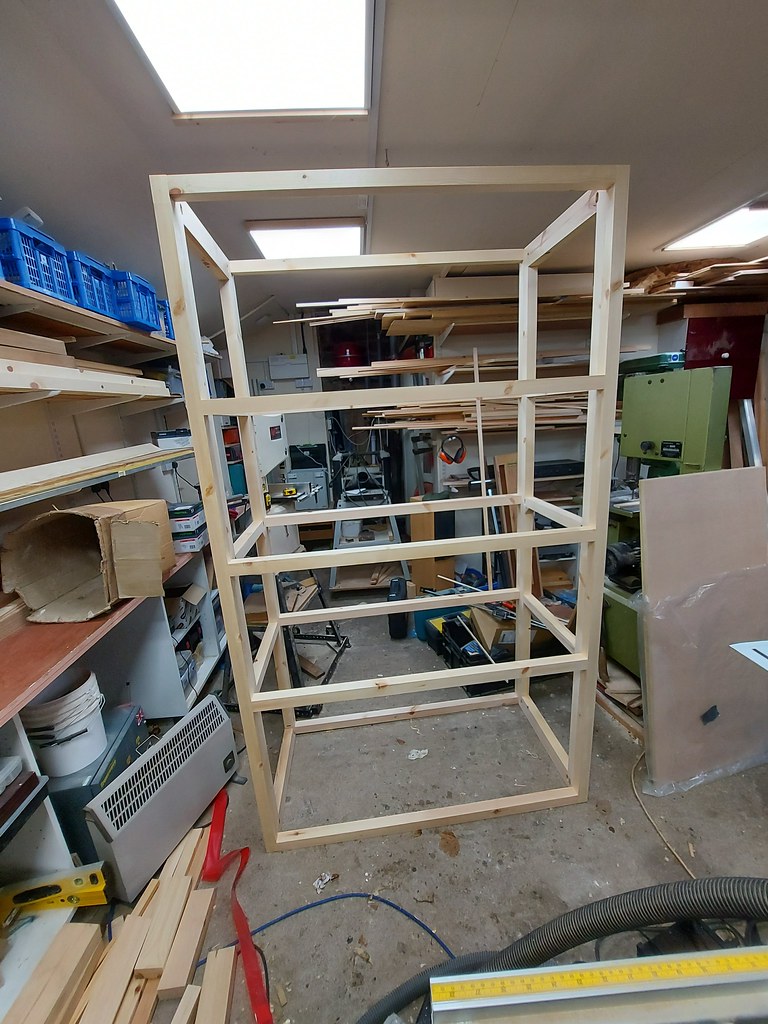
(B) the ability to remove the cupboard without too much hassle if the need arose to do any remedial work to the plumbing in the future (new HW tank, for example).
This is that story.
Festool provide a different type of connector system to suit each size Domino machine. The larger DOMINO XL DF 700 jointer uses this kit at £210
The smaller DOMINO DF500 Q-PLUS jointer uses this kit at an eye-watering £315
However on closer inspection I realised that those kits contained a lot of stuff that I probably wouldn't use and that I could just buy boxes of the parts I needed at a reduced cost. The smaller kit needs a special drilling jig - pricey - but the larger kit needs a 14mm cutter (which I already had). Decision made and so for slightly over £100 I bought four boxes of connectors.
The minimum that you need to make a connection is a :
split-anchor (or expansion bolt as some sites call them).
anchor bolt
The anchor bolt comes in three parts..the actual bolt itself plus two black plastic halves that click over the bolt at the appropriate time - of which more anon.
cross-anchor
In the Festool coding, the key letters are after the hyphen. eg. SV-AB D14/32. The D14 refers to the size cutter (in the kit for the larger Domino there is just the one size 14mm) and the 32 refers to how many in each box.
The way the connector works is that, after drilling the appropriate slot, the split-anchor is inserted and then the anchor bolt slowly screwed into it forcing those serrated jaws apart and into the wood on either side of the slot.
The anchor is then covered with the two black plastic halves.
(Obviously that anchor bolt in the photo hasn’t actually been screwed in all the way!).
Then in the piece of timber you want to join together, another slot is cut at 90 degrees to the other one and the cross-anchor inserted.
That’s the theory. How well does it work in practice ?
First off, you really have to keep your wits about you when cutting the slots. Remembering which side you’re cutting from and the settings required on the Domino machine is crucial. Fortunately Festool provide a drawing with the various settings needed although TBH, as mentioned in another thread I found their pictures not that obvious.
To be continued







 so do you see shortcomings in these connectors?