Well the people have spoken :lol:
So here goes my write up and already I did not take a photo of the boards to start with.
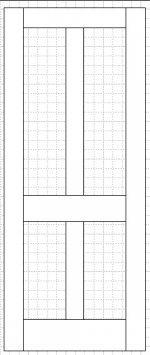
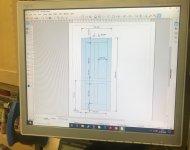
I like to have a drawing on the workshop computer. It is a very cheap £50 machine where I can pull stuff down off the home network. It does not need to be a powerful machine.
Here are the boards rough cut to size. On a project this size with only a few parts I did not use the optimizer program but instead juggled the parts on the boards around any flaws and cutting first to length and then width working around any twists. Cross cut done with a hand held circular saw and rips on the table saw.

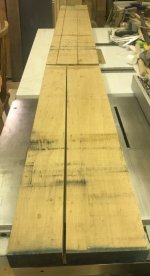
A quick check of the parts need and the offcuts set aside.
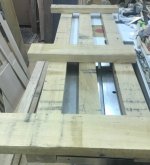
The pieces are still over length. Trimming after planing to size yields a few offcuts with the correct cross section that are so useful for set ups later on.
Each piece gets two adjacent faces planed flat at 90 degrees to each other (oops no photos)
Then out with the thicknesser. Bit of a large beast but rock solid, amazingly accurate and no snipe.

The machine elevates out of storage and automatically stops with the bed precisely level to use the table saw as an outfeed table.

As each piece exits the thicknesser it is examined for any hint of tear out. If there is any, then the piece is rotated end for end with the same surface kept upper most ready for the next pass through to look for reduced tear out. once the saw marks are no longer visible, the pieces are flipped end for end but this time vertically to expose the opposite face. This flip is repeated after every pass to remove an equal amount for each face to minimise any warping due to relieved stress in the boards.
Identical process for planing to width. Result square, flat unstressed stock - fingers crossed.
Once complete the thicknesser gracefully lowers in the stand.
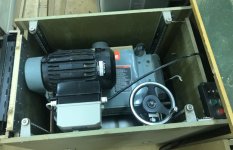
And rolls under the bench out of the way.

Planed timber left in stick for a few days (when possible) just in case it decides to move despite best efforts above
Some of the timber turns out to be rather pippy. All very nice a pretty features.

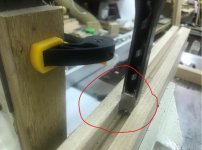
But a PITA when a pip turns up on a corner and pops out.

As it happens, I will be fitting bolection mouldings around the panels so most of the edges will be covered up. So provided the timber I select for the moulding is not pippy then all should be well.
NB to the couple of readers who voted for an abbreviated version please feel free to speed read and look at first and last photos :lol:
Thats it for now
Bob